
If you have ever watched a school of tuna explode through a bait ball, you understand the power of chaos in the water. A daisy chain fishing lure taps into that primal feeding frenzy by mimicking a tight group of fleeing baitfish, triggering strikes from aggressive predators like tuna, wahoo, king mackerel, and billfish. Unlike single lures, daisy chains use multiple hooks, skirts, or squid rigged in sequence along a main line, creating visual confusion and irresistible action. In this guide, you will learn how to build five proven daisy chain rigs, choose the right materials, and deploy them for maximum impact.
Choose the Right Rig Type

Not all daisy chains are built the same. The best design depends on your target species, fishing method, and water depth. Each rig offers unique advantages in action, durability, and tangle resistance.
Match Rig to Target Species
Your goal determines the setup. Here is what works best for each predator you might encounter:
• Tuna, wahoo, and mahi perform best with skirted or squid chains featuring flash and proper spacing
• King mackerel respond well to squid combined with a bottom spoon for added vibration
• Sailfish and marlin require dropper-loop teaser chains with chase bait for attraction
• Bonito and Spanish mackerel need compact three to five hook rigs optimized for shallow water
Compare Construction Styles
Different daisy chain designs excel in specific situations. The inline skirt version delivers low tangle risk and high reusability for trolling pelagics. The squid-spoon combination works exceptionally well for surface-feeding mackerel. The crimped skirt variant provides maximum durability for inshore school fish. The swivel trolling design handles deep water applications around one hundred to one hundred twenty feet. The dropper teaser chain stands out for attracting billfish.
| Feature | Inline Skirt | Squid-Spoon | Crimped Skirt | Swivel Trolling | Dropper Teaser |
|---|---|---|---|---|---|
| Best Use | Trolling pelagics | Surface macks | Inshore schools | Deep trolling | Billfish attraction |
| Hook Count | Two to ten | Three | Five | Five | Four to five |
| Tangle Risk | Low | Low | Low | Moderate | Moderate |
| Reusability | High | Moderate | High | Moderate | High |
Gather Essential Materials
Before tying anything, assemble the right components. A well-built daisy chain starts with strong, corrosion-resistant materials and the proper tools.
Core Line and Leader Setup
Your main line should be forty to eighty pound fluorocarbon, though monofilament works in a pinch. Fluorocarbon is preferred because it is nearly invisible underwater and resists UV degradation. Leader material should be eighteen to forty pound fluorocarbon for droppers. You also need size six or seven ball-bearing swivels to prevent twist and a snap swivel for quick attachment to your main trolling line.
Hooks, Crimps, and Connectors
Hook sizes vary by target species. Use three slash zero to five slash zero hooks for king mackerel and six slash zero two X strong or zero seven double hooks for tuna and wahoo. Match crimp size to line test, meaning an eighty-pound crimp for eighty-pound line. A crimping tool is essential for secure, slip-free connections. Shave gear creates anchor points and prevents line slippage.
Lures, Skirts, and Flash Add-Ons
Rubber skirts from brands like Yamashita come in four point five to seven centimeter sizes in glow, pink, green, or clear colors. Squid lures like the blue 2798 squid in seven to seven and a half centimeters work well, optionally in pink. Use six millimeter beads in glow, green, or pink to add internal flash and protect skirts. Small metal spoons on the bottom create extra flash and weight. Mylar lead heads slide under skirts for reflective flash. Turbo Slammer Billy baits attach to squid for enhanced action.
Must-Have Tools
You need scissors or line cutters, a lighter to melt line ends into mushroom stops, a measuring tape or ruler, a black Sharpie for marking spacing, and pliers for crimping hook eyes closed.
Build an Inline Skirt Daisy Chain
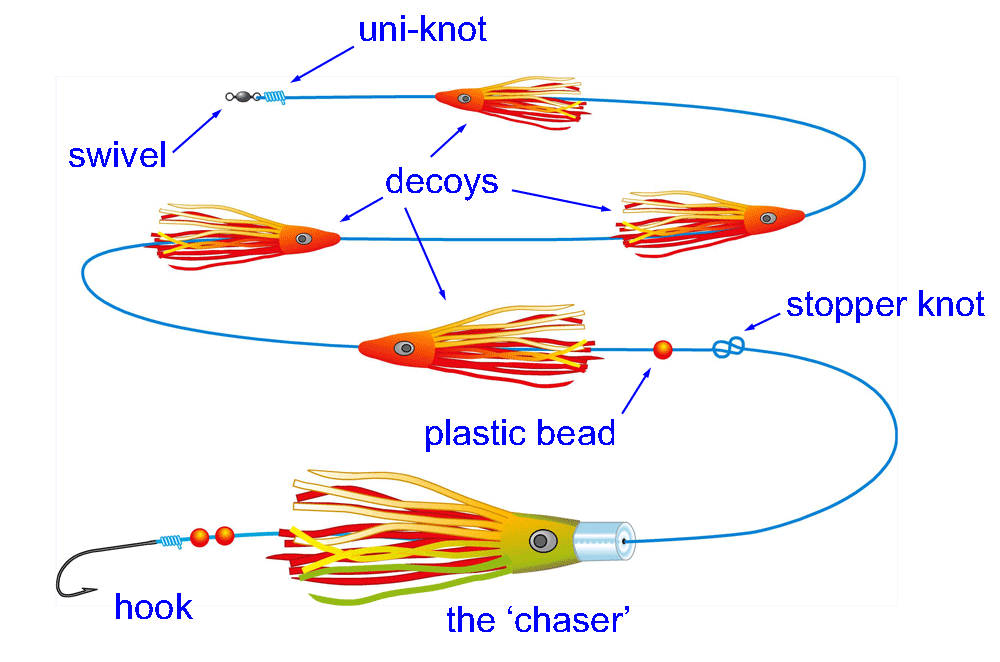
This backward-tying method creates a streamlined, low-profile rig ideal for tuna and wahoo. It is simple, durable, and minimizes tangles.
Start With a Base Stopper
Cut three to six feet of sixty to eighty pound fluorocarbon. Tie a figure-eight knot at the tag end. Pull tight and trim excess. This forms a solid base that will not slip.
Thread Beads and Skirts
Slide six millimeter beads in green, pink, or glow onto the line before attaching hooks. Alternate colors between links for contrast. Slide each skirt over the line so the bead sits inside. This prevents slippage and adds internal flash.
Attach Hooks With Inward Pull
Space hooks ten inches or twenty-five centimeters apart. Position the hook at your mark. Wrap the main line tightly around the shank six times, moving downward. Pass the tag end through the hook eye from top to bottom. Pull firmly. The wraps will pull the hook point inward toward the shank. This inward orientation may improve hook-up ratio by reducing deflection.
Repeat for each hook. Finish with a crimp at the terminal end to prevent rotation and secure all components.
Pro Tip: Use two to three hooks for most applications. More is not always better. Extra hooks increase tangle risk without boosting catch rates.
Assemble a Squid and Spoon Daisy Chain
Perfect for king mackerel and surface-feeding pelagics, this rig combines soft squid with a flashy spoon for vibration and attraction.
Cut and Prepare the Main Line
Use a forty-pound, one-point-two-meter section of monofilament or fluorocarbon. This length allows for three evenly spaced leaders.
Attach Leaders With Uni Knots
Space leaders twenty to thirty centimeters apart. Cut three equal lengths of eighteen to twenty-four inch leader line. For each connection, lay the leader and main line parallel. Wrap both lines together three times through the Uni knot. Pull tight and trim the tag end. This creates a secure, low-profile dropper.
Rig the Squid Bait
Slice off the top bubble of each blue 2798 squid. Use scissors to poke a small hole just big enough for the line. Thread the leader through and pull until the squid sits flush against the knot.
Add Protective Beads
Slide a six millimeter glow or colored bead above each squid. This prevents hook abrasion and adds visibility in low light.
Tie and Trim the Hook
Use a four-turn Uni knot to attach a three slash zero Hayabusa hook. Pull tight so the hook sits close to the squid. Trim excess leader.
Finish With a Bottom Spoon
Instead of a fourth squid, tie a small metal spoon to the lowest leader. This adds weight for better casting and trolling depth. It also creates flash and vibration that mimics a fleeing baitfish.
Why it works: The spoon acts as a wounded straggler. Often the first thing aggressive macks attack.
Construct a 5-Skirt Crimped Daisy Chain

This heavy-duty rig uses crimps and shave gear for long-term durability. It is ideal for inshore pelagics like Spanish mackerel and bonita.
Create the Anchor Point
Thread the line through a crimp. Add a piece of shave gear, which is a short tube that stops movement. Pass the hook through the shave gear. Pull the hook back through the crimp, leaving a short tail. Melt the tail with a lighter to form a mushroom head. Push the mushroom into the crimp and crimp securely. This forms a permanent, tangle-resistant base.
Attach First Skirt With Flash
Flip the skirt with hook side up and thread the line through the hole. Pull down to the weight and spin to check for snags. Trim any rubber blocking the hole if needed. Flip the rig and thread from the opposite side to seat the skirt. Slide a mylar lead head onto the base. This adds flash and weight.
Set Second Attachment Point
Measure three feet or ninety-one centimeters from the first skirt. Mark with a Sharpie. Place a crimp on the mark, insert a short piece of monofilament as a dropper, and crimp securely. Add a half-ounce sinker. It stops at the crimp.
Add Remaining Skirts
For each subsequent skirt, measure twelve to thirteen inches from the last crimp. Mark, crimp, add a sinker, and attach the skirt using the flip-thread-flip method. Alternate colors or add a terminal glow skirt to mimic an injured baitfish.
Finalize the Rig
Add a terminal crimp. Insert shave gear, thread the line, melt the end into a mushroom, push into the crimp, and crimp. Attach a snap swivel by sliding the crimp down, placing the swivel, and securing with a final crimp. Offset slightly for better line flow.
Cost: Under ten dollars total. Hooks cost around one dollar, skirt packs four to five dollars, and tools are reusable.
Build a Swivel-Based Trolling Daisy Chain
For deep trolling around one hundred to one hundred twenty feet, this rig uses independent swivels and droppers. Losing one lure does not ruin the whole chain.
Start at the Bottom
Thread an eighteen-inch, forty-pound leader through the tip of the first squid lure, exiting at the back. Tie a double-hooked six hundred J hook to the leader end with a clinch knot. This is your bottom hook. Attach a size six swivel to the same leader end.
Protect Line From Upper Lure
Open the eye of a five hundred J hook with pliers. Slide it onto the swivel. Crimp the eye closed while holding it facedown. This prevents line twist.
Attach First Lure
Slide the squid onto the swivel. Ensure it sits flat and spins freely. Add another size six swivel to the top of the leader. Trim the tag end.
Repeat the Sequence
Connect a fresh eighteen-inch leader to the top swivel with a clinch knot. Attach a five hundred J hook to the base swivel, opening the eye, placing it, and crimping closed. Thread on the next squid. Continue for four to five lures total.
Finish With Top Connection
After the last lure, attach a size seven swivel. This connects to your main line via a snap swivel. The larger swivel handles higher stress.
Advantage: If a fish takes one lure, the rest stay intact. This is perfect for long trolling runs.
Deploy a Billfish Teaser Daisy Chain
This is not just a fishing rig. It is a psychological tool used to draw sailfish and marlin into your spread, then yanked away so you can pitch a real bait.
Use Dropper Loops for Action
Dropper loops allow each squid to move independently. This creates more lifelike, chaotic motion. Space them variably, typically eighteen to twenty-four inches apart.
Apply Weight Gradient
Front lures should have heavier leads at one-half ounce or more. Rear lures should have lighter leads. This keeps the chain skipping on the surface when trolled.
Add a Chase Bait
Attach an Ilander lure with natural bait like ballyhoo or mackerel strip to the end. This simulates a predator chasing the school and triggers curiosity in billfish.
Tactical Deployment Steps
Deploy from the tower or bridge, closest to the boat in your spread. Troll at six to eight knots to keep the chain skipping. When a fish approaches, the captain turns the boat toward the fish. The angler begins controlled retrieval of the pitch bait. Once the pitch bait passes the teaser, yank the daisy chain out fast. The fish follows the pitch bait, and strike often occurs near the transom.
Pro Tip: Practice quick retrieval. Timing is everything. A delayed pull can cost you the bite.
Optimize Color, Flash, and Spacing
Success is not just in construction. It is in presentation. Small tweaks in color, flash, and spacing can make the difference between a follow and a hookup.
Choose Colors That Mimic Local Bait
There is no universal formula. Match the hatch to your local forage. Common effective combinations include green and pink beads with clear or glow skirts, blue squid with pink or glow accents, and silver, green, yellow for surface chains. Use a contrasting terminal lure like a glow bead or red skirt to mimic a wounded baitfish.
Boost Flash and Visibility
Mylar lead heads slide under skirts for internal sparkle. Glow beads work in low light or deep water. Spoons and metal lures add vibration and reflective flash. Turbo Slammer Billy baits attach to squid for erratic action.
Follow Spacing Guidelines
Closer spacing creates a tighter school effect. Wider spacing produces more vibration and spread. Inline skirt chains at ten inches deliver balanced action with low tangle. Squid chains at twenty to thirty centimeters offer compact, aggressive movement. Crimped chains at three feet then one foot create deep drop with staggered depth. Trolling chains with eighteen-inch leaders allow independent lure action.
Rule of thumb: Adjust spacing based on target species and water conditions. Tighter for calm water, wider for rough conditions.
Test, Maintain, and Improve
Even the best daisy chain fails if poorly maintained or never tested. Treat each rig as a prototype. Tweak until it works.
Inspect Before Every Use
Check crimps for cracks or looseness. Test knots by pulling hard. Sharpen or replace hooks. Dull hooks miss strikes. Replace torn skirts or squid.
Learn From Each Trip
Note which color combo got the most follows. Did fish hit the front, middle, or back lure? Was the spacing too tight or too loose? Keep a log. Over time, you will see patterns emerge.
Prevent Tangles
Use low-stretch line. Avoid overloading with too many lures. Retrieve slowly. Do not jerk. Store coiled loosely, not wrapped tightly.
Final Thoughts on Building Your Own Daisy Chain Lure
A daisy chain fishing lure is more than a rig. It is a strategy. Whether you are catching bait, trolling for tuna, or teasing marlin, the key is realism through motion, flash, and mimicry. By building your own, you gain control over every detail: color, spacing, weight, and hook placement. Start with one of the five methods outlined above, test it in real water, and refine it based on what works in your local conditions. The best daisy chain is not the fanciest. It is the one that gets bit. Now go build yours.
Frequently Asked Questions About Daisy Chain Fishing Lures
What is a daisy chain fishing lure used for?
A daisy chain fishing lure mimics a school of baitfish to trigger predatory strikes. It is used for catching bait, trolling for pelagic species like tuna and wahoo, and as a teaser to attract billfish before presenting a pitch bait.
How many hooks should a daisy chain have?
Most effective daisy chains use two to five hooks. Two to three hooks work well for tuna and wahoo. More hooks increase tangle risk without necessarily improving catch rates. The exact number depends on target species and fishing conditions.
What is the best spacing for daisy chain lures?
Inline skirt chains typically use ten inches or twenty-five centimeters between hooks. Squid chains work well at twenty to thirty centimeters. Crimped skirt chains often start at three feet then narrow to one foot between attachments. Adjust spacing based on water depth and target species.
Can I use daisy chains for inshore fishing?
Yes. Shorter, compact daisy chains with three to five hooks work well for Spanish mackerel, bonito, and king mackerel in inshore waters. Use smaller hooks and lighter leader material than you would for offshore tuna or wahoo.
How do I prevent my daisy chain from tangling?
Use low-stretch line and proper spacing. Avoid overloading with too many lures. Retrieve slowly without jerking motions. Store the rig coiled loosely rather than wrapped tightly. Swivel-based designs offer the best tangle resistance for deep trolling applications.