
Fishing line that curls, coils, or twists mid-cast is more than just annoying. It sabotages your accuracy, reduces casting distance, and dulls bite detection. Known as “line memory” or “line twist,” this problem affects monofilament, fluorocarbon, and copolymer lines, especially after storage or prolonged use with spinning lures. The good news? Most cases are fixable with simple, proven techniques. This guide delivers actionable fixes, prevention strategies, and clear diagnostics to restore your line’s straightness and performance, no guesswork needed.
Diagnose: Is It Line Memory or Line Twist?
Before fixing curly fishing line, you must identify the root cause. Coiling and twisting look similar but require different solutions.
Is It Line Memory (Coiling)?
Line memory causes spring-like loops after casting. The line refuses to lay flat, and lure action suffers as a result. This happens when line is stored on a spool too long, especially in heat. To test, cast without a lure. If the line forms large coils, it is memory.
Is It Line Twist?
Line twist causes the line to wrap around rod guides. You will see a corkscrew pattern, and tangles increase dramatically. Spinning lures and improper reel mechanics typically cause this. To test, cast with a spinnerbait. If tangles worsen, it is twist.
Quick Tip: If line wraps around your rod tip, it is twist, not just memory.
Fix Line Memory: Remove Coils from Your Fishing Line
Line memory responds well to stretching techniques. These methods reset the line’s shape by applying tension similar to casting force.
Stretch With a Weight
This technique eliminates spool-induced curls effectively.
- Tie a ¼ oz sinker or small lure to the line end.
- Open the bail and walk backward 50 to 100 feet, hand-feeding line.
- Hold the rod tip low and bend it slightly for 15 seconds.
- Walk forward while reeling slowly, keeping constant tension.
- Repeat 2 to 3 times if coils persist.
Why it works: Mimics casting force, resetting the line’s natural shape.
Use the Tree Pull Method
No water nearby? Use a fixed anchor instead.
- Tie line to a tree, fence, or post.
- Walk 30 to 50 yards away, pulling the line taut.
- Gently pull 3 to 5 times. Never exceed 75% of line breaking strength.
- Reel in slowly while maintaining tension.
Pro Tip: Pull line through a damp towel with line conditioner during retrieval to lubricate and clean simultaneously.
Whip With a Heavy Lure
Use casting inertia to break memory quickly.
- Attach a ½ oz or heavier spoon or sinker.
- Cast hard 15 to 20 times.
- Let the lure sink and retrieve slowly.
User Verified: “Whip that sucker out there… usually takes care of line memory.” – Jar11591
Fix Line Twist: Untwist the Spiral
Line twist requires different approaches. The goal is reversing rotational kinks imparted by lures or reel mechanics.
Drag Line Behind a Boat
This is the best mid-trip fix for twist.
- Remove all terminal tackle.
- Open bail and let 30 to 100 yards of line trail behind the boat.
- Motor forward at 2 to 4 mph for 2 to 5 minutes.
- Reel in slowly under light tension.
Why it works: Water resistance acts like a detangler, reversing rotational kinks.
Note: Works best with monofilament. It is less effective on braided line.
Re-Spool With a Swivel
Stop twist before it starts by adding a swivel.
- Cut line and tie on a ball-bearing or snap swivel.
- Attach new or existing line to the swivel.
- Cast and retrieve normally.
Expert Advice: “A ball-bearing swivel snapped between your bait and line should keep it from turning into a curly cue.”
Walk and Reel Method
Shore anglers can use this technique anywhere.
- Lean rod against a car fender or stable object.
- Open bail and walk out 50 to 100 yards of line.
- Pull through a conditioner-soaked towel.
- Reel in slowly. Repeat 2 to 3 times.
User Confirmed: “I do this several times a year. It does help.” – fishnkamp
Cast Without a Lure
Simple twist reset requires no tools.
- Cut off the lure.
- Cast out fully and retrieve slowly.
- Repeat 10 to 15 times.
Why it works: Breaks rotational lock without adding new twist.
Prevent Future Curling and Line Memory

Prevention costs less time than fixing curly fishing line. These habits keep your line straight between trips.
Use Line Conditioner Regularly
Line conditioner keeps your line supple and reduces memory buildup.
- spray KVD L&L, Berkley Line Care, or silicone-based treatment on a towel.
- Pull line through the towel from tip to spool.
- Reel in slowly, applying more conditioner to the spool.
- Let sit overnight before fishing.
User Habit: “KVD L&L after every trip definitely reduces memory.” – J Francho
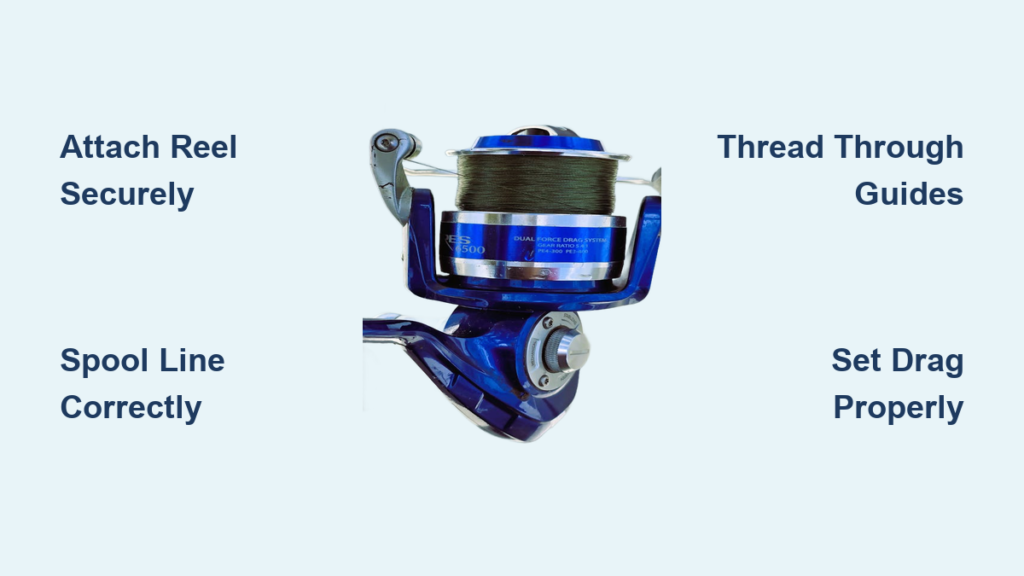
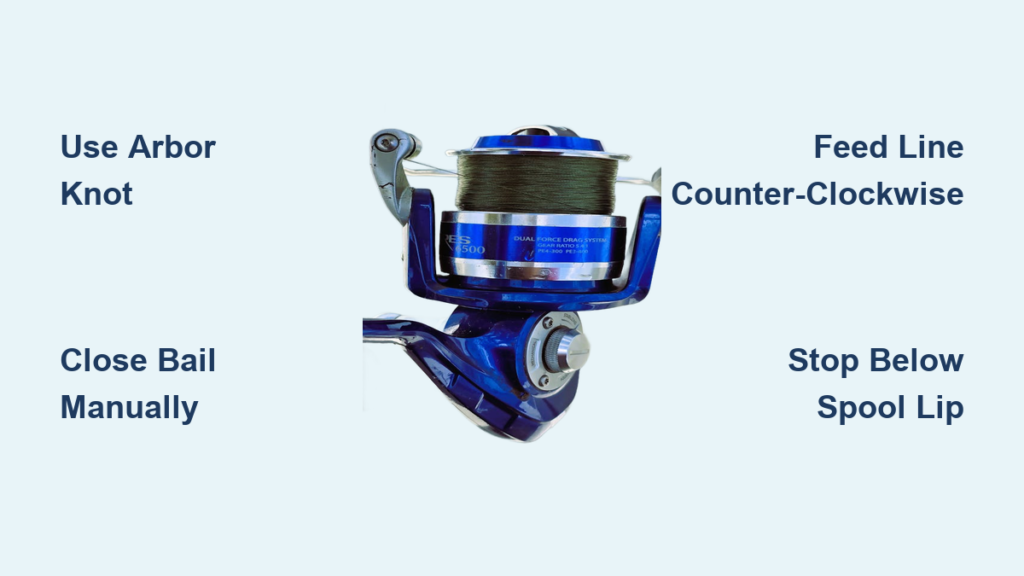
Spool Correctly
Avoid pre-loading twist during initial setup.
• Match rotation: Line should unspool in the same direction the reel turns.
• Use a spooling tool or helper to apply light back pressure.
• Manually close the bail after casting. Do not rely on auto-close.
Warning: Spooling backward introduces twist from the start.
Choose Low-Memory Line
Upgrade to lines designed to resist curling.
• Berkley Trilene XL: Known for “hardly any line memory.”
• Copolymer blends: Better than standard monofilament.
• Braided line (PE): Zero memory. “Replace it with braid…” – OkobojiEagle
Trade-off: Fluorocarbon has very high memory. Condition often or replace frequently.
Use Swivels With Spinning Lures
Spinning lures cause twist. A swivel prevents rotational transfer.
• Use ball-bearing swivels for casting.
• Use bead chain swivels for trolling.
• Attach swivel between lure and line connection point.
When to Replace Your Fishing Line

Some curls cannot be fixed. Know when replacement is cheaper than repair.
Replace If:
• Coils persist after multiple fix attempts.
• Line shows nicks, frays, or discoloration.
• It has been on the reel over 6 months (mono) or 12 months (fluoro).
• Knots keep failing or line snaps under light load.
• You notice brittleness or flattening.
Angler Consensus: “Change the line… it’s cheap.” – Catt, BiteFiend
Line Lifespan Guidelines
| Line Type | Replace Every | Notes |
|---|---|---|
| Monofilament | 3 to 6 months | Degrades fast in UV and heat |
| Fluorocarbon | 6 to 12 months | High memory, brittle over time |
| Copolymer | 6 to 9 months | Balanced performance |
| Braided (PE) | 1 to 3 years | Replace only if frayed |
Quick Field Fixes for Curly Fishing Line
When you are on the water without tools, these methods work anywhere.
Stretching Method Summary
- Attach any weight to the line.
- Walk backward while feeding line out.
- Hold tension for 15 seconds.
- Reel in slowly while maintaining pull.
- Repeat until coils disappear.
Conditioner Quick Application
- Apply line conditioner to a cloth.
- Pull line through while walking.
- Reel in slowly and let dry.
- Fish normally after 30 minutes.
Common Mistakes to Avoid When Fixing Curly Line
These errors waste time and can damage your line further.
Do Not Overpull the Line
Stretching helps, but excessive force weakens the line permanently. Never pull beyond 75% of breaking strength. Avoid yanking against immovable objects.
Do Not Ignore Spool Direction
Spooling line in reverse builds in twist from day one. Check reel rotation by turning the handle and observing which way the spool spins. Match the fill spool’s unwind direction exactly.
Do Not Skip the Swivel
Using no swivel with a spinner is like driving with flat tires. Always use a bead chain swivel for trolling and snap swivels for casual casting.
Do Not Rely on Auto-Bail
Automatic bail closure introduces twist. Always close the bail manually after each cast on spinning reels.
Frequently Asked Questions About Fixing Curly Fishing Line
Does stretching damage fishing line?
Stretching does not damage line when done correctly. Stay below 75% of breaking strength. Hold tension for 15 seconds rather than pulling sharply.
What causes fishing line to curl immediately after spooling?
Spooling against the reel rotation direction causes immediate curling. The line inherits twist from the winding process. Always match the spool unwind direction to your reel’s rotation.
Can line conditioner fix severe memory?
Line conditioner reduces memory but cannot fix severe coiling. Use stretching techniques first, then apply conditioner to maintain results.
Is braided line better for preventing curl?
Braided line has zero memory and rarely twists. It is the best choice if curl is a constant problem. However, braid lacks the stretch of monofilament and can be more visible to fish.
How often should I replace monofilament line?
Replace monofilament every 3 to 6 months with regular use. Replace sooner if fishing frequently in sunlight or heat. Check for nicks before each trip.
Does dragging line behind a boat work for fluorocarbon?
Dragging behind a boat works better for monofilament than fluorocarbon. Fluorocarbon is stiffer and responds better to stretching and conditioner treatment.
Key Takeaways for Fixing Curly Fishing Line

Curly fishing line is common, but it is never permanent when you apply the right fix. Line memory responds to stretching with weights or tree pull methods. Line twist requires water resistance from boat dragging or swivel prevention. Always diagnose correctly first. Coils indicate memory; wraps around rod guides indicate twist.
Prevention beats fixing curly fishing line every time. Apply line conditioner after every trip. Spool correctly by matching rotation direction. Use swivels with any spinning lure. Replace monofilament every 3 to 6 months and fluorocarbon every 6 to 12 months.
When in doubt, simply replace the line. It is inexpensive, eliminates risk, and gets you back to fishing fast. Regular maintenance keeps your line straight, strong, and ready to detect every bite.