Choosing the right fishing hook size can mean the difference between landing a trophy fish and watching it swim away. Many anglers struggle with how to determine fishing hook size, especially since hook sizing follows a dual-numbering system that flips logic depending on the size range. A higher number does not always mean bigger. This confusion leads to poor bait presentation, missed hooksets, and lost fish.
The key lies in understanding two systems: standard sizes (#32 to #1) and aught sizes (1/0 to 20/0+), each following opposite rules. Beyond numbers, the actual hook gap, shank length, and wire thickness matter more than the label. Whether you are targeting bluegill with a #6 hook or battling a tuna on 9/0, matching the hook to your bait and fish species is critical.
Decode the Hook Sizing System
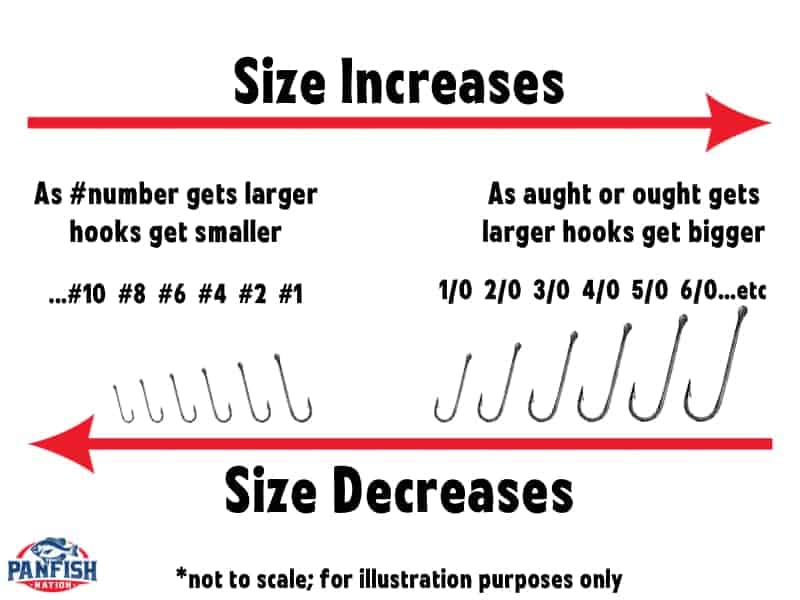
Fishing hook sizes follow a split logic that confuses even seasoned anglers. There are two distinct systems: one for small-to-medium hooks and another for large-to-jumbo ones. Knowing how they work is the first step in determining the right size.
Standard Sizes: Smaller Numbers, Bigger Hooks
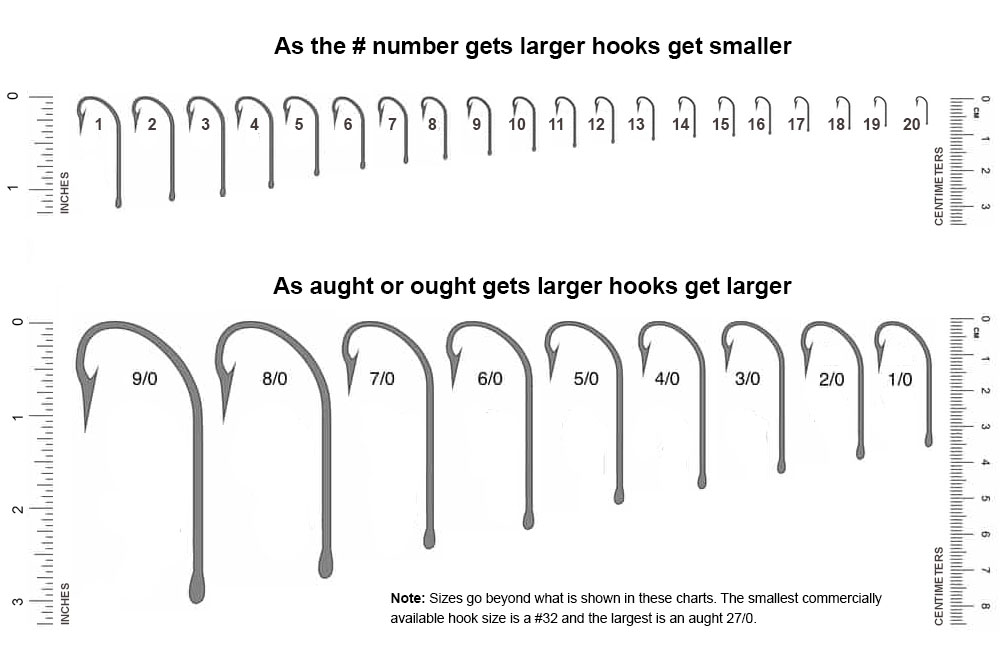
The standard size system ranges from #32 (tiniest) to #1 (largest in this group). The rule here is counterintuitive: the higher the number, the smaller the hook. A #10 hook is smaller than a #4 hook. A #1 is larger than a #2, #6, or #10. No #0 exists in this system. The sequence jumps from #1 directly to 1/0.
This system works backward from intuition. Many beginners assume a #12 hook must be huge, but it is actually tiny, ideal for threading a wax worm for perch. The most versatile range for bass and walleye sits between #8 to #1, offering balance between strength and subtlety.
Quick sizes to remember for common freshwater fishing:
-
8 to #14: Tiny worms, finesse baits for crappie, perch, bluegill
-
4 to #1: Nightcrawlers, tubes, small plastics for bass, walleye, trout
-
1 is the largest in this system before transitioning to aught sizes
Aught Sizes: Bigger Numbers, Bigger Hooks
The aught system starts at 1/0 (pronounced “one aught”) and extends up to 20/0 or more for trophy species. Here the rule is more intuitive: the higher the number before the slash, the larger the hook. A 6/0 is much larger than a 2/0.
After #1 comes 1/0. There is no mathematical link between the systems, just a sequential transition to larger sizes. A 2/0 hook is not twice the size of a 1/0. The aught system is sequential, not proportional.
These oversized hooks handle big baits and powerful fish. Saltwater anglers routinely use 7/0 to 12/0 for tuna and shark, while freshwater giants like alligator gar may require 10/0 or larger.
Visual progression from smallest to largest:
32 → #20 → #10 → #4 → #1 → 1/0 → 3/0 → 6/0 → 10/0 → 15/0 → 20/0
Measure the Hook Gap Accurately
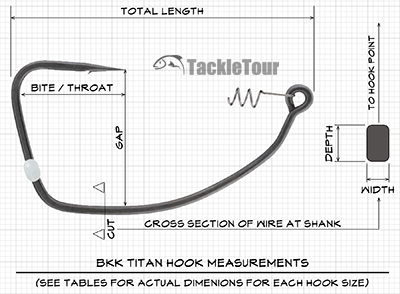
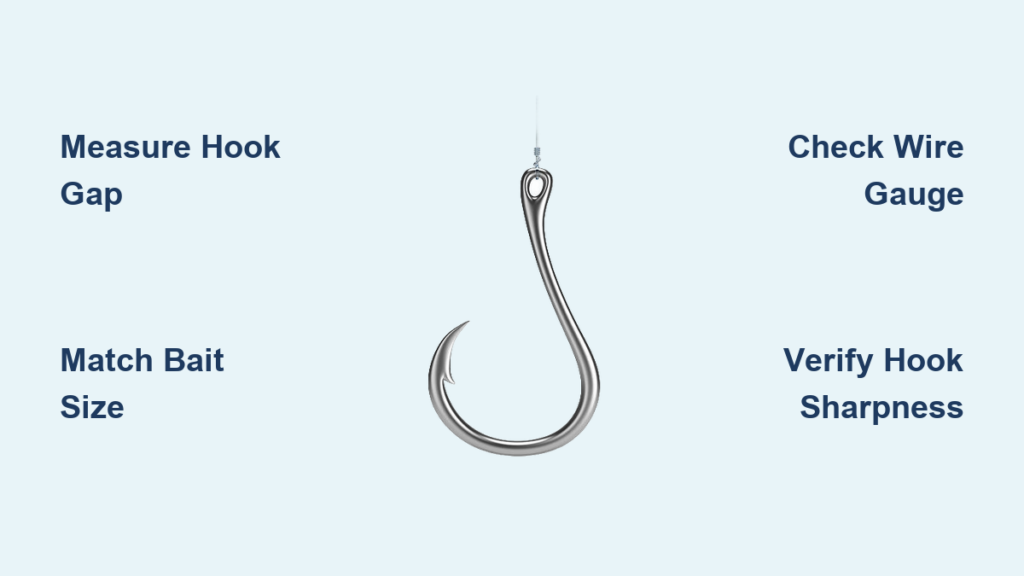
Since hook sizes vary by brand, measuring the gap (also called gape) is the most reliable way to determine effective size. This single dimension tells you whether the hook will fit in your target fish’s mouth and whether it can penetrate properly.
What Is Hook Gap
The gap is the horizontal distance from the inside of the shank to the tip of the point. This measurement determines how much “bite” the hook can take. It is the most critical dimension for anglers because it directly affects hook-set success.
Why it matters: A wide gap is essential for bulky soft plastics. If the lure blocks the point, the hook will not set. You will feel the hit but fail to connect.
Step-by-Step Measurement Process
Place the hook on a flat surface. Align calipers from the inner edge of the shank to the tip of the point. Record the measurement in millimeters. Compare to known standards:
-
6 hook: approximately 8 to 9 mm
-
1 hook: approximately 11 to 12 mm
- 3/0 hook: approximately 16 to 18 mm
- 6/0 hook: approximately 24 to 26 mm
Two 3/0 hooks from different brands may differ by 3 mm or more in gap. Always verify with calipers when precision matters for your fishing setup.
Check Shank Length and Wire Gauge
Beyond gap, shank length and wire thickness affect performance, durability, and bait action. These dimensions matter as much as the number on the package.
Shank Length: Match to Bait
The shank is the straight portion from the eye to the start of the bend. Short shank hooks offer a compact design and stronger construction under pressure. They work best for jigs, finesse rigs, and fish that dig into cover like bass and snapper.
Long shank hooks provide extra length between the eye and the bend. This design prevents toothy predators from biting through the line. They work best for pike, barracuda, mackerel, and live bait rigs.
On a 4-inch soft plastic, a long shank can stiffen movement and reduce natural action. Use short shank hooks for more realistic bait presentation.
Wire Gauge: Light vs Heavy Duty
Light-wire hooks have thinner metal that penetrates easily. They are ideal for trout, crappie, live bait, and clear water scenarios where a less visible hook improves bites.
Heavy-wire hooks are thicker and stronger. They resist bending under pressure from large fish or when fishing heavy cover. They are ideal for muskie, catfish, pike, and saltwater species.
Using a light-wire hook in heavy timber risks straightening out when a big bass runs under a log. Always match wire strength to your target species and fishing environment.
Match Hook Size to Target Species
Never choose a hook based on number alone. First match it to bait size, then to fish mouth size. Here is what works in real-world conditions.
Freshwater Species Guide
Sizes #8 to #14 work best for small worms and finesse baits targeting crappie, perch, and bluegill. Sizes #4 to #1 handle nightcrawlers, tubes, and small plastics for bass, walleye, and trout.
Sizes 1/0 to 4/0 suit large worms, creature baits, and live shiners for largemouth bass, catfish, and pike. Sizes 5/0 to 8/0 handle heavy cover and big swimbaits for muskie and flathead catfish.
Sizes 9/0 and up work for giant bait and trophy catfish or alligator gar.
Saltwater Species Guide
Sizes #2 to 3/0 work for shrimp, small jigs, and inshore lures targeting redfish, trout, and snook. Sizes 4/0 to 6/0 handle live bait and medium trolling for striped bass, king mackerel, and tarpon.
Sizes 7/0 to 10/0 suit large bait and offshore trolling for tuna, shark, and grouper. Sizes 12/0 to 20/0 handle giant bait and deep drop fishing for swordfish, marlin, and Goliath grouper.
Saltwater demands corrosion-resistant hooks. Rinse your hooks in freshwater after every saltwater trip to prevent rust and extend their life.
Choose the Right Hook Type for Your Technique
Size is not everything. Hook style changes how it functions. Pick the right type for your method.
J Hooks: The All-Around Performer
The classic J shape requires an active hookset. These hooks offer high hook-up rates and work for bass, walleye, trout, and snapper. They range from #8 to 10/0+ and suit Texas rigging, live bait, and topwater lures.
Circle Hooks: Self-Setting and Catch-and-Release Friendly
Circle hooks have a point that curves toward the shank. They set in the corner of the mouth, reducing gut hooking. They work best for catfish, tuna, tarpon, and live bait rigs.
The technique differs from J hooks. Do not jerk. Let the fish take the bait and reel steadily to let the circle do its work.
Treble Hooks: Triple the Chance
Treble hooks have three points on one shank. Size is based on arm length. A #4 treble is roughly equivalent to a #4 J hook. They work best for crankbaits, spoons, and topwaters targeting pike, muskie, and bass.
The drawback is they are harder to remove. Many anglers replace treble hooks with single hooks when practicing catch-and-release.
Offset Worm Hooks: Weedless Wonders
Offset worm hooks have a bent shank for Texas rig presentations. They keep soft plastics in place and slide through vegetation. Common sizes range from 3/0 to 5/0. They work best for flipping, pitching, and heavy cover situations.
Compare Brand Sizing Differences
There is no universal standard for hook dimensions. A 3/0 from Gamakatsu may not match a 3/0 from Eagle Claw. Always compare physical dimensions when precision matters.
Gamakatsu hooks are known for ultra-sharp points and thin wire for high penetration. Mustad hooks offer durability and consistency, great for wacky rigs. Owner hooks feature bright finishes and good visibility in clear water.
VMT hooks are sticky sharp with strong hold. Eagle Claw and Lazer Sharp maintain consistent internal sizing across their product lines, making selection more predictable.
Download and print manufacturer size charts for side-by-side comparison. Lay the hook over a printed scale chart to compare exact dimensions visually.
Test Hook Sharpness Before Use
Even the perfect size fails if the point is dull. Use the thumbnail test to check sharpness.
Gently drag the hook point across your thumbnail. If it slips, the hook is dull. If it bites or catches, the hook is sharp.
Dull hooks deflect off hard mouths like carp and catfish. They also fail to penetrate thick lips. Sharpen hooks with a hook file using light, one-direction strokes. Never saw back and forth.
Avoid Common Hook Size Mistakes
Using the wrong size leads to lost fish. Here is what to watch for.
Hook Too Large
Small fish cannot fit a large hook in their mouth. The bait sinks or moves unnaturally. It becomes harder to set without strong rod action.
A 4/0 hook on a #6 crankbait ruins balance and action. The lure cannot perform as intended.
Hook Too Small
A small hook pulls out during the fight. It increases gut hooking risk and lowers survival rates in catch-and-release fishing.
A #10 hook might hold a 2-inch minnow, but it will not stop a 5-pound bass from shaking free.
The golden rule: match hook to bait first, then to fish.
Maintain Hooks for Peak Performance
Proper care keeps hooks effective season after season.
Prevent Rust
Saltwater use requires rinsing in freshwater immediately. Store hooks in dry, sealed containers. Choose nickel-plated, Teflon-coated, or stainless steel hooks for saltwater environments.
Safe Disposal
Snip the point with wire cutters before disposing. Store in a pill bottle or tackle box compartment. Look for fishing gear recycling programs in your area.
Consider dissolvable hooks as an eco-friendly alternative for catch-and-release situations.
Frequently Asked Questions About Determining Fishing Hook Size
What is the difference between hook sizes #1 and 1/0?
In the standard system, #1 is the largest size before transitioning to aught sizes. A 1/0 is simply the next size up from #1. They are not mathematically related. A 1/0 is slightly larger than a #1 hook.
How do I measure the gap on a fishing hook?
Use calipers or a millimeter ruler. Measure the horizontal distance from the inside of the shank to the tip of the point. This is the most critical measurement for determining whether a hook will fit in a fish’s mouth.
Can I use the same hook size for freshwater and saltwater fishing?
You can, but saltwater demands stronger, corrosion-resistant hooks. Rinse all hooks in freshwater after saltwater use. Consider upgrading to stainless steel or coated hooks for marine environments.
Why does my hook not set on big fish?
A dull hook reduces penetration. The gap may be too narrow for the bait you are using. Your rod power may be insufficient for the hook size. Check sharpness, verify gap matches your bait, and ensure your tackle is appropriately matched.
What hook size should I use for bass fishing?
For bass with small soft plastics, use #4 to #1. For larger plastics and live bait, use 1/0 to 4/0. For flipping heavy cover, use 3/0 to 6/0 with heavy wire.
Do all brands size hooks the same way?
No. There is no universal standard. A 3/0 from one brand may differ in gap, shank length, or wire thickness from another brand. Always compare physical dimensions when precision matters.
Key Takeaways for Determining Fishing Hook Size

You now understand how to determine fishing hook size, but applying it like a pro requires practice. The dual-numbering system (standard and aught sizes) follows opposite logic. Remember: in standard sizes, higher numbers mean smaller hooks. In aught sizes, higher numbers mean larger hooks.
The gap is the most critical measurement. It determines whether the hook fits the fish and whether it can penetrate. Measure with calipers and compare to manufacturer charts for accuracy.
Match hook to bait first, then to fish. A hook that is too large ruins bait action. A hook that is too small risks losing fish. Consider shank length for bait compatibility and wire gauge for target species strength.
Start with a core set covering #6, #4, #2, #1 for panfish and small bass, 1/0 through 4/0 for bass and walleye, and 5/0 through 8/0 for pike and inshore saltwater. This covers 90% of fishing scenarios.
Test your rigs before casting. Insert the hook into the lure and verify the point exits cleanly. Check shank alignment. When in doubt, refer to manufacturer charts and experiment with different setups on the water. Mastering hook size turns more strikes into landed fish, and that is what fishing is all about.