Water clarity is one of the most critical yet overlooked factors in fishing success. It directly affects how fish see, feed, and react to lures. Knowing how to determine water clarity for fishing allows you to choose the right techniques, colors, and depths, giving you a significant edge on the water. Whether you’re targeting bass, crappie, or catfish, understanding visibility conditions helps you match your presentation to what fish can actually detect.
You don’t need a lab to assess clarity. With simple visual cues, a dropped lure, or even smartphone apps, you can quickly classify water as clear, stained, or muddy and adjust your strategy accordingly. This guide breaks down proven methods used by biologists and pro anglers, from the Secchi disk to real-time satellite tools, so you can make informed decisions every time you launch.
Use the Secchi Disk Method

The Secchi disk is the gold standard for measuring water clarity in scientific and fisheries management settings. It provides an objective, repeatable depth measurement that correlates directly with visibility.
How to Use a Secchi Disk
Lower a black-and-white 8-inch disk into the water on a marked rope. Watch from above until the contrast between quadrants fades into gray. Record the depth where it disappears. This is your Secchi depth. For accuracy, lower and raise slightly to confirm the vanishing point.
This number gives you a precise benchmark. A reading of 10+ feet means clear water. Under 3 feet indicates turbid, low-visibility conditions.
Make Your Own Secchi Disk
No need to buy one. Use a paint can lid. Paint opposite quarters black, the others white. Attach a screw eye and measured line. Even homemade, this tool delivers reliable data you can track over time, perfect for comparing pre- and post-rain conditions.
Test Lure Visibility Depth

If you don’t have a Secchi disk, your fishing gear doubles as a clarity tester. This field-proven method mimics the Secchi principle using a brightly colored lure.
Drop a White Jig to Measure Clarity
Tie on a white jig or chartreuse spinnerbait. Slowly lower it into the water while watching from the surface. Note the depth where color and shape blur or vanish. Measure using line markers, rod guides, or a tape measure.
You can lower your bait, and when you no longer see it, measure the distance. There is your Secchi disk.
Apply VanDam’s Lure Visibility Scale
Pro angler Kevin VanDam uses this practical system. Clear means you can see the lure 18+ inches deep. Stained means visible 6-18 inches. Muddy means less than 6 inches of visibility.
This quick classification helps you immediately adjust lure choice and technique.
Observe Visual Cues and Hand Tests
Experienced anglers assess clarity in seconds using natural indicators. No tools required.
Check Your Feet When Wading
Clear water lets you see your toes and rocks sharply at waist depth. Stained water makes your feet look fuzzy below knee level. Muddy water means you cannot see your feet past your ankles.
This instant test works whether you’re bank fishing or wading shallow flats.
Look for Bottom Structure
Can you see rocks, weeds, or gravel at 3-5 feet? Yes means clear to slightly stained. No means likely muddy or heavily stained.
Anchor and peer down. If you can distinguish individual stones at 10 feet, you are in high-clarity conditions ideal for sight-based presentations.
Use the Hand Submersion Test
Hold your hand underwater up to the wrist or elbow. At what depth do fingers lose definition? Less than 12 inches means you are in dirty water. Switch to vibrating lures.
These observations take seconds but inform every decision from lure color to retrieve speed.
Leverage Satellite Apps and Technology
Modern tools let you assess water clarity before you launch, saving time and fuel.
Track Stained Water with Deep Dive App
The app uses satellite imagery to map stained runoff bands in lakes and reservoirs. It shows movement of muddy inflows after rain. It displays 30 days of historical data, perfect for spotting trends. It integrates with Navionics for navigation and hazard avoidance.
The water clarity map is a game changer for bass fishing.
Limitations of Tech Tools
Cloud cover delays image updates. The app does not distinguish tannin-stained from sediment-laden water. Always verify with on-water observation.
Use apps for pre-trip planning, not final decisions.
Differentiate Stained vs. Muddy Water
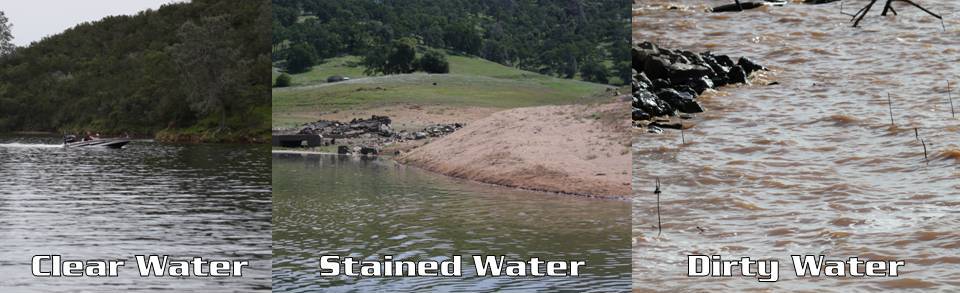
One of the biggest mistakes anglers make is confusing color with clarity. They are not the same.
Stained Water: Colored but Clear
Stained water is caused by tannins from decaying leaves and vegetation. It appears tea-colored, amber, or brown. Often it has 2-4 feet of visibility, so fish can still see well. It is common in swampy, forested, or spring-fed systems.
You can have clear water with a brown stain to it.
In stained water, fish rely on both sight and vibration. Use moderate-contrast lures with some noise.
Muddy Water: Cloudy and Opaque
Muddy water is caused by suspended silt, clay, or boat traffic. The water is thick, brown, and cloudy. Lure vanishes instantly. Visibility is often under 1-2 feet. It results from recent rain, wind, or high boat activity.
Here, fish depend almost entirely on lateral line and scent. Go loud, dark, and close.
Key Rule: Stained Is Not Muddy
Stained means brown but clear enough to see a few feet down. Muddy means brown and cloudy with zero visibility. Misidentifying them leads to wrong lure choices. Always test visibility before assuming.
Classify Clarity by Visibility Range
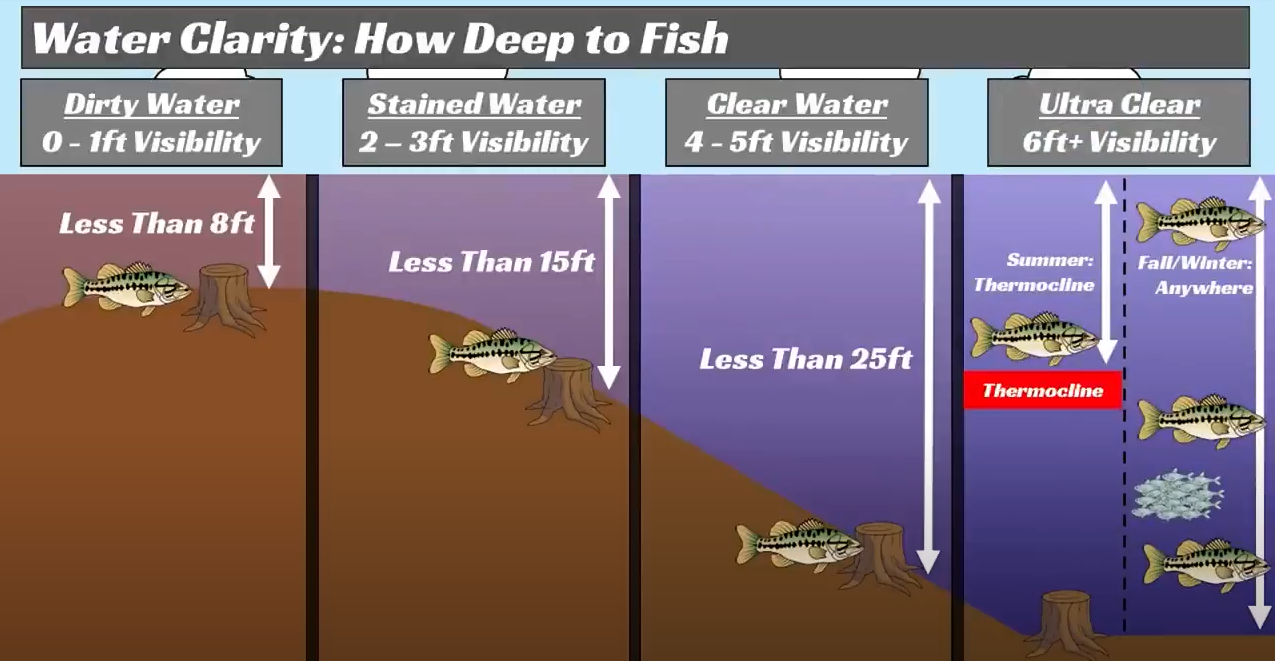
Use this depth-based system to standardize your assessments.
| Clarity Type | Visibility Depth | Fishing Implication |
|---|---|---|
| Crystal Clear | 20+ feet | Finesse lures, natural colors, deep structure |
| Clear | 10-20 feet | Sight-based tactics, subtle presentations |
| Slightly Stained | 6-10 feet | Balanced vibration and appearance |
| Stained | 2-4 feet | High-contrast colors, added vibration |
| Muddy/Turbid | Under 3 feet | Loud lures, slow retrieves, shallow focus |
Adjust expectations based on region. In Michigan, 15 feet may be clear. In Louisiana, 3 feet of stained water might be considered good. Local knowledge matters. Calibrate your scale to the lake.
Adjust Fishing Strategy by Clarity
Your lure, depth, and technique must match the clarity level.
Choose Lures Based on Visibility
In clear water, use green pumpkin, watermelon, and silent crankbaits. Natural looks prevent spooking. In stained water, use black/blue, chartreuse/white, and rattling crankbaits. Contrast and vibration attract. In muddy water, use Colorado spinnerbaits, dark jerkbaits, and jigs with rattles. Lateral line detection dominates.
Add red accents. Hooks, eyes, and dots trigger strikes. Fish perceive red as blood or distress.
Modify Retrieve and Noise
In clear water, use slow, subtle, quiet retrieves. In stained to muddy water, add rattles, wide wobble, or blades to displace water. In heavy mud, slow down. You want the fish to find you.
Lures like chatterbaits, buzzbaits, and rattling crankbaits excel in low visibility.
Change Fishing Depth
In muddy water, focus top 2-3 feet over deep structure. In clear water, target deeper ledges, drop-offs, and shaded cover. In transition zones where clear meets stained, these are prime ambush points.
Use Scent in Low Visibility
Even non-catfish species respond to scent when they cannot see. Apply Thump Gel or Crappie Magnet. Use scented soft plastics or dip baits.
Scent is not just for catfish anymore.
Understand Species-Specific Responses
Fish react differently to clarity based on feeding style.
Sight Feeders: Bass, Crappie, Trout
These fish rely on vision in clear water. They become cautious, so use finesse tactics. In muddy water, shift to vibration and sound. They move shallower because baitfish stay in brighter upper layers.
The muddier the water, the shallower you should fish.
Catfish: Thrive in Turbidity
Catfish use barbels and full-body taste buds to locate food. They feed aggressively in zero-visibility conditions. Increase activity when other fish shut down.
While sight feeders wait out muddy conditions, catfish are strapping on their feed bags and are on the move.
Reassess Clarity Frequently
Water clarity is dynamic, not static. Check every 2-3 hours or when moving locations. Wind, rain, boat traffic, and sunlight all alter visibility. A clear cove at dawn may turn muddy by noon.
Stay flexible. What worked this morning may fail by afternoon.
Final Thoughts on Mastering Water Clarity for Fishing
Water clarity is not just about how the water looks. It is about how fish experience their environment. By learning how to determine water clarity for fishing, you align your tactics with the fish sensory world.
The most important points to remember are these. First, use simple tools like a Secchi disk, dropped lure, or hand test to measure actual visibility depth. Second, always distinguish between stained water (colored but visible) and muddy water (cloudy with zero visibility). Third, match your lure choice, noise level, retrieve speed, and fishing depth to actual conditions.
Whether you use a $5 paint lid or a satellite app, the goal is the same. Put the right bait in front of the fish in a way they cannot ignore. Start applying these methods on your next trip and watch your catch rates improve.
Frequently Asked Questions About Water Clarity for Fishing
What is the simplest way to test water clarity while fishing?
Drop a white lure into the water and note the depth where it becomes invisible. This mimics a Secchi disk and gives you an immediate visibility reading. A white jig or chartreuse spinnerbait works best for this test.
How do I tell the difference between stained and muddy water?
Stained water has color from tannins but maintains 2-4 feet of visibility. Muddy water is cloudy and opaque with less than 1-2 feet of visibility. Look at your feet when wading or watch your lure enter the water to tell them apart.
Does water clarity affect where fish hold in the water column?
Yes. In clear water, fish often hold deeper on structure and ledges. In muddy water, they move shallower, staying in the top 2-3 feet where light penetrates. Transition zones between clear and stained water are prime ambush areas.
What lure colors work best in muddy water?
Use high-contrast combinations like black/chartreuse, white/chartreuse, or add red accents. Loud lures with rattles, vibration, or wide wobble perform best because fish rely on lateral line detection rather than sight.
Can I use apps to check water clarity before my fishing trip?
Yes. Apps like Deep Dive use satellite imagery to show stained water bands and clarity variations across lakes. Check 30 days of historical data to see how rain and wind have affected conditions. Always verify with on-water observation.
How often should I reassess water clarity during a fishing trip?
Check clarity every 2-3 hours or whenever you move to a new location. Wind, rain, boat traffic, and changing light conditions can shift visibility quickly. What worked in the morning may not work by afternoon.