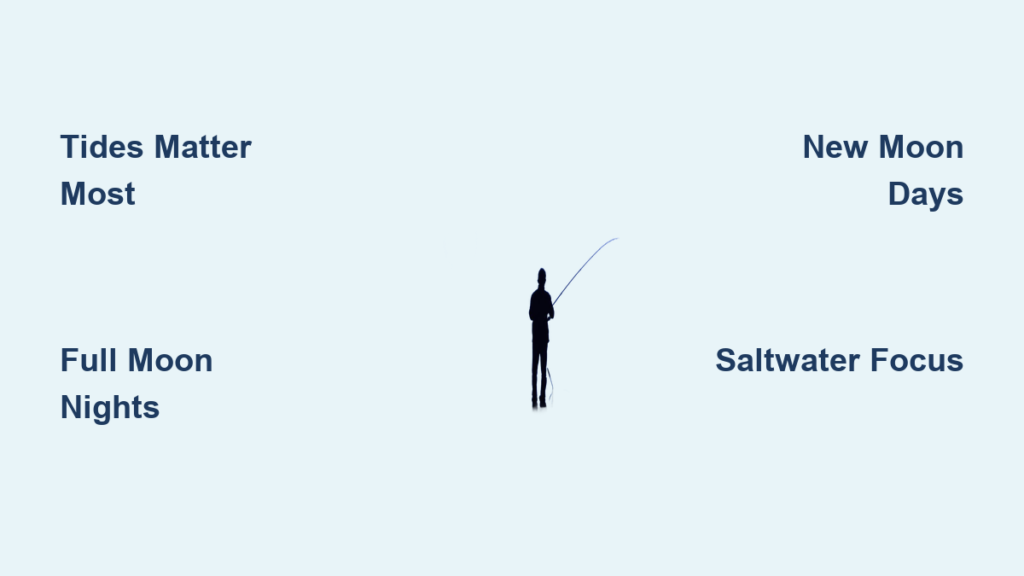
If you’ve ever planned a fishing trip around a full or new moon, you’re not alone. The idea that moon phase affects fishing has been passed down for generations, with anglers swearing by solunar charts and lunar calendars to predict the best bite times. But does the moon really influence fish behavior, or is it just folklore? While many believe the moon controls feeding patterns like clockwork, modern science paints a more nuanced picture. The truth is, moon phase can affect fishing, but not in the way most people think. Its real impact comes through tides, light levels, and species-specific behaviors, not mystical feeding urges. In this guide, you’ll learn what the research says, when the moon actually matters, and how to use lunar data without falling for myths.
Tidal Power: How the Moon Moves Water
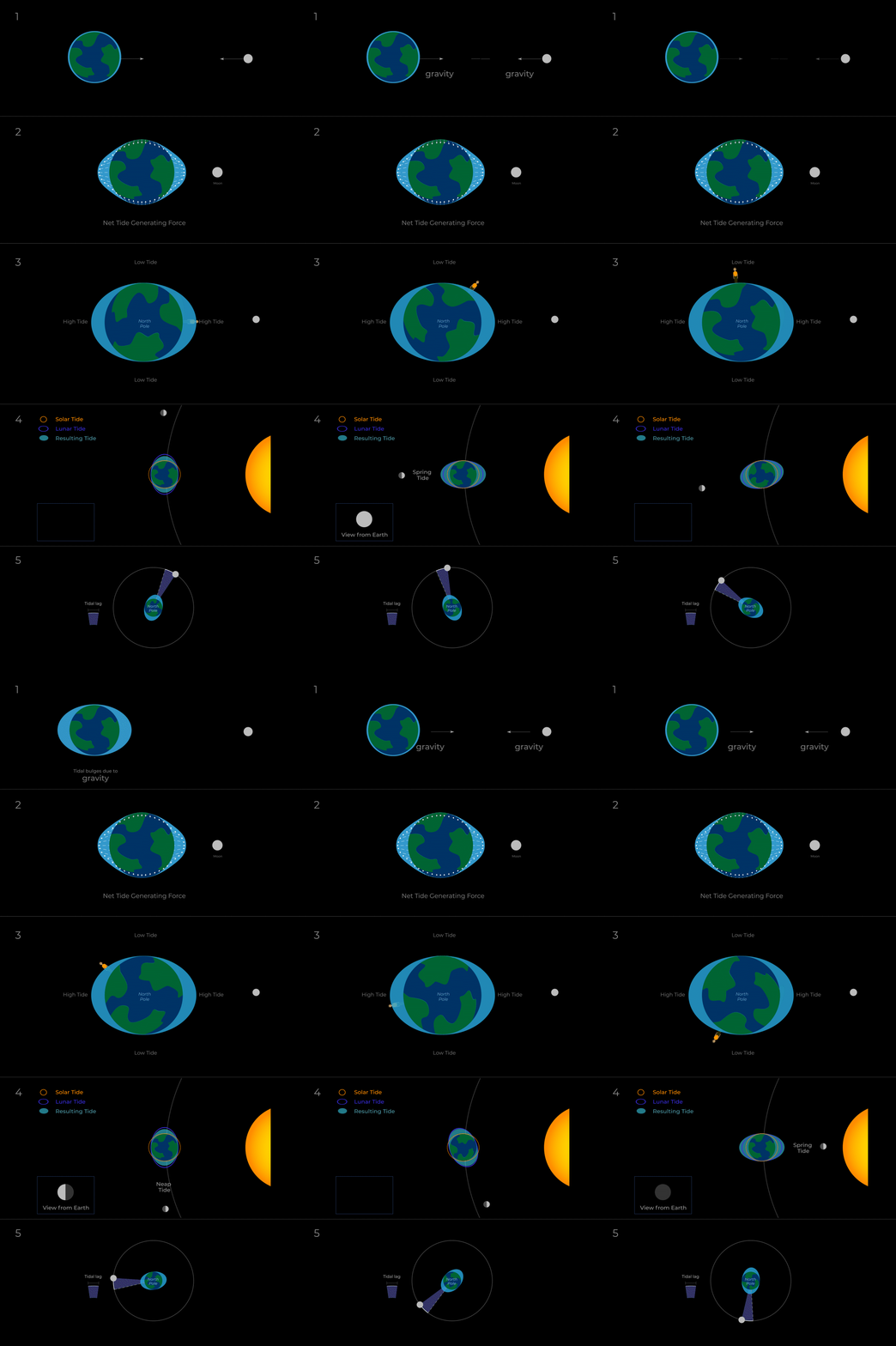
The moon’s greatest influence on fishing isn’t light or magic. It is gravity. As the moon orbits Earth, its gravitational pull creates tidal bulges, driving the rhythm of rising and falling water levels.
Spring Tides Boost Saltwater Fishing
During new and full moons, the sun and moon align in a phenomenon called syzygy, combining their gravitational forces to produce spring tides. These tides bring higher high tides, lower low tides, and stronger currents. For saltwater anglers, this means more water movement, which flushes baitfish from marshes, floods shallow flats, and pulls predators into feeding zones. Species like redfish, trout, and tarpon take advantage of expanded access to food-rich areas during these periods.
Neap Tides Reduce Feeding Opportunities
At first and last quarter moons, the sun and moon pull at right angles, canceling some of their tidal effects. This results in neap tides with minimal water movement, narrow tidal range, and weaker currents. With less current to stir up food and move bait, fish often become less active. Many experienced anglers avoid fishing during neap tides, especially in estuaries and flats where water flow is critical.
Why Tides Matter More Than Light
Fish do not care about the phase of the moon. They respond to what the moon does. The real trigger is not illumination. It is water movement. When tides surge, they carry nutrients and plankton, dislodge crustaceans and worms, and push schools of baitfish into ambush zones. Predators follow the food. So while anglers may credit the full moon bite, they are really benefiting from tidal energy, not lunar glow.
Solunar Theory: Myth or Useful Tool?

Since 1926, the solunar theory has shaped how many anglers plan their days. Proposed by John Alden Knight, it claims fish feed most actively during specific lunar periods each day.
What Are Solunar Periods?
Each day has four solunar phases. Two major periods last approximately two hours each, occurring when the moon is overhead at zenith or underfoot at nadir. Two minor periods last approximately one hour each, occurring at moonrise and moonset. The theory suggests peak feeding occurs when these periods align with dawn or dusk, especially during new or full moons.
Do Solunar Charts Actually Work?
Despite their popularity, scientific studies do not support solunar predictions in most cases. A 2023 study in SN Applied Sciences analyzed thousands of trout fishing reports and found no link between solunar periods and catch rates. Seven different solunar apps showed internal consistency but performed no better than random chance at predicting actual catches. Similarly, a largemouth bass study by Professor Mike Allen revealed 21% of trophy bass caught during new moon, 28% during full moon, and 49% during quarter moons. This even distribution suggests no significant lunar feeding peak.
Why Anglers Still Use Them
Even without scientific backing, many anglers report success using solunar charts. Effort bias may play a role, as anglers fish longer and harder on prime days, increasing odds of catching fish. Confirmation bias also contributes, as successes during full moons are remembered while failures are forgotten. Additionally, solunar peaks sometimes overlap with tide changes or low-light periods, which do affect fish. So while solunar theory may not be scientifically valid, it can still help anglers stay consistent and focused, as long as it is not the only tool in the box.
Moonlight’s Role in Nocturnal Feeding
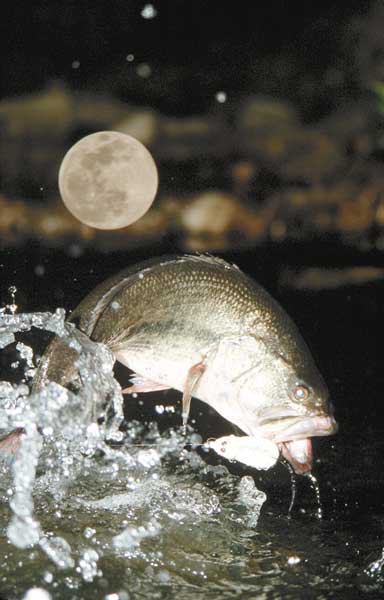
While gravity drives tides, moonlight influences behavior through visibility, especially at night.
Full Moon Extends Night Bites
Bright nights allow visual predators like bass, pike, and snook to hunt effectively after dark. With more light, they can spot surface lures, track baitfish movements, and ambush prey in shallow water. This explains why many anglers catch their largest bass at night during full moons. Topwater frogs, poppers, and wake baits become deadly under moonlight.
New Moon Favors Daytime Activity
When the moon is dark, fish rely less on sight and more on lateral line sensitivity and vibration detection. Some species shift feeding to daylight hours to compensate for poor night vision. Others, like snapper and grouper, become bolder at night during new moons, moving closer to shore or reefs where they feel safer in darkness.
Light Penetration Limits Effect
Moonlight only penetrates a few feet into water, especially in murky or deep lakes. In stained rivers or eutrophic reservoirs, its effect is minimal. So while full moons can boost night fishing on clear, shallow flats, they will not make a difference in turbid or deep-water environments.
Freshwater vs. Saltwater: Does the Moon Matter?
The answer depends entirely on your location.
Freshwater: Minimal Lunar Impact
In lakes, ponds, and rivers, the moon has almost no effect on fishing success. Why? There are no tides, so gravitational pull causes negligible water movement, often less than a millimeter. Weather overrides everything, as a cold front or sudden pressure drop will shut down bites regardless of moon phase. Local conditions dominate, as structure, cover, temperature, and oxygen levels are far more important. A major 2023 study of North American trout fisheries found zero correlation between lunar phase and catch rates. Whether it was new moon or full moon, the fish did not care.
Saltwater: Tides Rule the Game
In oceans, bays, and estuaries, the moon matters, but indirectly. Fish are not responding to the moon itself. They are reacting to tidal currents, flooding of flats and marshes, and baitfish migrations. During spring tides, rising water opens new feeding grounds. Redfish flood into marshes, flounder move onto spawning bars, and tarpon follow mullet into tidal creeks. So yes, fishing improves around full and new moons, but because of tides, not telepathy.
Species-Specific Lunar Responses

Not all fish react the same way to moon phases. Some show clear patterns. Others could not care less.
Tuna: Avoid Light, Go Deep
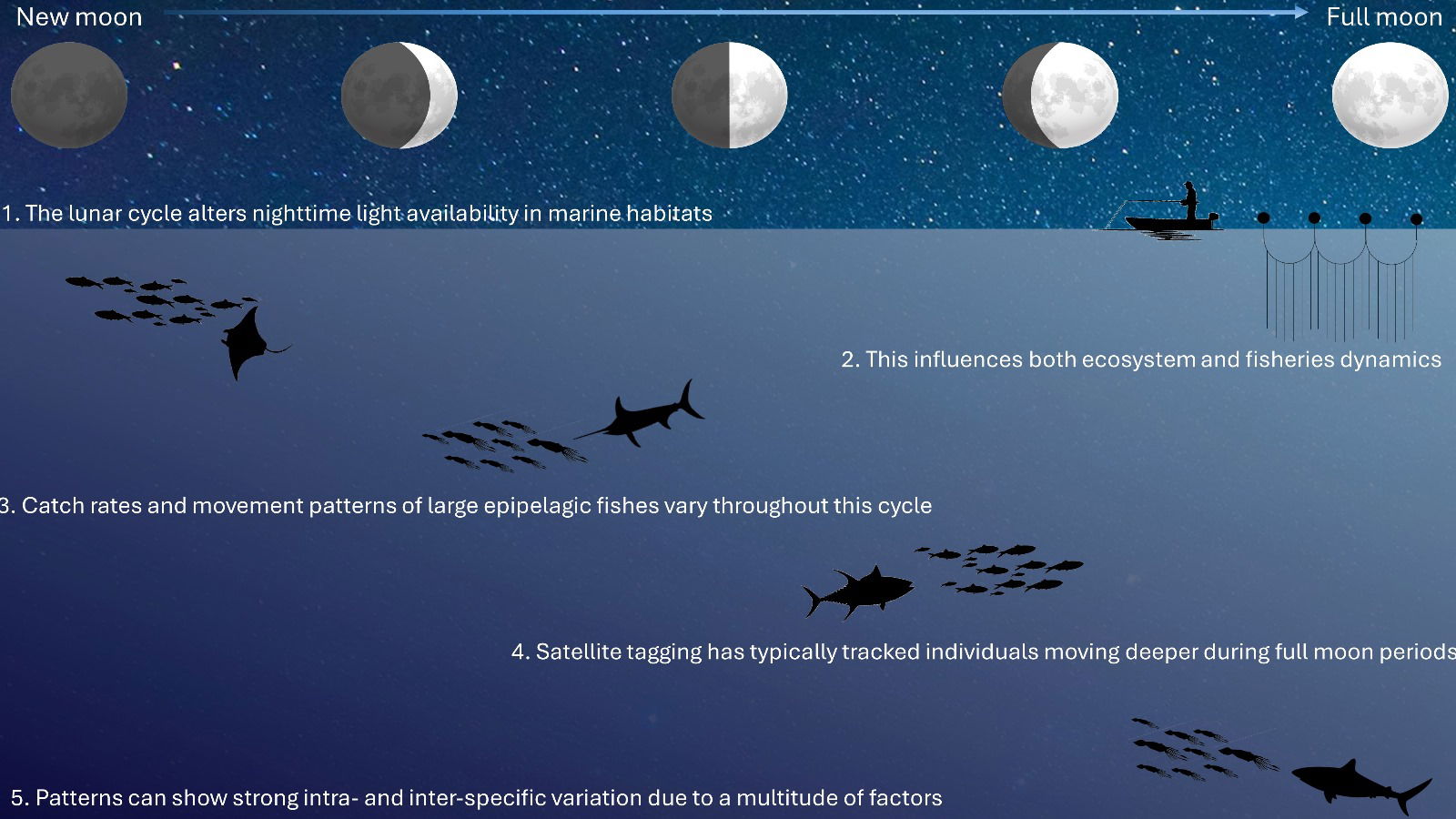
A review of 190 marine studies found that 51% of tuna species move deeper as moonlight increases. They likely avoid bright nights to stay hidden from predators or reduce energy use. So if you are targeting tuna, new moon or darker nights may offer better results.
Sharks: Mixed Reactions
Most sharks show increased activity during full moons, but responses vary. Bull sharks, Galapagos sharks, oceanic whitetips, and largetooth sawfish move into shallower waters under bright moons. Others remain deep or show no pattern. This suggests some species use moonlight to hunt while others avoid exposure.
Swordfish: Shine On, Catch More
Swordfish are an exception, as catch rates increase with lunar illumination. They feed near the surface at night, and moonlight helps them see prey. It may also make lures or baits more visible. So for night swordfishing, full moon equals better odds.
Spawning Cycles Tied to Moon
Some species time reproduction to moon phases. Corals, snappers, grunts, and certain tuna spawn around full moons. Tidal currents help disperse eggs and larvae. While this does not mean easier catches, it can concentrate fish in specific areas temporarily, offering a narrow window for anglers.
When Moon Phase Actually Matters
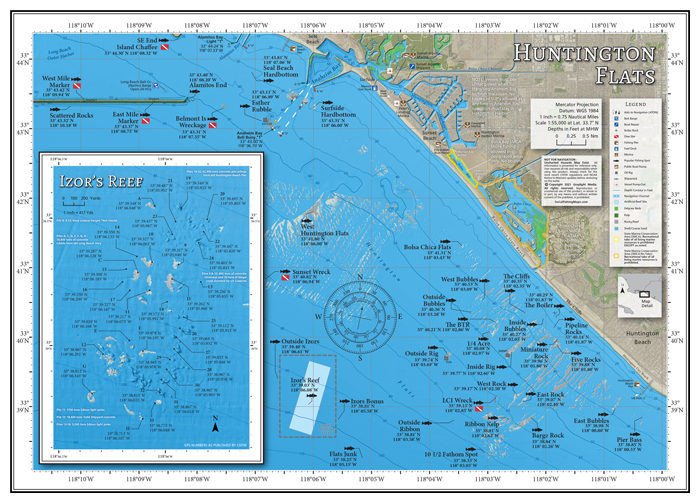
Despite limited scientific support, there are real situations where tracking the moon improves your odds.
1. Coastal Flats and Marsh Fishing
On shallow flats, a few inches of extra water can mean the difference between wading and being stranded. During spring tides, high water covers sandbars, grass beds, and oyster reefs, allowing fish to roam freely. Plan your trip so high tide coincides with dawn or dusk for maximum action.
2. Night Fishing in Clear Water
In clear, shallow environments like Florida backwaters or Caribbean flats, moonlight extends feeding windows. During full moon, target nighttime topwater bites. During new moon, switch to vibrating jigs or scent-based baits. Adjust your tactics based on light, not myth.
3. Predicting Access and Safety
Extreme tides during new and full moons pose real dangers. Water can rise dramatically in places like the Bay of Fundy. Anglers get trapped on sandbars or rocks. Currents become dangerously strong. Always check local tide forecasts and avoid isolated spots during peak flood stages.
What Really Controls Fishing Success?
If the moon is not the key, what is? Multiple studies show that other factors outweigh lunar influence every time.
Weather and Barometric Pressure
Falling pressure before a storm often triggers feeding. Cold fronts shut down bites for days. Wind direction affects bait movement and casting efficiency. A stable day during a quarter moon often outperforms a stormy full moon.
Water Temperature
Fish are cold-blooded. Their metabolism, spawning, and feeding depend on water temp. Bass spawn at 60 to 65 degrees Fahrenheit. Walleye bite best at 45 to 55 degrees. Trout thrive in 50 to 60 degrees. These windows align loosely with spring full moons, but it is temperature, not the moon, that drives the behavior.
Local Habitat Knowledge
The best predictor of success is knowing where fish live. Submerged logs, drop-offs, weed edges, and current breaks attract fish year-round. Understanding daily movement patterns beats any lunar chart. Focus on structure, cover, and food sources, not celestial events.
How to Use Moon Phases Wisely
You do not have to ignore the moon. Just use it correctly.
1. Treat It as One Tool
Think of lunar data like a weather app: helpful, but not definitive. Combine moon phase with tide tables, wind forecasts, water temperature readings, and local fishing reports. This gives you a complete picture.
2. Track Tides, Not Just Phases
Instead of asking is it full moon, ask when is high tide, how strong is the current, and will the water cover the flat I want to fish. Tide timing matters more than lunar phase alone.
3. Adjust Lure Selection by Light
During full moon nights, use topwater lures, shallow crankbaits, or glow jigs. During new moon days, try rattling crankbaits, scented soft plastics, or slow-rolled spinners. Match your gear to visibility conditions.
4. Keep a Fishing Journal
Record moon phase, tide stage, weather, water temp, lures used, and number and size of fish caught. Over time, you will see what really works for your waters, not someone else’s theory.
Safety Considerations During Extreme Tides
Fishing during new and full moons can be dangerous if you are unprepared. Rising water can cut off escape routes. Strong currents make wading risky. Rip tides form near inlets and jetties. Always check local tide charts, fish with a buddy, carry a VHF radio or phone in a waterproof case, and avoid narrow channels during peak flow.
Final Thoughts on Using Moon Phases for Fishing Success
The moon does not control fish like a puppet master. Its real power lies in driving tides and altering light, not triggering feeding frenzies. In saltwater, use moon phase to predict tidal movement and access. In freshwater, rely on temperature, weather, and habitat instead. Solunar theory may feel intuitive, but science shows it performs no better than chance. Smart anglers use the moon as one piece of the puzzle, not the whole map. Focus on what matters most: reading the water, adapting to conditions, and putting in the time. That is how you catch fish, lunar calendar or not.
Frequently Asked Questions About Moon Phase and Fishing
Does the full moon really improve fishing?
Full moons do not directly increase fish feeding, but they create stronger tides in saltwater environments. This increased water movement can flush baitfish into the open, making predators more active. In freshwater, the effect is negligible.
What is the best moon phase for saltwater fishing?
New and full moons produce spring tides with stronger currents and greater tidal range. These conditions often create better fishing opportunities in coastal areas by moving more water and concentrating baitfish.
Does solunar theory work scientifically?
No. Multiple studies, including a 2023 analysis of trout fisheries, found no correlation between solunar periods and catch rates. Solunar predictions perform no better than random chance.
Should freshwater anglers worry about moon phase?
No. Research shows zero correlation between lunar phase and freshwater catch rates. Focus on water temperature, weather, and local habitat instead.
Does moon phase affect night fishing?
Yes, but indirectly. Full moons provide more light for visual predators, extending productive night fishing hours. New moons push more feeding activity into daylight hours.
Which fish are most affected by moon phases?
Tuna tend to avoid bright nights and move deeper. Some sharks become more active in shallower water during full moons. Swordfish actually show higher catch rates during brighter lunar conditions.