Every winter, thousands of anglers head out onto frozen lakes and rivers, drilling holes through thick ice in search of walleye, perch, or northern pike. Ice fishing is more than a pastime across North America, especially in the northern U.S. and Canada. But beneath the serene, snow-covered surface lies hidden danger. How dangerous is ice fishing? The answer isn’t simple: when done safely, it’s a low-risk activity. But one wrong step, one ignored warning, or one poor decision can turn a peaceful day into a life-or-death emergency.
The truth is, ice fishing becomes deadly when safety is overlooked. Unlike open-water fishing, the environment is unstable. Ice thickness changes hourly, currents weaken hidden spots, and weather shifts rapidly. According to data, around 65 hardwater-related deaths occurred in the U.S. in 2019, many involving vehicles or alcohol. While ice fishing injuries account for only 1% of all fishing-related ER visits, they’re often more severe, with higher hospitalization rates. This guide breaks down the real risks, backed by fatality statistics and expert insights.
Top Causes of Ice Fishing Deaths

Understanding the leading causes of ice fishing fatalities is the first step toward staying safe. The majority of deaths follow predictable patterns, and most are preventable with proper awareness and preparation.
Falling Through Thin Ice
Falling through weak ice is the number one killer in ice fishing incidents. This can happen in seconds, and survival time in freezing water is measured in minutes. Cold shock triggers an involuntary gasp reflex, and inhaling water can drown you instantly. Within 3 to 5 minutes, muscle control fades, making self-rescue nearly impossible without help or equipment.
Most falls occur because anglers assume ice is safe without testing it. A spot that held firm yesterday may be rotten today due to temperature swings, snowmelt, or underwater currents. Even 4 inches of ice, enough for walking, can fail if it’s white snow ice, layered, or covering a spring.
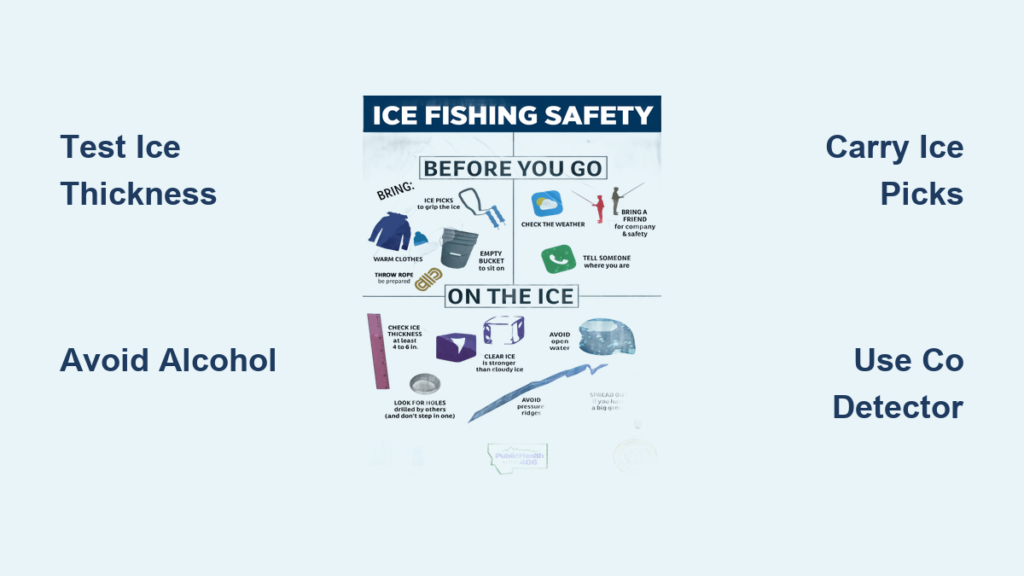
Always test ice every 10 to 20 feet when moving. Never trust appearance alone.
Driving Vehicles on Unsafe Ice
Using snowmobiles, ATVs, or trucks on ice dramatically increases fatality risk. In 2019, 32 deaths involved snowmobiles, 6 involved ATVs, and 3 involved cars or trucks. Vehicles sink fast, often within 30 seconds, and enclosed cabs trap occupants.
Clear ice thickness requirements for vehicles include 5 inches for snowmobiles and ATVs, 7 inches for light trucks, and 12 to 14 inches for full-sized trucks. These represent ideal conditions. Snow cover, current, or layered ice require much thicker ice to be safe.
Keep windows partially open when driving on ice. Unbuckle seatbelts while driving. Carry a spring-loaded window punch. Practice escape drills. Never drive alone on questionable ice.
Ignoring High-Risk Locations
Some areas are predictably dangerous due to water flow, structure, or heat sources. On rivers, avoid outside bends where faster current undercuts ice. Stay away from bridge pilings where turbulence prevents solid freezing. Tributary mouths have warm water that melts ice. Downstream of dams, water stays moving and warm. Main current channels are rarely safe.
On lakes, avoid inlets and outlets, underwater springs that maintain around 50 degrees Fahrenheit, pressure ridges from ice expansion, and drop-offs near underwater structures. The safest spots are backwaters, oxbows, and protected bays with minimal current.
Alcohol: A Silent Killer on Ice
Drinking while ice fishing is one of the biggest risk factors for accidents. Alcohol impairs judgment, leading to poor decisions like ignoring warnings. It reduces coordination and increases fall risk. It creates false warmth by dilating blood vessels, actually speeding up heat loss. It worsens hypothermia by causing the body to lose core heat faster.
The myth that a beer warms you up is dangerous. Alcohol increases hypothermia risk. Save drinks for after you’re off the ice. Even just one impairs reaction time. Minnesota DNR warns that even a couple of beers are enough to cause a careless error that could cost you your life.
Types of Ice and Their Strength

Not all ice is equal, and clarity determines strength. Understanding the different types helps you make smarter decisions about where to walk, drive, or set up shelter.
Clear black ice forms in calm, cold weather and represents 100% strength. White snow ice needs double thickness for equivalent safety because it’s only about 50% as strong as clear ice. Slush ice is very weak and indicates thaw or saturation. Layered ice should be treated as the weakest layer present. Old ice that is cracked, thawed, or weathered is significantly weaker even if it appears thick.
A practical rule of thumb is that 8 inches of white ice equals approximately 4 inches of clear ice in strength. For example, 6 inches of white ice provides only 3 to 4 inches of effective load capacity.
Common Injuries Beyond Drowning
Contrary to belief, hypothermia and frostbite are rare among ice anglers. Most use heated shelters and proper gear. Instead, the top injuries are burns, carbon monoxide poisoning, trauma from power tools, and falls causing fractures.
Burns commonly occur from propane heaters, stoves, or catalytic heaters in enclosed shelters. Prevent burns by maintaining proper distance from heating sources and keeping fire extinguishers nearby. Carbon monoxide poisoning comes from unvented heaters in ice houses. This odorless, colorless gas is deadly. Install CO detectors in all shelters. Trauma from augers, saws, and chisels causes lacerations. Always wear gloves and keep tools sharp because dull tools slip. Falls and fractures happen on slippery surfaces or during break-through events. Use ice cleats and stay low when moving.
CO poisoning is preventable but often ignored. Never sleep in a shelter with an unvented heater running.
Essential Safety Gear You Must Carry

Carrying the right equipment can mean the difference between a close call and a fatality. Every ice angler should carry these items on every trip.
Ice safety picks enable self-rescue by allowing you to dig into solid ice and pull yourself out. They should be chest-mounted with retractable cords for accessibility with numb hands. A throw rope of 50 to 75 feet allows you to rescue others from a distance without approaching weak ice. A PFD or float suit prevents drowning and buys critical time. An ice chisel or spud bar tests thickness and detects slush or hollow spots. An auger with an angle drill reveals ice layering and weak zones. A CO detector prevents poisoning in enclosed shelters. A fire extinguisher handles heater or stove fires. A communication device like a satellite messenger or waterproof radio ensures you can call for help. A first aid kit plus emergency blanket treats injuries and hypothermia.
Ice picks are the fashion of the intelligent ice angler. Always wear them. At least one person in your group should carry rescue gear, and practice throwing the rope before an emergency occurs.
Minimum Ice Thickness Guidelines

These thickness requirements apply to new, clear, solid ice. Double all values for white or snow ice.
Stay off ice that is 2 inches or less. Walking on foot requires at least 4 inches. A snowmobile or ATV needs 5 inches. A small car or light truck requires 7 inches. A full-sized truck needs 12 to 14 inches. For river ice, use 6 to 8 inches of clear ice minimum due to current risk.
These represent minimums. Snow cover, current, or warm temperatures reduce actual safety margins significantly.
Self-Rescue: What to Do If You Fall In
Survival depends on preparation, gear, and technique. This is especially critical on rivers where current complicates rescue.
During cold shock in the first 60 seconds, the involuntary gasp reflex creates risk of drowning if you go underwater. Hyperventilation leads to panic. Float first and keep your head above water. Without a PFD or float suit, cold shock can be fatal.
Cold incapacitation occurs within 3 to 5 minutes. Arms and legs lose strength. You cannot swim or grip ice. Drowning risk skyrockets.
For self-rescue on rivers, control your breathing first for 10 to 15 seconds. Turn upstream because current pushes you against the ice edge. Use ice picks by stabbing into solid ice and pulling forward while kicking. Avoid vertical climbing to prevent further ice breakage. Let current carry you along the edge to find thicker ice. Push away if being pulled under to stay in the open hole. After exiting, roll away from the hole and move 20 to 30 feet before standing to distribute weight and prevent re-breaking through.
Who Faces the Highest Risk
Certain demographics face disproportionately higher risks during ice fishing activities.
Men account for 88% of ice fishing injuries. The average age of injured anglers is 39.4 years. Often these are experienced anglers whose overconfidence leads them to skip safety checks. Alcohol use is suspected in many fatalities. Failure to test ice is common among accident victims.
The difference between a close call and a fatality often comes down to one decision, one tool, or one piece of gear.
Frequently Asked Questions About Ice Fishing Dangers
How many people die ice fishing each year?
Around 65 hardwater-related deaths occurred in the U.S. in 2019, with many involving vehicles or alcohol. Recent seasons have seen multiple fatalities in states like Montana, Wyoming, and Minnesota, even among experienced anglers.
What is the most common cause of ice fishing deaths?
Falling through thin ice is the leading cause of death. Cold shock triggers an involuntary gasp reflex, and drowning can occur within seconds. Within 3 to 5 minutes, loss of muscle control makes self-rescue nearly impossible without proper equipment.
Can you survive falling through ice?
Yes, survival is possible with proper gear and technique. Wearing a PFD or float suit provides buoyancy. Ice picks allow you to dig into solid ice and pull yourself out. A throw rope enables rescue by companions. Without this equipment, survival chances drop dramatically, especially on rivers with current.
Is ice fishing more dangerous than open-water fishing?
Ice fishing injuries are less frequent but more severe. They account for only 1% of fishing-related ER visits but have higher hospitalization rates. The unstable frozen environment creates risks that open-water fishing doesn’t face, including sudden ice failure and vehicle submersions.
What ice thickness is safe for walking?
Four inches of clear solid ice is generally considered safe for walking. This requirement doubles to 8 inches for white snow ice. Always test ice frequently because conditions can change rapidly even over short distances.
Why is alcohol so dangerous while ice fishing?
Alcohol impairs judgment, leading to poor decisions like ignoring ice warnings. It reduces coordination and increases fall risk. It creates a false sense of warmth while actually accelerating heat loss. It worsens hypothermia and reduces the ability to perform self-rescue or assist others.
Key Takeaways for Ice Fishing Safety
Ice fishing is moderately dangerous when precautions are ignored but very safe when done right. The risks aren’t in the activity itself. They’re in complacency.
Test ice before you trust it. Drill or chop test every 10 to 20 feet when moving. Double the thickness requirement for white ice because it’s only half as strong as clear ice. Never drive vehicles without personally verifying ice thickness along your route. Carry rescue gear including ice picks, throw rope, and a float suit. Avoid alcohol entirely while on the ice. Listen to local warnings and respect the knowledge of experienced residents. Use only vented heaters and install CO detectors in all shelters. Travel with a partner and inform someone of your location and return time.
The fish will always be there next week. You might not be. Wait for safe conditions, check everything, and come home alive.