Imagine being stranded in the wilderness with no fishing gear. You have no tackle box, no hooks, just the clothes on your back and a pocket full of office supplies. In that moment, a simple paperclip could mean the difference between hunger and a meal. Making a fishing hook out of a paperclip is a proven survival technique that turns an everyday object into a functional tool for catching small fish. While it will not replace a store-bought hook, with the right method, it can catch real fish when you need it most. This guide walks you through every step from selecting the right clip to hardening it for strength and using it effectively in the wild.
You will learn not just how to bend a wire, but how to make it work. You will avoid common failures like bending under load or line slippage. With basic tools like pliers and a file, plus optional fire hardening, you can create a reliable hook capable of landing fish up to two pounds. Whether you are preparing for emergencies, teaching survival skills, or just curious about DIY ingenuity, this is knowledge that transforms the ordinary into the essential.
Choose the Right Paperclip for Your Fishing Hook

Not all paperclips are suitable for making a fishing hook. The success of your improvised gear starts with material selection. Using the wrong clip will result in a weak hook that bends or breaks the moment a fish strikes.
Pick Uncoated Metal Clips
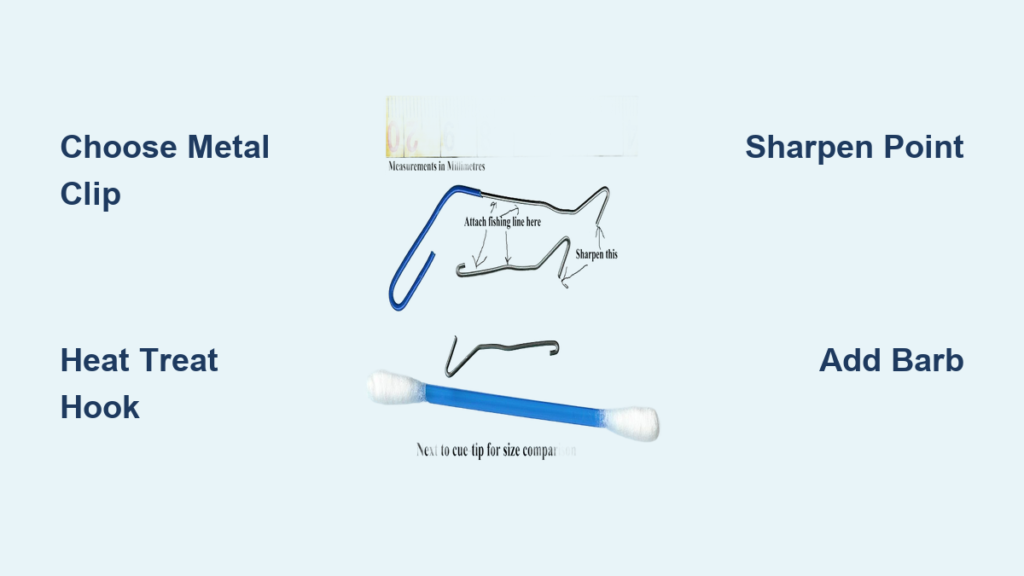
Use only metal-only paperclips made of galvanized or stainless steel. Avoid any with plastic, paint, or rubber coatings. These coatings interfere with sharpening, weaken the structure, and prevent secure knot tying. If you only have coated clips, remove the coating by scraping, sanding, or briefly heating and peeling it off.
Select the Correct Wire Thickness
Standard number one paperclips work, but jumbo paperclips offer better durability due to increased wire thickness. Thicker wire resists bending but requires more force to shape. Aim for wire between 0.7 and 1.0 millimeters in diameter. This gives enough strength without making the hook too bulky for small fish to swallow.
Inspect for Damage Before Starting
Check for cracks, rust, or kinks. Discard any compromised clips. A single weak point can cause failure when a fish takes the bait. A damaged clip will bend or snap under the stress of fighting even a small fish.
Straighten the Paperclip Wire Properly
Bending a paperclip into a hook starts with a clean, straight wire. Rushing this step creates weak points that will fail later. Take your time to get this foundation right.
Use Pliers for Maximum Control
Grip one end firmly with needle-nose pliers. Gradually unbend each curve, rolling the clip smooth against the pliers jaws. Work slowly to avoid kinking or creating sharp bends. The goal is a perfectly straight piece of wire with no deformations.
Avoid Work-Hardening the Metal
Never bend the metal back and forth repeatedly. This causes work-hardening, making the steel brittle and prone to cracking. If you make a mistake, start over with a new clip rather than trying to correct it. The small investment of a new clip is worth avoiding a hook that fails mid-catch.
Target the Correct Length
Aim for a straight wire between 80 and 100 millimeters. This gives enough length to form both the eyelet and hook bend without sacrificing strength. Anything shorter limits your options, and anything longer creates unnecessary bulk.
Create a Secure Line Attachment Loop
The eyelet is where your fishing line ties on. Its strength determines whether you land the fish or lose it at the most critical moment. A poorly made eyelet is the number one cause of failure in improvised hooks.
Form a Tight Closed Spiral
At one end of the wire, use pliers to twist the tip into a tight spiral of 1.5 to 2 turns. Aim for a diameter of 3 to 4 millimeters, about the size of a grain of rice. This small loop prevents line slippage and distributes stress evenly across the metal.
Reinforce the Eyelet Connection
For added security, wrap the tail around the shank once or twice after forming the loop. Trim excess with wire cutters. Bend the remaining tag end back into the shank to lock it in place. This prevents the loop from unwinding under tension.
Smooth Rough Edges That Fray Line
Rough edges on the loop can fray your fishing line and cause it to snap. Run a file or stone over the inside of the loop to remove burrs. A smooth eyelet protects your line and ensures your knot holds securely.
Shape the Hook Bend Correctly
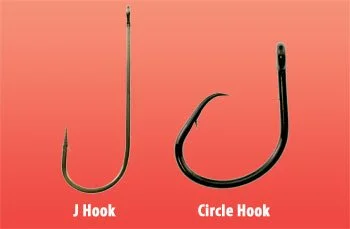
The curve of the hook affects both fish retention and structural strength. A poorly shaped bend creates stress points that snap under load. Getting this step right means the difference between landing dinner and watching it escape.
Bend a Proper J-Shape
Using pliers, form a smooth J-style or U-style bend over the last 15 to 25 millimeters of the wire. Avoid sharp angles. These create stress points that can snap under load when a fish fights. The curve should flow naturally from the straight shank.
Set the Optimal Hook Gap
The gap, the space between the point and shank, should be wide enough to hold bait but not so wide that it increases leverage during a fight. A gap of 8 to 12 millimeters works well for small fish like bluegill and perch. Too wide a gap makes the hook prone to bending. Too narrow a gap lets bait fall off.
Consider a Circle Hook Design
For better hook-up rates and reduced gut-hooking, shape the bend into a near-circular profile. This design rotates into the corner of the fish mouth when pulled, improving retention while reducing injury to the fish. Circle hooks also distribute stress more evenly than sharp corners.
Add a Functional Barb to Prevent Lost Fish

A barb keeps the fish from slipping off the hook during the fight. Without a barb, the hook acts more like a skewer. Fish can shake free easily, especially during sudden movements. Adding a barb dramatically increases your catch rate.
Score the Wire Behind the Tip
Use wire cutters to make a shallow nick on the inside curve of the hook, about 2 to 3 millimeters from the tip. Do not cut through the wire. Only score the surface to create a weak point you can pry against.
Pry Up the Barb at the Right Angle
With pliers, gently lift the scored metal upward to form a tiny barb. It should protrude at about a 45-degree angle, pointing toward the shank. The barb does not need to be large to be effective. Even a small protrusion dramatically increases hook retention.
Sharpen the Point to a Needle Edge
A dull point will bend before it penetrates fish mouth tissue. Sharpness is critical for successful hook sets. A sharp point requires less force, reducing the chance the wire will straighten instead of penetrating.
File at the Correct Angle
Hold the tip at a 45-degree angle against a metal file, sharpening stone, or even concrete. Stroke away from your body to avoid injury. Consistent angle produces a sharper, more durable point.
Rotate for Symmetrical Sharpness
Turn the wire slightly with each stroke to create a conical, symmetrical point. An uneven tip will wobble on impact and increase bending risk. A balanced point penetrates cleanly and resists deformation.
Test Sharpness Before Fishing
The point should catch on your fingernail when lightly dragged across. It should pierce paper cleanly without tearing. If it passes these tests, your hook is sharp enough to catch fish. If not, continue sharpening.
Harden the Hook with Heat for Extra Strength
Raw paperclip steel is soft and bends easily under load. Heat treatment doubles the structural integrity of your hook. This single step transforms a weak improvised tool into something that can actually land a fighting fish.
Heat to Cherry Red Color
Hold the hook with pliers and place the bend and point area in the hottest part of a flame. This includes a lighter, campfire, or stove. Heat until it glows cherry red, which is approximately 760 to 900 degrees Celsius. Do not overheat. Excessive heat burns off carbon and weakens the metal.
Quench Immediately for Hardness
Immediately plunge the hot metal into cold water or oil. This rapid cooling, called quenching, hardens the steel and makes it resistant to bending. The冷却 must be fast for the hardening to work. Delayed quenching produces weak, soft metal.
Temper to Reduce Brittleness
After quenching, reheat the hook away from direct flame until it reaches a straw yellow or light blue tint. This is approximately 200 to 300 degrees Celsius. Let it air cool. This tempering step reduces brittleness while keeping most of the hardness.
Choose the Right Fishing Line and Knot
Even the best hook fails with a weak knot or poor line. Your line and knot are just as important as the hook itself. A strong hook attached to a weak knot guarantees lost fish.
Select High-Strength Line Options
Best options include dental floss, which is compact, strong, and widely available. Paracord inner strands offer high tensile strength and abrasion resistance. Monofilament is ideal if you have it. Tarred bank line provides excellent knot strength and water resistance. Avoid natural fibers like plant cordage, which weaken significantly when wet.
Tie a Secure Clinch Knot
Use the improved clinch knot for most situations. Pass the line through the eyelet, wrap the tag end around itself five to seven times, pass the tag through the first loop, then the large loop. Pull tight. Ensure the knot seats flush against the eyelet to prevent stress concentration.
Bait the Hook for Maximum Attraction
Since the paperclip hook is bulky and visible, your bait must draw fish in aggressively. A poor bait presentation means even the best hook catches nothing. The right bait makes the hook irresistible.
Use High-Scent or Live Bait
Earthworms are the most effective bait. They wriggle naturally and release scent into the water. Insects like grubs, crickets, and beetles work well. Meat scraps like fish fat or chicken skin attract predatory fish. Bread balls molded with water and flavored with salt or garlic can work in a pinch.
Add Flash and Color for Visibility
Tie on a small piece of aluminum foil, shiny tape, or colored thread. These mimic scales and attract curious fish in clear water. Rub fish oil or garlic on the bait to boost the scent trail and draw fish from farther away.
Use Proper Fishing Technique
How you fish matters as much as the gear. Even a perfect hook fails with poor technique. Patience and smooth movements mean the difference between success and failure.
Wait for a Full Bite Before Setting
Let the fish fully take the bait before setting the hook. Premature sets result in missed strikes or pulled bait. Watch for the line to move steadily, not just twitch. When the pull becomes sustained, it is time to set.
Set the Hook Smoothly and Firmly
Use a firm, steady pull, not a violent jerk. Sudden force can straighten the hook or tear the fish mouth. A smooth, confident motion drives the point home without overwhelming the weak metal.
Use a Flexible Rod for Shock Absorption
Use a green sapling or willow branch as a natural rod. Its flexibility absorbs shocks and reduces pressure on the weak hook. A stiff rod transfers all the fish energy directly to the hook, increasing the chance of bending or breaking.
Target the Right Fish Species

Be realistic about what your paperclip hook can handle. Targeting fish too large for your gear guarantees failure. Understanding your limits keeps you from wasting time and energy.
Focus on Small Freshwater Species
Target bluegill, perch, crappie, sunfish, and small trout. The maximum realistic size is under two pounds or eight inches long. These fish provide a meal without testing the limits of your improvised gear.
Avoid Large or Strong Fish
Do not target bass, catfish, pike, or saltwater species. Their strength will bend or break the hook. Even a healthy one-pound bass has more fight than a two-pound bluegill. Respect the limits of your materials.
Avoid Common Mistakes That Cause Failure
Even small errors can doom your effort. Knowing what not to do is just as important as knowing the correct technique. These common mistakes trip up beginners and experienced crafters alike.
Do Not Overwork the Metal
Repeated bending causes microfractures that weaken the hook. If you mess up, start fresh with a new clip. Trying to fix a mistake often creates more problems than it solves.
Do Not Skip the Barb
Hooks without barbs lose fish at three times the rate of those with barbs. The small effort to add a barb dramatically increases your catch success. It is not optional for reliable performance.
Do Not Forget Heat Treatment
Untreated hooks bend under load in nearly every test. Hardening is the single biggest upgrade you can make to your paperclip hook. If you have access to fire and quenching, do not skip this step.
Understand the Limitations of Paperclip Hooks
This is a survival tool, not a replacement for real fishing gear. Knowing the limits helps you use it appropriately and avoid disappointment. Accepting these constraints leads to better outcomes.
Material Weakness Is Inevitable
Paperclips are made from low-carbon steel not designed for fishing stress. All versions eventually bend or break under load. Treat your paperclip hook as temporary gear designed for emergencies.
Inspect After Each Catch
After catching one fish, inspect the hook. If bent or dull, retire it. A used hook may look fine but have hidden stress fractures. Safety first means checking your gear after every fish.
Practice Before You Need This Skill
Skills degrade under stress. Build confidence now so you can perform when it matters. Making hooks ahead of time means you have ready backups when survival situations arise.
Make Practice Hooks at Home
Create five to ten hooks and test them by pulling with pliers and simulating fish fights. Check for weak points and refine your technique. This practice builds muscle memory and reveals problems with your method.
Store Pre-Made Hooks in Your Kit
Keep three to five finished, sharpened hooks in your survival kit. Wrap in cloth or tape to protect the point. Having ready-made hooks saves critical time when you need food fast.
Frequently Asked Questions About Making a Fishing Hook from a Paperclip
Can a paperclip really catch a fish?
Yes, a properly made paperclip hook can catch small fish like bluegill, perch, and sunfish. Heat-treated hooks have landed fish up to 1.2 pounds in tests. The hook works, but it is designed for survival situations, not recreational fishing.
Does heat treatment really make the hook stronger?
Yes, heat treatment significantly improves strength. Hardening and tempering doubles the structural integrity of the hook. Without heat treatment, the hook bends easily under the stress of a fighting fish.
What is the best bait for a paperclip hook?
Earthworms are the most effective bait for paperclip hooks. They wriggle naturally and release scent that attracts fish. Other good options include insects, meat scraps, and bread flavored with garlic or salt.
How long does it take to make a paperclip fishing hook?
With practice, you can make a basic paperclip hook in about 10 to 15 minutes. This includes straightening the wire, forming the eyelet, shaping the hook, adding a barb, and sharpening the point. Heat treatment adds another 5 to 10 minutes.
Can I use any type of paperclip?
No, use only uncoated metal paperclips made of galvanized or stainless steel. Plastic-coated clips interfere with sharpening and knot security. Jumbo paperclips offer better durability due to thicker wire.
Final Takeaways for Making a Functional Paperclip Fishing Hook

Making a fishing hook from a paperclip is a valuable survival skill that turns an ordinary office supply into life-sustaining gear. The essential steps include selecting uncoated metal clips, straightening the wire carefully, forming a secure eyelet, shaping a proper hook bend, adding a functional barb, and sharpening to a needle point. Heat treatment through hardening and tempering dramatically increases the hooks ability to land fish without bending. Pair your hook with strong line like dental floss or paracord, use effective bait like earthworms, and employ patient fishing technique. Target only small freshwater species under two pounds. Practice making these hooks before you need them, and store pre-made versions in your emergency kit. This skill proves that resourcefulness is the ultimate survival tool.