
If you’re surf fishing for pompano, whiting, redfish, or black drum, nothing outperforms a properly rigged sand flea. These small, burrowing crustaceans, also known as mole crabs, are a natural food source for many inshore species, making them one of the most effective live baits along sandy beaches. But simply impaling a sand flea won’t cut it. Hook it wrong, and your bait tears apart on the cast or fails to stay alive long enough to attract fish.
The key to success lies in how you hook the sand flea: preserving its vitality, maximizing scent release, and ensuring it stays securely on the hook through powerful surf and long casts. Whether you’re targeting fast-striking pompano or bottom-feeding drum, the right rigging technique makes all the difference.
In this guide, you’ll learn the exact methods used by expert surf anglers to hook sand fleas for maximum effectiveness, including the best hook types, foolproof rigging steps, bait enhancements, and species-specific tips that turn casual catches into consistent hauls.
Choose the Right Hook for Sand Fleas
Matching your hook to the sand flea’s size and your target species is critical for hook retention and strike conversion.
Best Hook Types
• Circle Hook (1/0 to 2/0): Ideal for catch-and-release fishing. The self-setting design reduces gut-hooking, especially with live bait.
• Kahle Hook (Size 1-2): Wider gap fits the round body of adult sand fleas perfectly. This is the top choice for pompano anglers.
• J-Hook (Long Shank): Preferred for sheepshead and other hard-mouthed fish. Allows better hook penetration and easier removal.
Pro Tip: Always use sharp hooks. A dull point crushes the shell instead of piercing cleanly, killing the flea instantly.
Hook Size Guidelines
• Juvenile fleas (under 1 inch): Use size 4-6 hooks.
• Adult fleas (1-1.5 inches): Opt for 1/0 to 2/0.
• Large fleas (over 1.5 inches): Consider halving or using a double-hook rig.
Expert Insight from Weldon Hall (Sand Flea Outfitters): Match the hook length to the flea’s body. Too big, and it tears through. Too small, and it won’t hold.
Hook Through the Telson: Bottom-Up Method
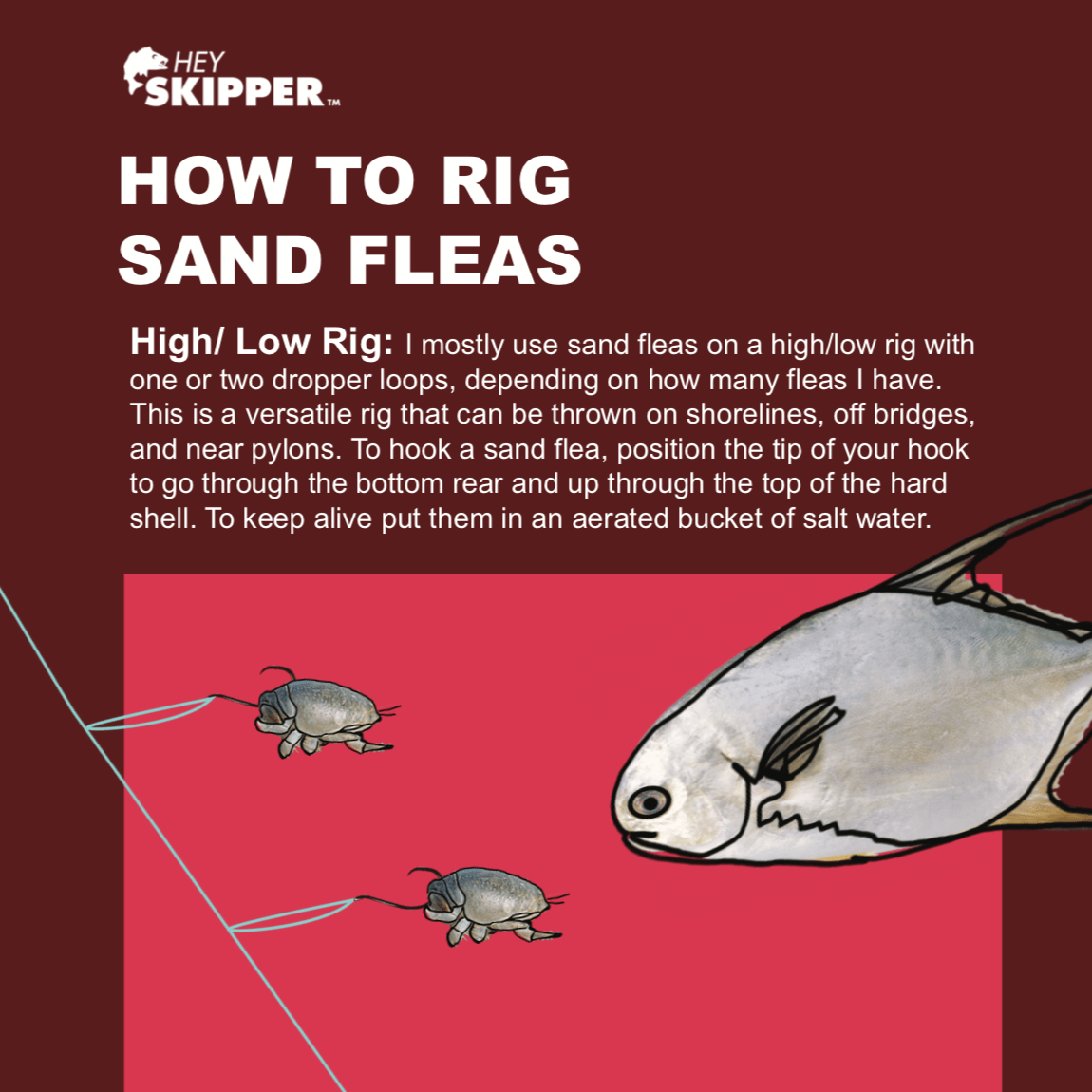
This is the gold standard for rigging sand fleas. It maximizes survival, durability, and natural presentation.
Locate the Telson
Flip the sand flea over so the legs face upward. At the rear end, you’ll see a small, triangular tail flap called the telson. This is also known as the “digger.” This is the strongest muscle attachment point.
Insert Hook Under the Telson
Place the hook tip just beneath the base of the telson where it connects to the body. Avoid piercing the soft underside directly. This can rupture internal organs and kill the bait.
Push Upward Through the Body
Gently guide the hook upward at a slight angle. Use a twisting motion if needed. The goal is to pass through internal tissue without cracking the hard top shell, called the carapace.
Exit Through the Carapace
Continue until the hook point breaks cleanly through the back. You should feel a slight “pop” as it emerges through the shell.
Expose the Barb
Ensure the barb is fully outside the shell. If buried inside, the hook may pull free during a strike.
Test for Stability
Give the bait a gentle wiggle. It should be firmly seated on the hook bend with minimal shell damage.
Why This Works: The telson method uses the strongest part of the flea, keeps it alive longer, and survives casting forces better than any other technique.
Alternative Rigging Techniques
Depending on conditions and target species, different methods can improve your odds.
Head-Hook Method for Pompano
Best for pompano and active, smaller fleas.
• Find the natural crack along the head’s midline.
• Insert the hook just to the side of the crack, not through the center.
• Pass through until the point exits the opposite side.
Advantage: Keeps the flea highly mobile, mimicking natural drift.
Risk: Can kill the flea if vital organs are pierced.
Digger-Tail Hook for Bottom Feeders
Ideal for black drum and redfish that root along the sand.
• Lift the telson slightly.
• Thread the hook through the base of the digger.
• The bait stays stationary, exposing the egg sac if present.
Best Rig: Sliding sinker Carolina setup to keep bait on the bottom.
Why It Works: Mimics a digging or injured sand flea, which is easy prey for bottom dwellers.
Halve After Hooking: Large Bait Strategy
Use when fleas are too big for pompano or whiting.
- Hook the flea using the standard telson method.
- Once secured, cut lengthwise in half with sharp scissors.
- Use the front half for long casts (more durable).
- Use the rear half (with legs) for short-range fishing.
Critical Tip: Never cut before hooking. Pre-cut bait disintegrates on impact.
Source: Blaine Roberts, Panhandle Salt Beach Fishing.
Double-Hook Rig for Tough Conditions
Used when fish are short-striking, meaning they bite the tail but miss the hook.
• First hook: Standard telson-to-carapace.
• Second hook: Smaller hook through the front of the carapace.
Best For: Large redfish or drum in heavy surf.
Avoid for Pompano: Overkill for smaller-mouthed fish.
Boost Attraction with Simple Add-Ons
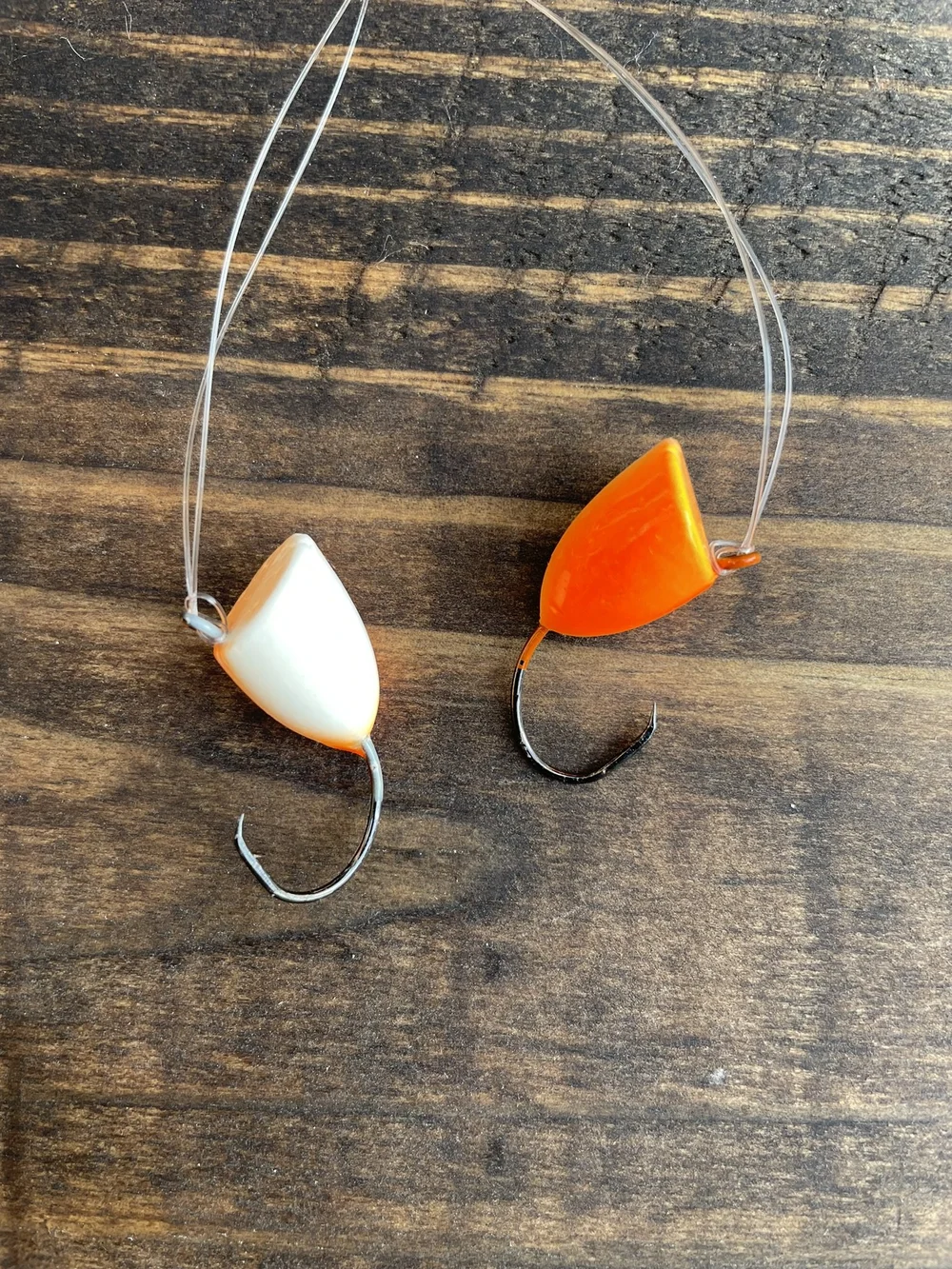
Even a perfectly rigged sand flea can be upgraded for more strikes.
Add an Orange Bead
Slide a fluorescent orange bead onto the leader just above the hook.
• Mimics the egg sac of a female “in berry.”
• Highly visible in clear water.
• Proven to increase strike rates.
Expert Tip: Use on pompano rigs with multiple hooks and colored beads for best results.
Use Fishbites Strips for Scent and Backup
Attach a thumbnail-sized strip of Fishbites Sand Flea, E-Z Flea, or E-Z Crab.
Benefits:
• Adds a powerful scent trail to the water.
• Stays on the hook if the live flea is torn off.
• Orange strips mimic egg sacs visually.
• Combines durability with natural appeal.
Weldon Hall Notes: “A little orange Fishbites looks like eggs and can trigger a bite when fish are shy.”
Rig Sand Fleas on Jigs for Active Presentation
Combine natural bait with artificial action for greater coverage and realism.
Pompano Jig Setup
Use feather, silicone, or synthetic-tail jigs such as Sea Striker, Bomber Nylure, Goofy Jig, or Buccaneer Wiggler. Cast into the surf, let it sink, then slowly reel while bouncing along the bottom. This mimics a tumbling sand flea in the swash zone.
Attach Live Sand Flea to Jig
Hook the flea through the telson and slide it onto the jig hook. Alternatively, wrap a Fishbites strip around the jig for added scent.
Best Time to Use Jigs: Calm days with little wave action let you cover more ground effectively.
Jig Weight Guide
• 1/4-1/2 oz: Light surf, shallow water.
• 3/4-1 oz: Heavy waves, deep troughs.
Catch Your Own Sand Fleas
Fresh, live sand fleas outperform frozen or preserved bait every time.
Best Time and Spot
• Tide: Incoming or high tide. Fleas move up with the swash.
• Time: Early morning or late afternoon.
• Look For: V-shaped ripples in wet sand as waves recede. These are signs of buried fleas filtering plankton.
Tools You Will Need
• Sand Rake: Metal basket with teeth to sift sand.
• Bait Bucket: With moist sand, not water.
• Gloves: Optional, for handling large quantities.
Collection Steps
- As a wave pulls back, dig the rake into the sand where V-ripples appear.
- Pull the rake toward you. Sand falls through, fleas remain.
- Pick out fleas by hand or let them burrow into a container of damp sand.
No Rake? Use your hands, but act fast. They burrow in seconds.
Store Sand Fleas Properly to Keep Them Alive
Live bait only works if it stays alive.
Short-Term Storage (Up to 3 Days)
Use a cooler or bucket with damp sand. Add a few ice chips on top, but never let fleas touch ice directly. Keep in shade, not direct sun. Remove dead fleas immediately because they release ammonia that kills others.
Lifespan: 2-3 days if stored correctly.
Long-Term: Blanch and Freeze for Backup
When live fleas are not available, preserved ones can still work.
- Dip live fleas in boiling water for 15-20 seconds.
- Immediately transfer to ice bath to stop cooking.
- Once cooled, vacuum seal and freeze.
Why Blanch: Toughens the shell and improves hook retention.
Downside: Less scent and movement than live bait.
Note: Never freeze raw. Results in mushy, fragile bait.
Avoid These Common Mistakes
| Mistake | Fix |
|---|---|
| Dull hooks | Always use sharp points to pierce, not crush |
| Hooking soft belly | Insert under telson, not into abdomen |
| Oversized hook | Match hook to flea size |
| Storing in water | Use moist sand. Fleas drown in water |
| Cutting before hooking | Hook first, then cut if needed |
| Ignoring egg sacs | Use egg-bearing females when possible |
Key Reminder: A cracked shell means short-lived bait. Inspect before casting.
Species-Specific Rigging Tips
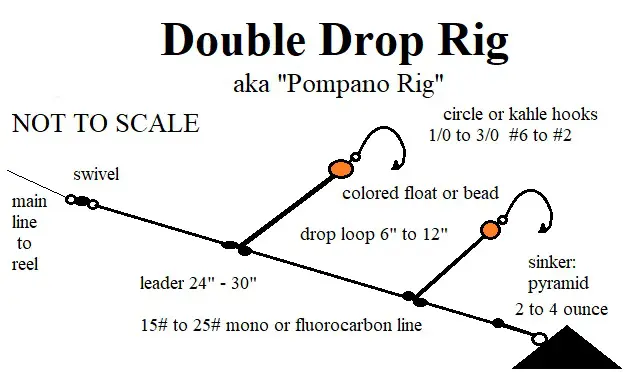
Tailor your setup to the fish you are after.
Pompano
• Best Rig: Pompano rig with orange beads
• Hook: Kahle (size 2) or circle (1/0)
• Presentation: Keep bait off bottom. Use head-hooked or telson-hooked fleas.
Pro Move: Position above the sand to avoid stingrays that steal live bait.
Whiting
• Best Rig: Single hook with light sinker
• Hook: Circle (1/0)
• Bait: Small to medium fleas. Let drift naturally with current.
Redfish
• Best Rig: Carolina or double-hook
• Hook: Kahle or J-hook
• Bait: Digger-hooked or halved large fleas.
Tip: Fish near sandbars or troughs where redfish patrol.
Black Drum
• Best Rig: Sliding sinker bottom rig
• Hook: Kahle (2/0)
• Presentation: Digger-hooked, stationary. Mimics digging prey.
Sheepshead
• Best Rig: Jig or live bait rig
• Hook: Long-shank J-hook
• Bait: Smaller fleas. Precise hook placement needed for clean penetration.
Live vs. Preserved Sand Fleas: When to Use Each
| Live Sand Fleas | Preserved (Frozen/Blanched) |
|---|---|
| Superior scent and movement | Less attractive but more durable |
| Best for pompano and whiting | Good for drum and redfish |
| Need careful rigging | Easier to handle |
| Ideal in calm to moderate surf | Better in rough conditions |
Best of Both Worlds: Use live flea plus Fishbites strip for maximum scent and staying power.
Key Takeaways for Hooking Sand Fleas
The most effective way to hook a sand flea is from the telson up through the carapace using a sharp 1/0 circle or Kahle hook. This method keeps the bait alive, secure, and natural-looking, driving strikes from pompano, drum, whiting, and redfish alike.
Master this technique, and you will turn every surf fishing trip into a high-percentage opportunity. The ocean’s most elusive inshore predators are already hunting sand fleas. With the right rig, you are just giving them what they want, on your terms.
Frequently Asked Questions About Hooking Sand Fleas
Can you use frozen sand fleas for fishing?
Yes, but they are more fragile than live ones. Blanching them in boiling water for 15-20 seconds before freezing toughens the shell and improves hook retention. Fresh, live sand fleas are always preferred when available.
What size hook is best for sand fleas?
The ideal range is 1/0 to 2/0. Circle hooks are best for catch-and-release situations. Kahle hooks are favored by pompano anglers for their wide gap. Always match hook size to flea size for best results.
Do sand fleas bite humans?
No. The sand fleas used for bait (mole crabs) are harmless crustaceans with no ability to bite or sting. The “biting” sand fleas people sometimes refer to are actually small flies and are completely unrelated.
How long do sand fleas live in a bucket?
Properly stored in moist, cool sand and kept in the shade, sand fleas can live 2 to 3 days. Never submerge them in water because they will drown.
Should I use a bead with my sand flea rig?
Yes. A fluorescent orange bead above the hook mimics the appearance of an egg sac and significantly increases strike rates, especially in clear water conditions.
Can I rig a sand flea on a jig?
Yes. Hook the sand flea through the telson and onto the jig’s hook. Alternatively, use a Fishbites strip for added scent. Bounce the jig along the bottom to mimic natural movement.