You’re on the water, line tight, lure dancing through the current then bam a strike. But instead of setting the hook, you fumble your grip, lose leverage, and watch the fish vanish. It’s not your gear. It’s not your bait. It’s how you’re holding the rod. Improper fishing rod grip is the silent killer of more bites than bad weather or poor technique.
This guide breaks down exactly how to hold a fishing rod for maximum performance. You’ll learn the correct hand placements for baitcasting and spinning setups, avoid common mistakes, and adapt your grip for speed, power, and precision.
Baitcasting Rod: Left Hand in Front

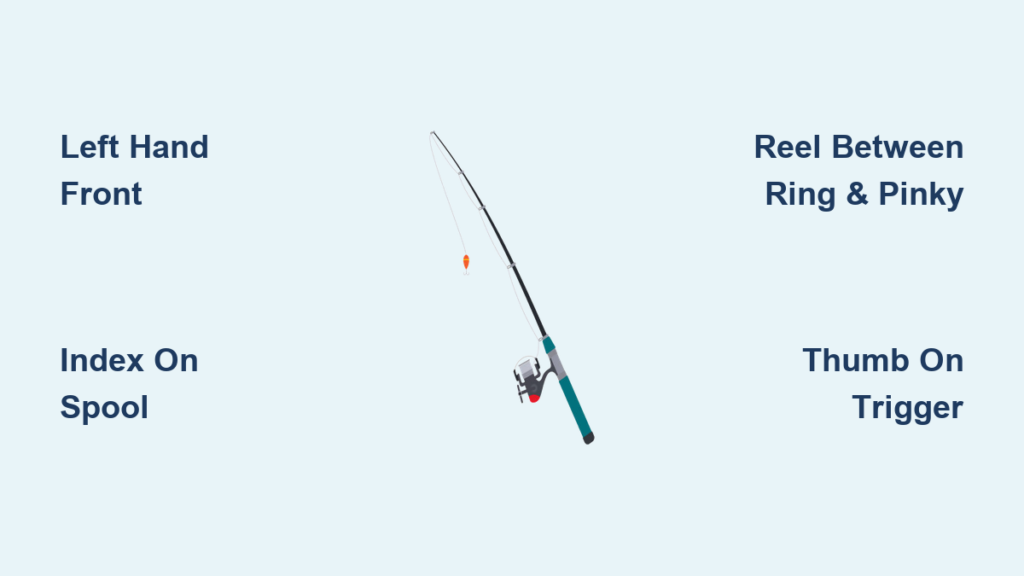
For right-handed anglers, the left hand must stay in front of the reel at all times, not under and not behind. This single rule transforms your control, power, and reaction speed when fishing.
Why Front-Hand Grip Wins
Your non-dominant hand drives the hook set, so position it where it generates maximum force. When your left hand grips the foregrip in front of the reel, your forearm, biceps, and shoulder drive the hook set, not your weak wrist. This matters enormously when using modern braided line or short-shank hooks that require explosive force.
The front position also eliminates deadly delay when fish strike. Many anglers wait with their hand behind the reel. When a fish bites, they scramble to move the hand forward, engage the reel, then start cranking. That half-second delay costs you the fish. With your hand already in front, you set the hook and start reeling in one motion.
Prevents Backlash During Retrieval
Your left hand guides the line back onto the spool during retrieval. If you don’t, the line piles up on one side, guaranteeing a backlash on your next cast. Even one crank matters. Watch the spool while retrieving. If the line isn’t winding straight, your hand position is wrong.
Right-Hand Position on Baitcaster
Your dominant hand controls the reel, but where your fingers go determines your reaction speed when a fish bites.
Index Finger on Spool, Thumb on Trigger
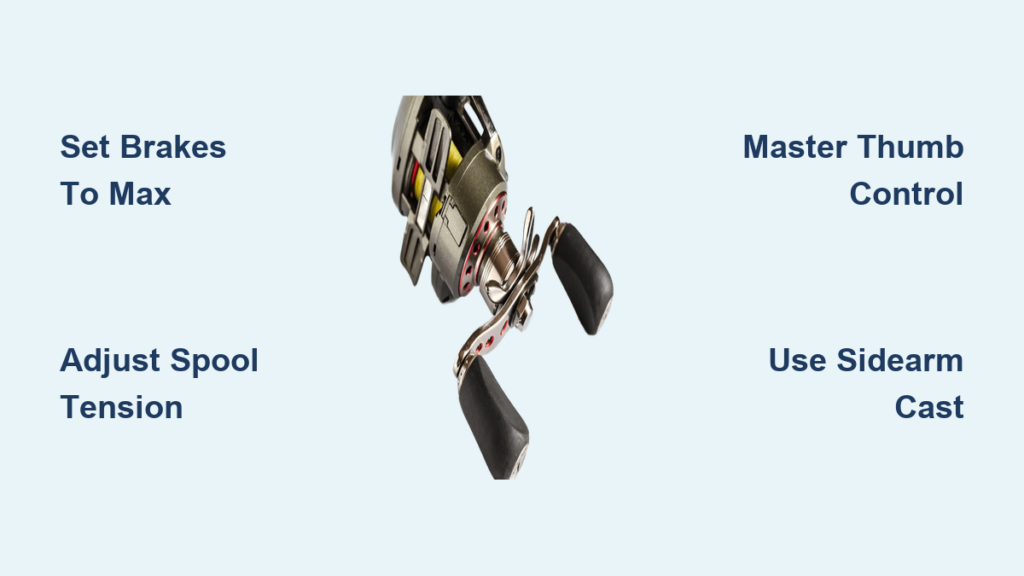
Your right index finger rests lightly on the spool edge to monitor line movement and apply pressure if needed. Your thumb controls spool speed during casting (feathering) and engages the gear lever (trigger). This setup lets you throw the lever and crank the moment a fish strikes, with zero repositioning required.
Baitcaster Mistakes That Cost Fish
Holding the left hand behind the reel forces you to use your wrist for hook sets, which is weak and unstable. Moving your hand forward only for big fish is a myth. You never know the fish size until after the hook is set, so always be ready. Not guiding line during retrieval causes uneven spooling and backlashes. Thumb on the spool while idle means you must move your hand to engage the reel during a strike, wasting precious seconds.
Spinning Rod: Reel Seat Between Ring and Pinky

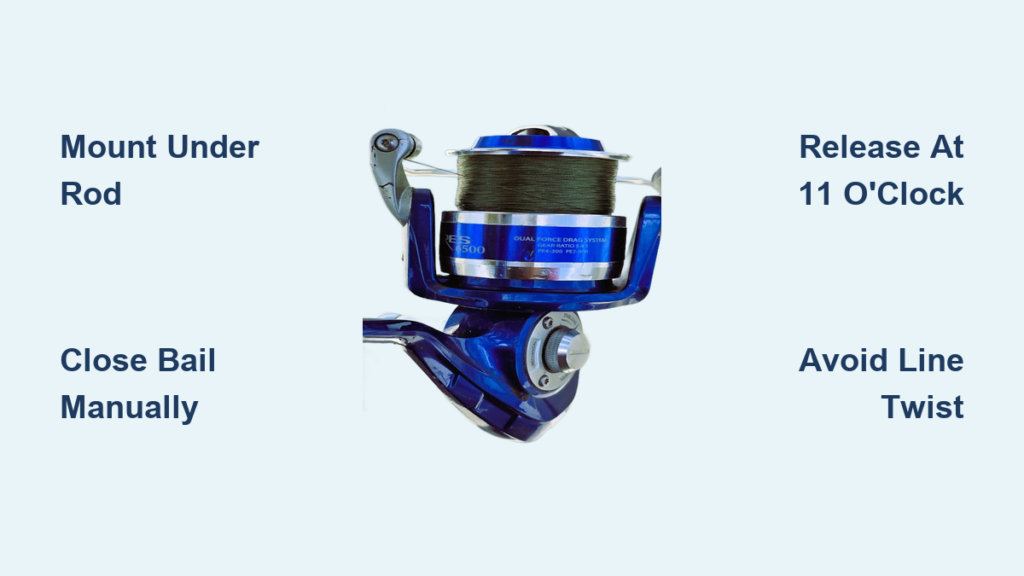
Spinning rods hang the reel below the rod, so grip changes completely. The standard and most effective method places the reel seat between your ring finger (fourth) and pinky (fifth).
Why This Grip Works
This grip positions your index finger naturally above the spool, ready to brake or release line during casting. You get instant control without switching hands or repositioning. The balanced feel reduces fatigue during long fishing sessions. Your index finger can stop the spool instantly if the lure heads toward a snag.
To use this grip, grip the rod so the reel foot sits between ring and pinky. Let your index finger hover over the spool. Use it to hold the line before casting, then release or brake as needed. After casting, press your index finger lightly against the spool to prevent overrun and control distance.
Spinning Rod Grip Errors to Avoid
Gripping too high (index and middle fingers) places your hand too far forward. Your index finger can’t reach the spool to brake, and you lose leverage and sensitivity. Gripping too low (below the reel or between middle and ring) causes the line to exit below the spool, increasing snag risk. Your index finger can’t act as a brake, forcing you to use your other hand, which is slower and less reliable. Both errors lead to more tangles, missed strikes, and poor casting control.
Alternative Spinning Rod Grips That Work

While the ring-pinky grip is standard, many anglers succeed with variations that maintain control and readiness.
2×2 Grip: Middle and Ring in Front
Ring and middle fingers grip in front of the reel stem while index and pinky rest behind. This feels balanced for many anglers and lets the index finger rest on the rod blank for bite sensitivity. It’s popular among Missouri anglers and finesse fishing specialists.
3-Up: Index, Middle, Ring in Front
Index, middle, and ring fingers grip in front while pinky stabilizes behind. This provides strong control for finesse fishing and works great for managing slack line.
All Fingers in Front
All four fingers grip in front of the reel stem for maximum grip strength. This is useful for bail-less reels or heavy cover fishing, and it’s common in drop-shot and Ned rig setups.
Pinky Behind, Others in Front
Pinky wraps behind the stem while the other three fingers grip in front. This adds leverage and enhances hook-setting power, working well with longer rods.
Choosing the Right Grip for You
Not all hands are the same. Not all rods are identical. The best grip fits your body, gear, and fishing style. Hand size matters. Smaller hands may prefer 2×2 or pinky-behind styles. Rod design matters. Extended foregrips (like the Favorite Sick Stick) allow foregrip-only use. Reel size matters. Larger reels (3000 plus) may shift balance. Fishing style matters. Finesse fishing needs higher control while power fishing needs more leverage.
Best Practices for All Rod Types
Follow these universal grip rules regardless of your reel type. Keep your main hand on the rod at all times. No switching. Your index finger should stay free to brake, feel, or stabilize, not grip. Be ready to cast or set the hook without moving your hand. The rod should feel balanced in your grip, not front-heavy or back-heavy. Adapt when needed for wind, cover, or lure type, but maintain core control principles.
Grip Mistakes That Cost Fish
Holding the rod upside down (reel above rod) destroys casting and control. Letting go during cast or retrieve loses tension and reaction speed. Using your wrist for hook sets produces weak, unstable, slow sets. Ignoring line spooling during retrieval leads to tangles and backlashes. These habits cost more fish than any other factor.
Performance Gains from Proper Grip
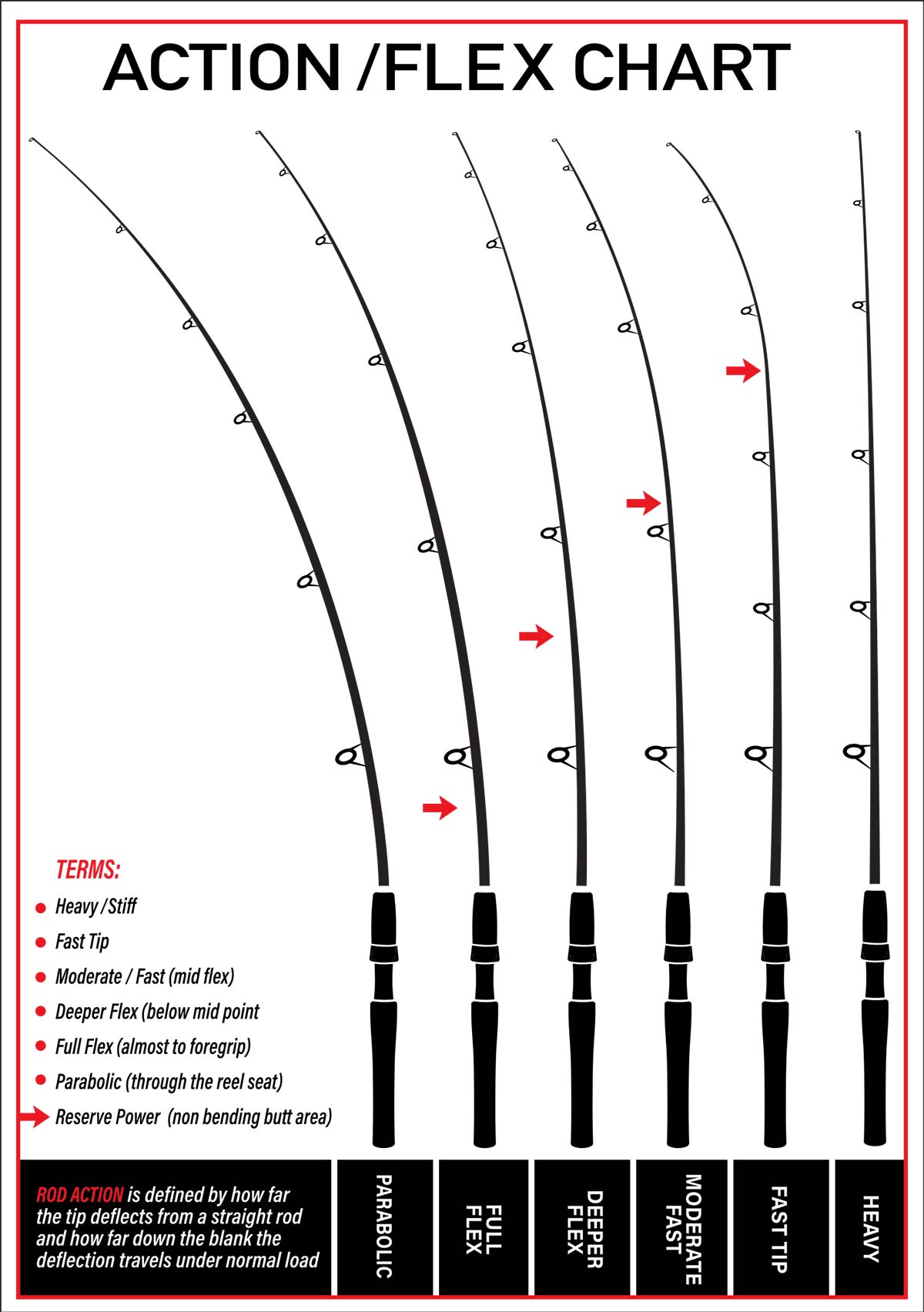
Proper grip delivers measurable improvements across every skill area. Hook-set success improves up to 40% because you use your whole arm instead of just your wrist. Casting accuracy improves because better line control produces tighter casts. Tangle reduction happens because even spooling means fewer backlashes. Bite sensitivity increases so you feel every tick and tap. Angler confidence grows because you fish faster, smarter, and stronger.
Frequently Asked Questions About How to Hold a Fishing Rod
What is the correct hand position for a baitcasting rod?
For right-handed anglers using a baitcasting rod, your left hand must grip the foregrip in front of the reel at all times. Your right hand operates the reel with the index finger on the spool and thumb on the trigger. This positioning maximizes hook-set power and eliminates reaction delay.
How do I hold a spinning rod for better control?
Place the reel seat between your ring finger (fourth) and pinky (fifth). This positions your index finger above the spool where it can brake the line instantly during and after casting. This grip provides the best balance of control, sensitivity, and reaction speed.
Why does my left hand need to stay in front of the reel?
When your hand is in front of the reel, your forearm, biceps, and shoulder drive hook sets instead of your weak wrist. This generates significantly more power, which is crucial for driving hooks with modern braided line. Additionally, your hand is already in position when a fish strikes, eliminating the half-second delay of moving it forward.
What happens if I don’t guide line during retrieval?
If you don’t guide line back onto the spool with your non-dominant hand, it piles up on one side. This uneven spooling guarantees a backlash on your next cast. Even a single crank requires proper line management to prevent future tangles.
Can I use a different grip on my spinning rod?
Yes. While the ring-pinky grip is standard, alternatives like the 2×2 (two fingers in front, two behind), 3-up (three fingers in front), or pinky-behind work well if they provide comfort and control. The best grip is one that lets you feel bites, control line, and set hooks effectively.
How do I know if my grip is correct?
You should be able to cast or set the hook without repositioning your hands. Your index finger should be free to brake or feel the line. The rod should feel balanced in your hand. If you experience delays during strikes, tangles, or reduced sensitivity, your grip likely needs adjustment.
Key Takeaways for Holding Your Fishing Rod Right

Your hand position directly controls casting accuracy, line management, hook-set power, and bite sensitivity. Get it right, and you’ll feel every vibration, stop every backlash, and drive hooks with authority. Get it wrong, and you’ll fight tangles, miss strikes, and exhaust yourself needlessly. For baitcasting rods, keep your non-dominant hand in front of the reel at all times. For spinning rods, start with the reel seat between your ring and pinky fingers, then adapt if needed. Your hands are your connection to the fish. Train them right, and every cast, every bite, and every fight becomes more effective.