After a long day on the water, your fishing gear is coated in salt, slime, algae, or mud, ready to degrade if left unattended. Knowing how to clean fishing gear properly can double its lifespan, prevent costly replacements, and ensure peak performance every time you cast. Whether you are a weekend angler or a seasoned pro, neglecting post-trip maintenance leads to corrosion, line failure, sticky reels, and damaged rods.
This guide delivers a complete, step-by-step system for cleaning every piece of your setup, including rods, reels, lines, hooks, waders, and tools. You will learn not just how to clean, but when, what to use, and what to avoid for maximum durability.
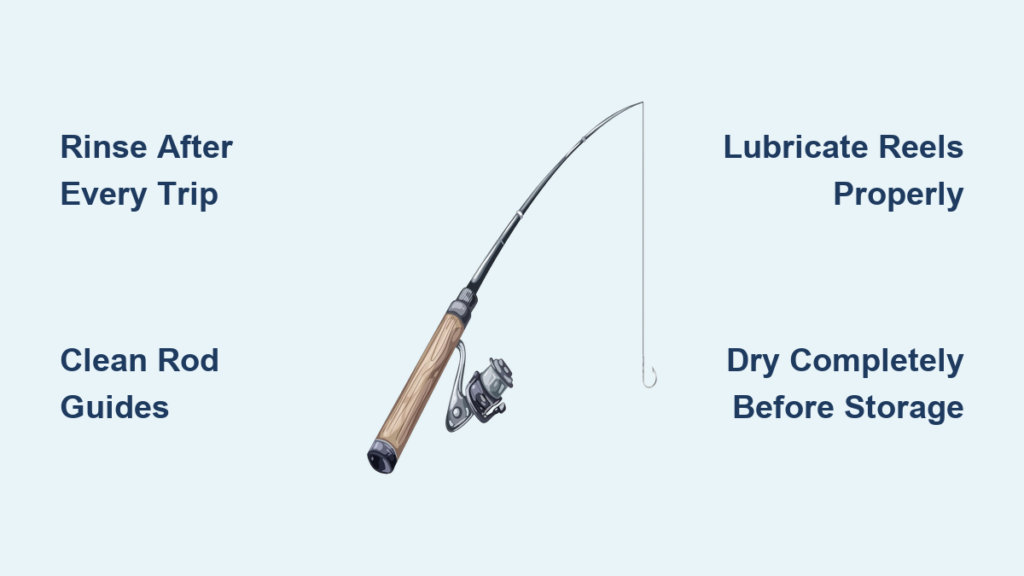
Rinse After Every Trip

Salt, sand, and fish slime are silent killers of fishing gear. Even freshwater use leaves behind algae and organic buildup that corrode metals and degrade composites over time. This quick rinse is the single most important step you can take.
Immediate Freshwater Rinse
Use a gentle stream of fresh water. Never use high-pressure sprayers that force moisture past seals into reel internals. Tighten the drag on spinning or baitcasting reels before rinsing to compress drag washers and prevent water intrusion.
Rinse all components including rod blank, guides, handle, and reel seat. Also clean the reel body, spool, bail arm, line roller, and handle knob. Do not forget the fishing line while it is still spooled.
Shake off excess water and wipe dry with a microfiber or cotton cloth. Let gear air dry completely in a shaded, ventilated area. Never dry in direct sunlight, which degrades line and weakens rod materials. Once dry, loosen the drag to prevent permanent washer compression.
Pro Tip: For saltwater anglers, this rinse is non-negotiable. Skipping it even once accelerates corrosion in reels and guides.
Deep Clean Rods Like a Pro

Perform deep cleaning every few days of consecutive use or before seasonal storage. This goes beyond the basic rinse to remove stubborn grime and protect rod components.
Rod Blank and Handle Cleaning
Mix warm water with mild dish soap such as Dawn. Use a soft sponge or cloth to wipe down the rod blank. Avoid abrasive pads that scratch finishes.
For cork handles, use denatured alcohol or Magic Eraser melamine foam to remove stains and oxidation. Wipe gently because excessive scrubbing wears down cork over time. For EVA foam handles, clean with soapy water or Simple Green. Magic Eraser also works well for deep stains.
Guide Cleaning: Stop Line Breaks Before They Happen
Use a soft-bristled toothbrush, Q-tip, or fancy swivel-tip cotton swab to scrub inside guides. For mineral deposits or algae, soak guides in a 50/50 vinegar-water solution for five to ten minutes before scrubbing.
Microguides are tricky because standard Q-tips may not fit. Try pulling cotton slightly off the stick to reduce bulk, or use thin wire wrapped with cloth. Electronic cleaning swabs also work well for slender guides.
Test for Damage: Run a dry Q-tip through each guide. If it snags, the guide is chipped or cracked. Repair it before your next use.
Ferrule Care for Multi-Piece Rods
Apply ferrule wax to the male end before joining sections. This prevents sticking, eases assembly, and reduces wear on your multi-piece rod.
Reel Cleaning Without Damage
Never submerge reels, especially sealed models from Shimano or Quantum. Water inside gears kills performance fast. Your goal is to clean the exterior and accessible internal components without forcing water where it does not belong.
Spinning Reel Maintenance
Remove the spool, bail arm, drag knob, and side cover if accessible. Take photos during disassembly to aid reassembly. Do not force parts because some reels are not user-serviceable.
Blow out dust and sand with canned compressed air before wet cleaning. Wipe exterior with ammonia-free glass cleaner or soapy water. Use a small paintbrush or Q-tip to clean around the bail roller and gear housing.
For internal grime, apply CRC QD Electronic Cleaner or non-chlorinated brake cleaner sparingly. Never soak internal components.
Baitcasting Reel Focus Areas
Clean the level wind system including the guide bar and worm gear. Lubricate with light oil. For braking systems, whether centrifugal or magnetic, keep them free of dust and old grease. Apply grease to gears and oil to spool shafts, but avoid over-lubricating, which attracts dirt.
Warning: WD-40 is not a lubricant. It displaces water but offers no lasting protection. Use it only for light rust removal, nothing more.
Lubricate Moving Parts Correctly

Wrong lubricant equals faster wear. Use the right type in the right place to keep your reel running smoothly.
What to Use
Light Teflon-based oil works well for main shaft, bail roller, and anti-reverse lever. Use grease for gears, level wind cam, and high-load zones. For surface protectants, consider 3M Protective Spray, Lucas Slick Mist, or Bass Boat Saver. These repel water, salt, and grime.
Step-by-Step Lubing
Reassemble major parts first. Remove the spool, open the bail, and add one drop of oil down the main shaft. Move the shaft up and down to distribute the oil. Oil the bail roller pin and pivot points. For baitcasters, grease the gears and spool tension knob. Wipe off excess because grease traps sand and dust.
Expert Note: Shimano and Quantum recommend factory-specific lubricants. Using incompatible oils can void warranties.
Replace and Clean Fishing Line

Old line fails silently. Even if it looks fine, UV exposure and abrasion weaken it over time.
Replacement Schedule
Replace monofilament every six months. Replace fluorocarbon annually or after heavy use. Replace braided line every one to three years, but inspect it often for fraying.
Cleaning Line on the Reel
For mono and fluoro, wipe with a damp soft cloth while reeling slowly. Use plain water or mild soap. Never use harsh chemicals.
For braided line, which is highly absorbent, soak in mild soapy water for five to ten minutes. Agitate gently, rinse thoroughly, and dry with a towel. This step is crucial after saltwater trips.
For fly line, remove it from the reel. Rinse in warm water and wipe with a soft cloth and fly line cleaner. Pat dry, apply fly line dressing, and re-spool evenly.
Never store wet line because it leads to mold, memory, and breakage.
Sharpen and Store Hooks Right
Dull hooks mean lost fish. Keep them sharp and rust-free for maximum hookups.
How to Clean Hooks
Rinse hooks with fresh water after each use. Dry thoroughly before storage. For crusty hooks, soak in warm soapy water and scrub with a soft brush.
How to Sharpen Hooks
Use a hook hone, fine-grit stone, or dedicated sharpener. Maintain the original point angle and use light, controlled strokes. Test sharpness by gently dragging the point across a fingernail. It should catch slightly. Avoid over-sharpening because it thins the metal and shortens hook life.
Best Storage Practices
Keep hooks dry with no damp tackle boxes. Use compartmentalized trays such as Plano to prevent tangling. Separate by size and type for quick access. Store soft plastics in their original packaging to prevent melting or bonding.
Maintain Terminal Tackle and Tools
Small parts fail first. Inspect and clean them regularly to avoid surprises on the water.
Terminal Tackle Care
Wash sinkers, swivels, snaps, split rings, and bobbers in mild soapy water. Use a soft brush to remove grime. Discard cracked bobbers, rusty hooks, and bent split rings. Dry completely before returning to your tackle box.
Tool Maintenance
Rinse pliers, knives, line cutters, and hemostats with fresh water. Dry immediately. Remove light rust with steel wool and apply lubricating oil to metal parts. Sharpen blades regularly and replace seized or broken tools.
Clean and Store Waders and Boots
Waders fail from the inside out if not cleaned and inspected regularly.
Cleaning Steps
Rinse waders inside and out after every use. Use mild soap and a soft brush for algae or mud. Turn waders inside out monthly to clean inner surfaces.
Leak Detection with Alcohol
Turn waders inside out. Dip cotton swab in rubbing alcohol and wipe high-stress areas such as knees, crotch, and seams. Alcohol evaporates fast, so dark spots mean leaks. Mark leaks with a waterproof marker and patch with a wader repair kit.
Storage Tips
Store waders inside out or loosely folded. Do not hang by suspenders because that stretches the fabric. Keep in a cool, dark place away from UV and heat.
Seasonal Deep Maintenance

End-of-season care prevents next-year headaches. Take time to inspect and refresh everything.
Off-Season Checklist
Inspect all gear including rods for cracked guides or loose reel seats. Test reel drag smoothness and look for corrosion. Replace rusted or broken tools.
Repair or replace damaged items. Fix broken guides, rewrap damaged rod sections, and send reels for professional servicing if they feel gritty or bind. Re-spool all reels with fresh line. Lubricate reel shafts, gears, and tool joints. Clean tackle boxes, discard trash, and reorganize.
Pro Tip: High-end reels such as Quantum and Shimano can go fifty or more trips between professional services if cleaned after every use.
Store Gear to Last
Where and how you store gear determines its lifespan. Proper storage protects your investment.
Best Practices
Store in a cool, dry place away from garages with humidity or chemical fumes. Keep out of direct sunlight because UV destroys line and fades rod blanks. Store reels with drag loosened. Use vertical or horizontal rod racks. Do not lean rods in corners. Unrig all rods before storage. Cover gear if stored near dust, sanding, or paint.
When to Call a Pro
Some issues you cannot fix at home. Know when to seek professional help.
Signs You Need Professional Service
Drag feels gritty or inconsistent. Reel binds or hesitates during retrieve. You hear unusual noises such as grinding or clicking. You see visible corrosion inside gears. You have lost smoothness despite cleaning.
Service Options
Most tackle shops offer reel servicing for thirty to seventy-five dollars. This includes disassembly, degreasing, re-greasing, and washer replacement. DIY guides are available online, but sealed reels such as Shimano often require special tools.
Avoid These Common Mistakes
Using bleach corrodes metal, even diluted. Use vinegar instead. Do not use Magic Eraser on reel seats because it is abrasive and can scratch anodized finishes. Avoid over-lubricating because it attracts dirt and grime. Never store wet gear because it causes mold, rust, and line degradation. Never use high-pressure water because it forces water past seals and damages reels.
Frequently Asked Questions About Cleaning Fishing Gear
How often should I rinse my fishing gear after each trip?
Rinse your gear with fresh water after every single trip, regardless of whether you fish in saltwater or freshwater. Salt and organic matter cause corrosion and degradation even from freshwater. This takes only a few minutes but dramatically extends the life of your equipment.
Can I submerge my fishing reel in water to clean it?
Never submerge your reel. Even sealed models can suffer water intrusion that damages internal gears and bearings. Use a gentle rinse on the exterior, wipe with damp cloth, and use compressed air to blow out debris from accessible areas.
What is the best way to clean fishing line without removing it from the reel?
For monofilament and fluorocarbon, wipe with a damp soft cloth while reeling slowly. Use plain water or mild soap. For braided line, soak in mild soapy water for five to ten minutes, agitate gently, rinse thoroughly, and pat dry. Never use harsh chemicals on any fishing line.
How do I know when it is time to replace my fishing line?
Replace monofilament every six months, fluorocarbon annually, and braided line every one to three years. Inspect regularly for fraying, memory, or abrasion near knots and guides. Old line fails without warning, so follow these schedules proactively.
Should I use WD-40 on my fishing reel?
WD-40 is not a suitable lubricant for fishing reels. It displaces water but offers no lasting protection. Use it only for breaking down light surface rust. For lubrication, use Teflon-based oil for shafts and bearings, and grease for gears and high-load areas.
Key Takeaways for Cleaning Fishing Gear
Cleaning fishing gear is not optional. It is the price of reliability. A ten-minute rinse and wipe-down saves hundreds of dollars in replacements and ensures your gear performs when it matters most.
The most critical steps are rinsing after every trip, drying completely before storage, and loosening the drag once dry. Clean rod guides monthly, replace line on schedule, and inspect waders for leaks quarterly. Store everything in a UV-protected, dry space and service reels professionally at the first sign of trouble.
Keep a cleaning kit ready with mild dish soap, soft brushes, Q-tips, reel oil, reel grease, vinegar solution, and compressed air. Follow this guide, and your rods will cast true, your reels will run smooth, and your next trophy fish will not get away due to preventable gear failure.