You cast your favorite lure, wait patiently, and get nothing. No bites. No swirls. No signs of life. Chances are, you’re fishing in the wrong thermal zone. Water temperature is one of the most powerful predictors of fish behavior, yet most anglers never check it. A change of just 5°F can mean the difference between a blank day and a limit catch.
This guide reveals the best tools, step-by-step methods, and species-specific sweet spots to use temperature data like a pro. By the end, you’ll know exactly how to find the thermocline, match lure depth to fish zones, and avoid wasting time in unproductive water.
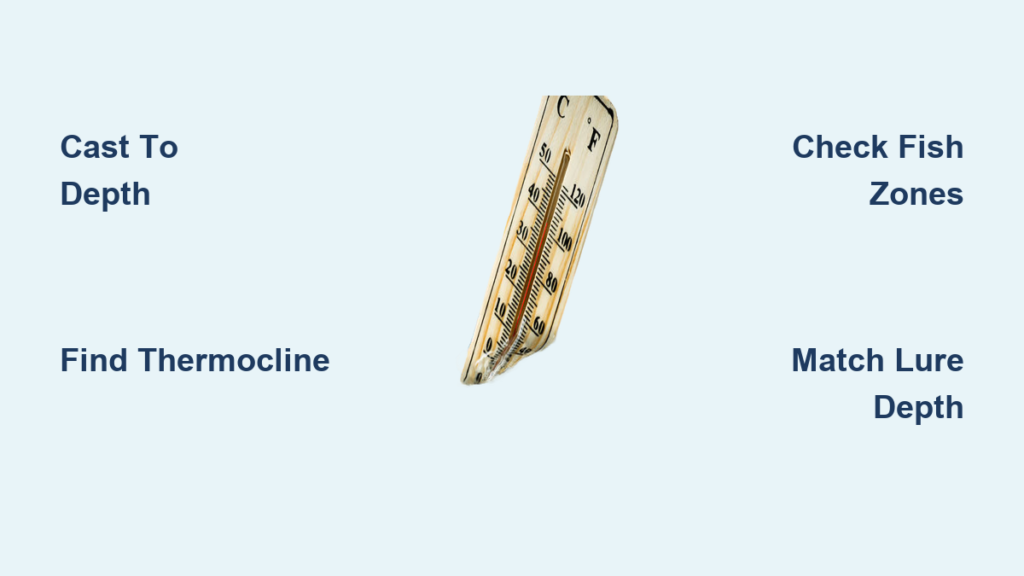
Use a Sinking Thermometer at Depth
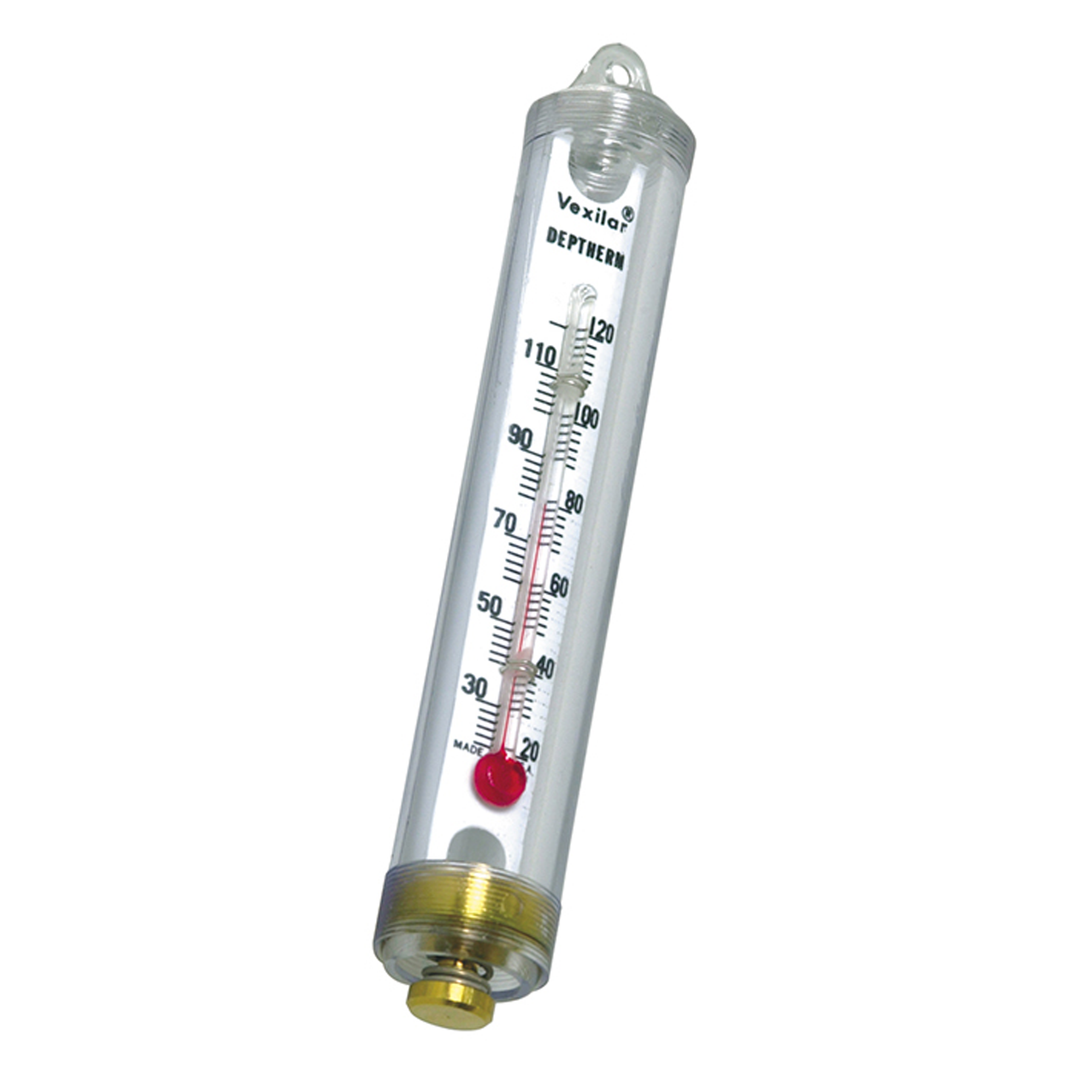
The most accurate and affordable way to check fishing water temperature is with a castable sinking thermometer. Unlike surface sensors, it measures conditions where fish actually live.
Why Surface Readings Fail
Surface water heats quickly in sunlight and cools fast at night. But fish do not always follow surface trends. In summer, the top 10 feet might be 85°F, while just 15 feet down, it drops to 72°F, a prime zone for walleye and bass. Relying on surface temperature leads to fishing in the wrong place.
How to Use a Sinking Thermometer
- Attach to your line. Clip it below your lure or use it as a sinker.
- Cast to target zone. Drop it near drop-offs, points, or deep structure.
- Let it stabilize. Hold at depth for 60 seconds to match water temperature.
- Reel up fast and read. Check the dial before air exposure changes the reading.
Pro Tip: Take readings every 2 to 5 feet on the way up to detect sudden temperature drops. This is how you find the thermocline.
Best Models and Cost
- Analog dial types: $7 to $12, durable, no batteries needed
- Digital versions: $12 to $15, backlit display, faster reading
This tool pays for itself in saved time and better catches.
Try a Handheld Digital Thermometer
If you are wading, fishing from a pier, or launching from shore, a submersible digital thermometer is fast and reliable.
Choose the Right Type
- Aquarium thermometers: $2 to $10, basic but accurate
- Fly fishing stream thermometers: Clip to vest, $10 to $20
- Long-probe digital models: $15 to $40, ideal for rivers
How to Get an Accurate Reading
- Submerge the sensor fully. Do not let it touch the surface.
- Avoid sunny spots. Measure in shade or early morning.
- Wait 30 to 60 seconds for stabilization.
- Record the number and compare across locations.
Warning: Holding the thermometer just below the surface in direct sun can read 5 to 10°F higher than actual fish-level temperatures.
Use this method for quick checks, but pair it with depth-specific tools when targeting deep fish.
Deploy a Smart Sonar Device
For anglers serious about mapping unknown waters, castable sonar units like Deeper Pro+ deliver real-time temperature, depth, structure, and fish marks, all from shore or kayak.
How It Works
- Cast it out over deep water or structure.
- Retrieve slowly while it sends data to your phone via Bluetooth.
- Watch the app display a live temperature profile as it rises from the bottom.
Key Benefits
- See the thermocline as a sharp drop in the temperature graph.
- Mark fish in real time, even in murky water.
- Build custom lake maps with depth contours and hotspots.
Example: A 93-foot lake showed 86.2°F at the surface, dropping to 74°F at 40 feet. This was the exact zone where bass were caught.
Limitations
- Bluetooth range drops in deep or turbid water.
- Requires a smartphone and stable app connection.
- Price: $150 to $250.
Still, it is one of the best tools for solo anglers scouting new lakes.
Read Your Fish Finder’s Sensor
If you have a boat or kayak with a built-in fish finder, it likely has a temperature sensor on the transducer.
What It Tells You and What It Does Not
- Measures water just below the surface, 5 to 10 cm deep.
- Updates in real time as you move.
- Logs GPS-tagged data for later review.
But: It will not show deep layer temperatures unless you use a drop probe.
How to Use It Effectively
- Cross-check with a sinking thermometer at depth.
- Note sudden changes when moving between bays or depths.
- Pair with sonar to see if fish are near warmer or cooler zones.
Pro Tip: Some systems allow drop-shot temperature probes. Use them to verify subsurface readings.
This tool is great for on-the-go monitoring but should be supplemented for full thermal profiling.
Map the Thermocline with a Fishhawk

Serious anglers use the Fishhawk or similar devices to log temperature every few feet from bottom to surface.
Step-by-Step Profiling
- Power on and set to °F.
- Lower to the bottom and start recording.
- Retrieve at 1 foot per second. The device logs every 5 feet.
- Review the profile on screen or in a notebook.
Example Summer Profile
| Depth (ft) | Temperature (°F) |
|---|---|
| Surface | 86.2 |
| 20 | 80 |
| 35 | 76 |
| 40 | 74 |
| 50+ | 50 |
This reveals a 12°F drop between 20 and 40 feet, a classic thermocline where fish stack.
Why It Matters
- Fish like walleye and bass hold just above the thermocline.
- Baitfish follow the same layer.
- Matching your lure depth to this zone increases strikes.
Cost: $100 to $150. A strategic investment for tournament or guide-level success.
Estimate Without Tools
No thermometer? You can still make educated guesses using sensory and environmental clues.
Hand Immersion Test
- Cold to touch: Below 55°F. Trout active, bass sluggish.
- Tepid: 55 to 65°F. Pre-spawn bass moving in.
- Warm: Above 65°F. Crappie and panfish heating up.
Experienced anglers claim accuracy within ±3°F.
Environmental Cues
- South-facing rocky banks absorb heat. Water here can be 1 to 2°F warmer.
- Shallow bays warm faster than deep main lakes.
- Inflows from sun-warmed creeks create localized hotspots.
Myth: “Water temp cannot exceed the night is low air temp.” This is false. Water retains heat. A 34°F night does not cool a 45°F lake.
Use these cues to prioritize areas, but always verify with a tool when possible.
Check Online Data Before You Go
While not a substitute for on-site measurement, pre-trip research helps narrow your search.
Reliable Sources
- NOAA buoys: For Great Lakes and coastal areas
- USGS stream gauges: Real-time river temperatures
- State DNR websites: Lake reports, stocking updates
How to Use It
- Look for recent temperature logs within 24 to 48 hours.
- Compare multiple locations on large lakes.
- Note trends. Is the lake warming or cooling?
Example: If USGS shows a river at 58°F, expect pre-spawn smallmouth activity.
Limitations
- Data may be miles from your spot.
- Reflects surface or ambient conditions.
- No depth-specific information.
Use online data to plan your strategy, not replace field checks.
Know Species-Specific Temperature Zones
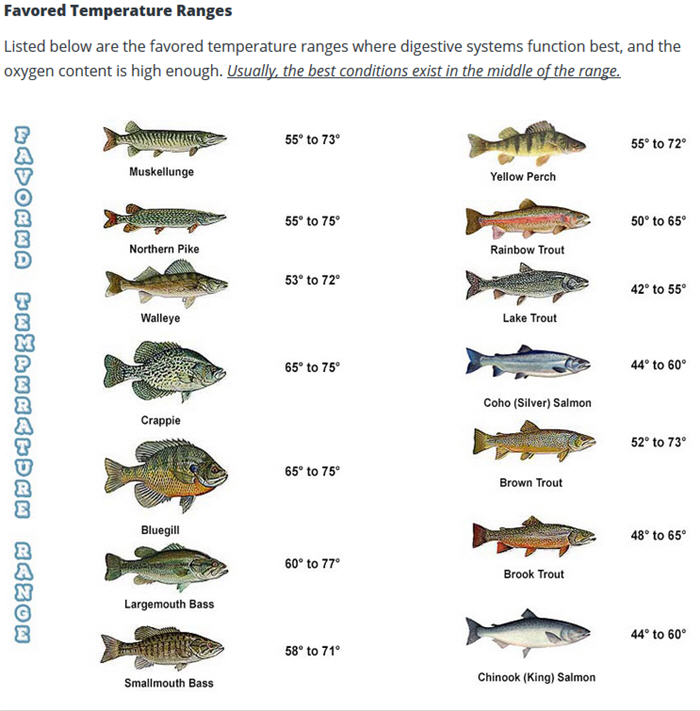
Different fish thrive in different thermal ranges. Use this guide to target the right species at the right time.
Largemouth Bass
- 50°F: Start moving from deep winter holes.
- 60 to 65°F: Spawn begins. Target shallow flats.
- 68 to 78°F: Peak feeding. Use crankbaits and topwater.
- Above 80°F: Retreat to deeper shade or thermocline.
Pro Tip: In summer, fish 30 to 40 feet down where temperature drops to 74 to 76°F.
Walleye
- 45 to 50°F: Pre-spawn run. Fish tributaries.
- 53 to 72°F: Optimal range. Follow baitfish.
- Around 67°F: Prime feeding depth. Often near thermocline.
Trout (Rainbow/Brown)
- 54 to 59°F: Best feeding window.
- Above 68°F: Avoid catch-and-release. Stress increases.
- Above 75°F: High mortality risk.
In summer, target spring-fed inlets or deep lakes with cold bottom layers.
Catfish
- 75 to 86°F: Prime feeding, especially at night.
- Use stink baits, cut bait, or live shad.
- Less affected by low oxygen than other species.
Barramundi
- 82°F (28°C): Peak feeding.
- Below 64°F: Activity shuts down.
- Survives up to 99°F in tropical billabongs.
A cold front dropping temperatures from 82°F to 72°F can stop bites for days.
Target Thermal Breaks and Microzones
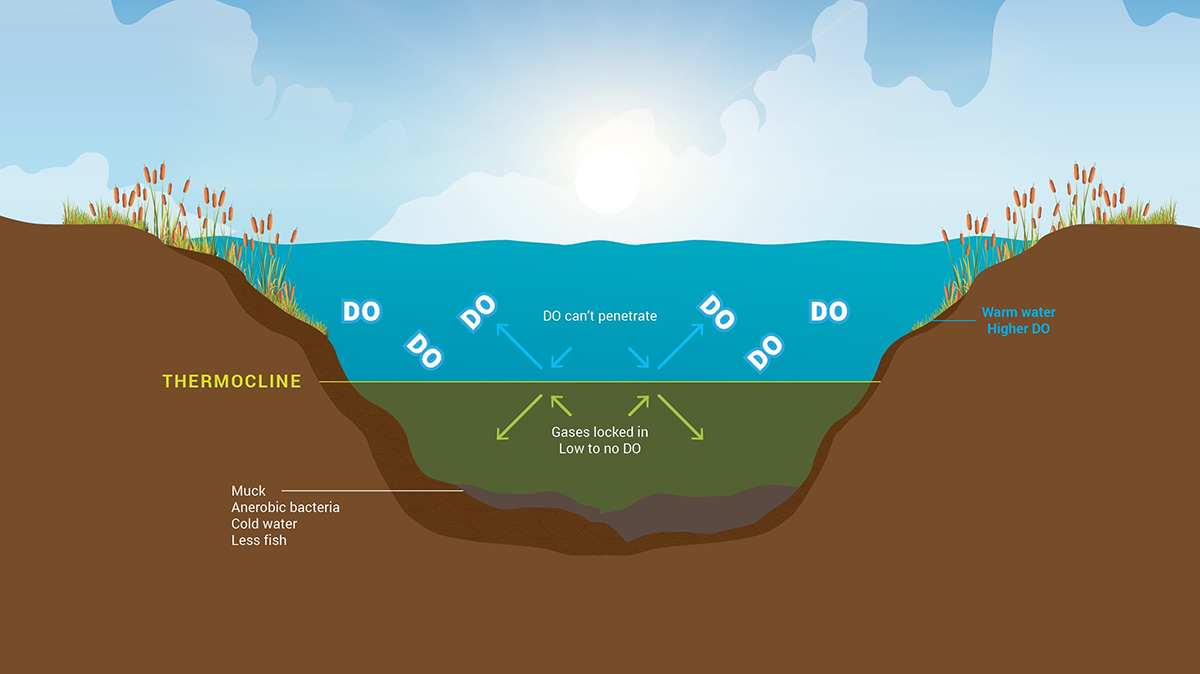
Fish do not just respond to broad temperature ranges. They key in on tiny thermal edges.
Find the Thermal Break
This is where temperature drops rapidly over a short depth change. It often coincides with baitfish schools, oxygen balance, and predator ambush points.
Use a sinking thermometer or Fishhawk to map the gradient and fish just above the drop.
Hunt Microthermal Zones
Even 0.5°C (0.9°F) differences attract fish. Target:
- Sun-warmed rocky points in early spring
- Shallow bays that heat up by midday
- Inflows from warm runoff after sunny days
- Wind-blown shores where warm surface water piles up
Winter example: A shallow bay 1°F warmer than surrounding water can draw in lethargic bass.
Adjust Tactics to Thermal Conditions
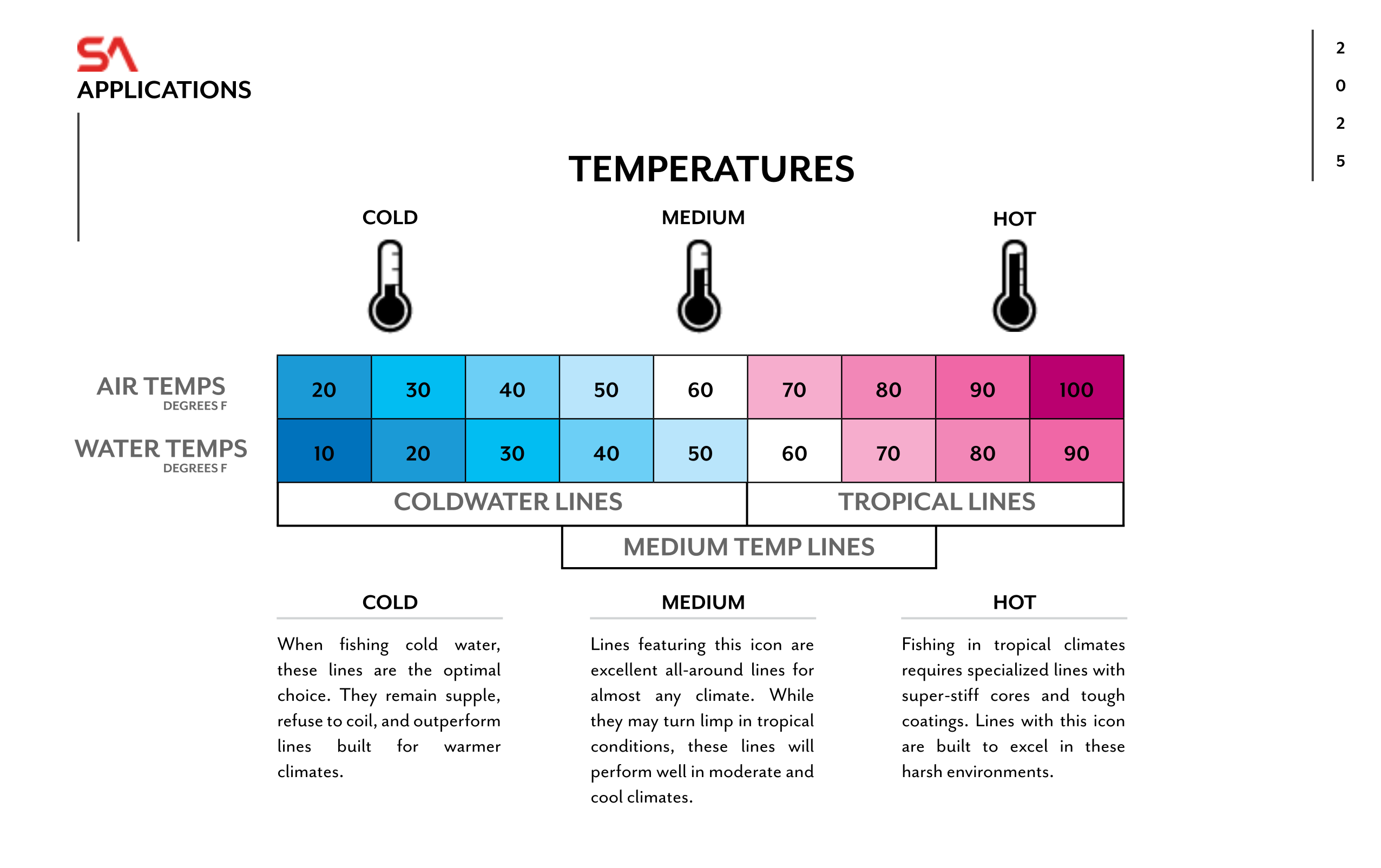
Your presentation should match the fish is metabolic state, dictated by water temperature.
Cold Water (Below 59°F / 15°C)
- Fish are slow. Use slow-moving lures.
- Best lures: Jigs, soft plastics, live bait.
- Retrieve: Slow roll, dead stick, lift-and-fall.
- Time: Midday, when sun warms shallow zones.
Expect short feeding windows. Be patient.
Warm Water (Above 75°F / 24°C)
- Fish are active but oxygen-sensitive.
- Best times: Early morning, late evening.
- Avoid midday heat for trout and bass.
- Use topwater or shallow crankbaits in cooler hours.
In summer, focus on dawn and dusk when temperatures stabilize.
Follow Best Practices for Accuracy
1. Measure at Fish Depth
Never rely on surface-only readings. Fish live where the temperature suits them, not where the sun hits.
2. Avoid Direct Sunlight
Take readings in shade or early morning to prevent false highs.
3. Take Multiple Readings
Compare windward versus leeward shores, deep holes versus shallow flats, and inflows versus main lake.
4. Keep a Fishing Log
Record date, time, location, surface and depth temperatures, lure, depth, and catch results. Over time, patterns emerge.
5. Combine with Other Cues
- Structure: Rocks, weeds, drop-offs
- Baitfish: Minnows, shad, shrimp
- Birds diving: Sign of baitfish and predators below
Frequently Asked Questions About Checking Water Temperature for Fishing
What is the best thermometer for shore fishing?
A castable sinking thermometer is the best tool for shore fishing. Models cost $7 to $15 and attach directly to your fishing line, allowing you to measure temperature at specific depths where fish actually hold.
How accurate is the hand immersion test for estimating water temperature?
Experienced anglers can estimate water temperature within ±3°F using the hand immersion test. Submerge your hand and compare sensations: cold means below 55°F, tepid means 55 to 65°F, and warm means above 65°F.
What is a thermocline and why does it matter for fishing?
A thermocline is a layer of water where temperature drops rapidly over a short depth change, often 10°F or more over 10 feet. Fish like walleye and bass congregate just above the thermocline because it offers optimal oxygen and temperature conditions.
Can I use my fish finder to check water temperature at depth?
Standard fish finders only measure temperature near the surface, typically 5 to 10 cm deep. They do not show deep layer temperatures. Use a sinking thermometer, Fishhawk, or castable sonar to get depth-specific readings.
What water temperature do bass prefer?
Largemouth bass become active above 50°F, with peak feeding between 60 and 70°F. They spawn at 60 to 65°F and seek deeper, cooler water above 80°F.
Do I need expensive tools to check water temperature?
No. A basic sinking thermometer costs only $7 to $15 and provides accurate depth-specific readings. More advanced tools like smart sonar ($150 to $250) offer additional features like fish marking and bathymetric mapping.
Key Takeaways for Checking Water Temperature While Fishing
Water temperature is the invisible key to unlocking fish behavior. Fish are cold-blooded, meaning their metabolism, feeding activity, and location all respond directly to thermal conditions. A difference of just 5°F can completely change where fish hold and how aggressively they bite.
The most important practice is measuring temperature at the depth where fish actually live, not just at the surface. Use a sinking thermometer to find the thermocline, then match your lure depth to that thermal layer. This single habit separates productive anglers from those who waste days fishing in the wrong water.
Start with an affordable sinking thermometer, record your findings in a fishing log, and combine temperature data with observations of baitfish activity and structure. Over time, you will develop patterns that make every trip more productive. Check the temperature before your first cast, and turn science into success.