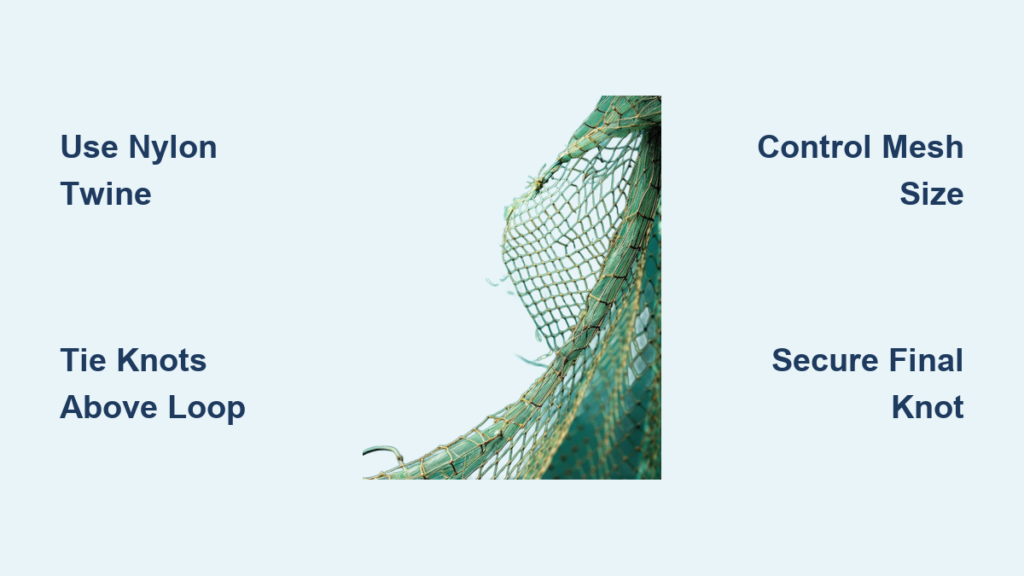
Fishing nets have been catching fish for over 10,000 years, yet many people still wonder exactly how these simple-looking tools actually trap aquatic life. At its core, a fishing net works by creating a physical barrier in the water that exploits fish movement and behavior to achieve capture. Whether you are throwing a cast net from shore or watching a commercial trawler drag a massive net through the ocean, the underlying principles remain remarkably consistent.
In this guide, you will discover exactly how fishing nets trap fish through different mechanisms, the key components that make nets functional, and which net type works best for specific situations. You will also learn practical deployment techniques, maintenance tips, and sustainable practices to maximize your success while minimizing environmental harm.
How Fishing Nets Trap Fish
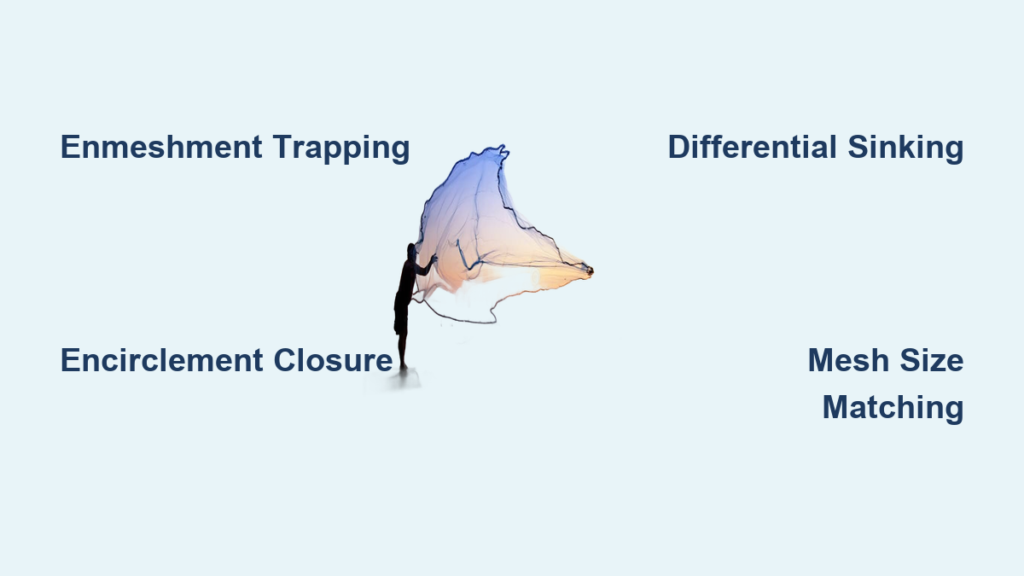
Fishing nets do not randomly catch fish. They are engineered tools that exploit specific behaviors and physical properties of fish to achieve capture. Understanding these mechanisms helps you choose the right net and use it effectively.
Enmeshment: When Fish Get Stuck
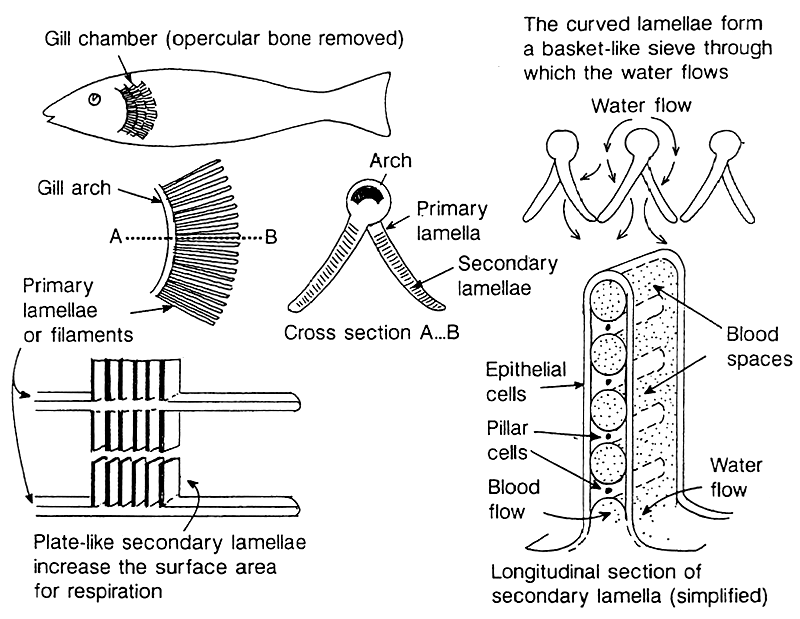
Gillnets and tangle nets rely on enmeshment, where fish swim into the net and become trapped by their gills, fins, or body. The mesh is sized so a fish can push its head through but cannot back out. As the fish struggles, its gill covers catch on the mesh, securing the hold.
This method works best when mesh size matches the target species. However, enmeshment is not selective. Marine mammals, seabirds, and non-target fish can become trapped if the net is left unattended. Lost or abandoned gillnets continue catching marine life for years, a phenomenon called ghost fishing.
Encirclement: Closing the Circle
Purse seines and beach seines use encirclement to trap entire schools of fish. A long net is set in a circle around a school, then the bottom is drawn shut like a drawstring bag. This “purse” action prevents fish from escaping upward or downward.
This method works exceptionally well on surface-schooling species like tuna, mackerel, and sardines. When used with Fish Aggregating Devices, purse seines can catch massive volumes. However, they often include high levels of bycatch, including juvenile fish and sea turtles.
Trapping: Funnel Entry Without Exit
Fyke nets, hoop nets, and trap nets use passive trapping. Fish enter through cone-shaped funnels that guide them inward but prevent escape. These nets are typically anchored in rivers, lakes, or estuaries and left for hours or days.
Because they require minimal monitoring, trap nets are popular for catching eels, catfish, and panfish. The downside is that if not retrieved regularly, they risk overfilling or contributing to ghost fishing if made from non-biodegradable materials.
Sweeping: Trawling Through the Water
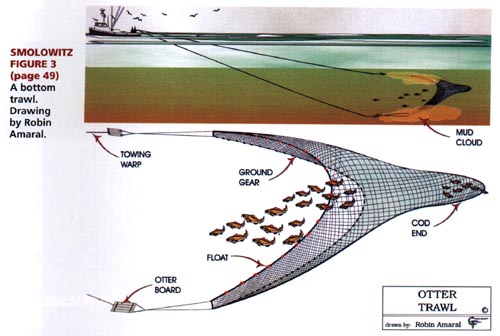
Trawl nets, whether bottom or midwater, are towed through the water to sweep up fish in their path. Otter boards or spreader bars keep the net mouth open while the net funnels everything into a closed cod end at the rear.
Bottom trawling is particularly impactful on marine ecosystems. It scrapes the seafloor, damages coral and benthic habitats, and can remove 5 to 25 percent of seabed life with each pass. Midwater trawls are less destructive but still catch non-target species when targeting dense schools.
Cast Net Differential Sinking
Cast nets use differential sinking, where the weighted edge sinks faster than the center, forming an inverted cone underwater. After waiting one to two seconds, the fisher pulls a hand line to close the bottom before fish can escape.
This technique works best in shallow, calm waters targeting baitfish like mullet or shad. Success depends heavily on throwing technique, timing, and proper weight distribution along the perimeter.
Key Components Every Fishing Net Uses

Every fishing net shares core structural elements that ensure it opens correctly, sinks properly, and closes to trap fish. Understanding these components helps you select and use nets effectively.
Floats and Sinkers Create Vertical Orientation
Floats attached to the top edge keep the net upright in the water. Without floats, the net would collapse horizontally and fail to form a vertical barrier. Modern floats are made from hollow plastic or foam, replacing older materials like cork or gourds.
Sinkers or weights on the bottom edge pull the net downward quickly. In cast nets, lead-core ropes ensure the perimeter sinks faster than the center, creating the trapping bag. In trawls, heavy chains along the bottom stir up fish from the seabed.
Together, floats and sinkers create a vertical curtain spanning the water column. This vertical orientation is critical for gillnets, seines, and trawls to function properly.
Mesh Size Determines What Gets Caught
The mesh is the heart of any fishing net. Its size and shape determine species selectivity and catch efficiency.
Square mesh provides consistent openings and is the most common configuration. Diamond mesh stretches more and is frequently used in gillnets. Hexagonal mesh offers flexibility and appears in some artisanal nets.
Mesh size is measured in two ways. Square mesh is the distance between adjacent knots when the net is relaxed. Stretch mesh is the distance when fully pulled, which is approximately twice the square mesh measurement.
As a general rule, mesh should match the average body width of target fish. Smaller mesh catches more fish, including juveniles, while larger mesh allows undersized fish to escape.
Cast Net Specific Components
Cast nets include unique components that enable their throwing action. The hand line connects to the top and allows retrieval. Bridle lines run from the central horn through the net, ensuring even opening during deployment.
The horn is the central hub that separates bridle lines and prevents tangling. A swivel connects the hand line to the net and prevents twisting during the throw.
Poor bridle alignment or tangled lines cause partial openings and missed catches. Taking time to load and prepare the net correctly dramatically improves performance.
Common Fishing Net Types Explained
Different nets are designed for different jobs. Here is how the most widely used types work in practice.
Bottom Trawl: Dragging the Seafloor
Bottom trawls are towed along the seabed to catch cod, halibut, and shrimp. Otter boards spread the net wide while heavy tickler chains scare fish into the net’s path.
This method is highly efficient but ecologically damaging. Bottom trawling disrupts benthic ecosystems and produces significant bycatch. Many fisheries now require bycatch reduction devices and closed areas to limit environmental impact.
Cast Net: The Art of the Throw
Cast nets are thrown by hand in a spinning motion. The weighted perimeter sinks rapidly, enveloping fish in a closing circle. This method is ideal for shallow waters and targets baitfish.
Cast nets are selective and low-impact when used properly. Success depends on technique. Consistent throwing produces better results than occasional perfect throws.
Gillnet: The Invisible Wall
Gillnets are vertical panels set in the water column, either drifting with currents or anchored in place. Fish swim into them and become caught by their gills as they attempt to back out.
These nets are effective but controversial due to bycatch of marine mammals and seabirds. Many countries regulate mesh size and require acoustic pingers to deter dolphins.
Purse Seine: Closing the Bottom
Purse seines encircle a school of fish and then close the bottom with a purse line that runs through rings along the footline. This method is common in tuna and sardine fisheries.
When set on free-swimming schools without FADs, purse seines have relatively low bycatch. However, when used with Fish Aggregating Devices, they catch large numbers of juvenile tuna, sharks, and turtles.
Fyke Net: Passive Funnel Trapping
Fyke nets use a series of cone-shaped chambers. Fish enter through the first funnel and swim deeper, unable to find the exit. These nets are commonly used for eels and panfish.
They are low-impact but require regular checking to avoid overfilling or ghost fishing if left unattended for extended periods.
Materials Used in Modern Net Construction
Fishing net materials have evolved dramatically over thousands of years, though core design principles remain unchanged.
From Natural Fibers to Synthetics
Early nets were made from willow, flax, hemp, or spruce root. Floats were wood or gourds, and sinkers were stones or pottery.
The shift to nylon in the 1950s revolutionized fishing. Nylon is strong, lightweight, rot-resistant, and nearly invisible underwater. By 1975, approximately 95 percent of Norwegian fishing gear was synthetic.
Today, polyethylene and polypropylene dominate for ropes and floats, while monofilament is used in gillnets for its near-invisibility underwater.
Why Material Choice Matters
Synthetic nets last longer, sink faster, and resist biofouling better than natural materials. However, they persist in the ocean for centuries if lost, contributing to ghost fishing and plastic pollution.
New biodegradable nets are being developed and tested to reduce long-term environmental impact when gear is accidentally lost.
How to Deploy and Retrieve a Fishing Net
Even the best net fails without proper handling. Here is how to use nets effectively.
Preparation Before Deployment
Before deploying any net, inspect it for tears, tangles, or worn mesh. Ensure floats and sinkers are evenly spaced. Coil the hand line loosely and attach the leash securely to your wrist.
For cast nets, load the net properly by holding the horn in one hand and gathering half the lead line in the other. Proper loading ensures full opening during the throw.
Throwing a Cast Net Correctly
Stand with your lead foot forward and knees slightly bent. Use a wide, circular motion like a haymaker. Release at the top of the arc, aiming slightly downward.
Hold the lead line briefly after release to build momentum for full opening. Wait one to two seconds after the net sinks before pulling the hand line to close the bottom.
Retrieve smoothly rather than yanking, which can tear the net or injure the catch.
Using Depth Markers
Tie colored tape every five feet on the hand line. This helps estimate sinking time and closure timing, especially in deep or murky water where you cannot see the net.
Factors That Affect Net Performance
Many variables influence how well a fishing net works. Some are controllable, while others depend on conditions.
Matching Mesh to Target Species
Too small mesh catches juveniles and slows sinking. Too large mesh allows target fish to escape.
A general rule is to match mesh to body girth. A nine-inch fish needs about a one-inch square mesh. Many regulations set minimum mesh sizes to protect young fish and ensure sustainable harvests.
Net Visibility and Fish Behavior
Dark or transparent nets are less visible underwater. Monofilament is nearly invisible, which is ideal for wary fish in clear water.
In murky water, color matters less. Understanding how visibility affects fish behavior helps you choose the right net for conditions.
Environmental Conditions
Currents can drift nets off target or prevent full opening. Visibility affects fish reaction, as some nets rely on startling fish into the mesh. Depth determines net weight and sinking speed requirements.
Use fish finders to locate schools and time your throws accurately for best results.
Environmental Impact and Sustainable Practices

Fishing nets feed millions of people, but some net types harm ecosystems significantly.
Bycatch and Habitat Concerns
Bottom trawls destroy seabed habitats and remove large percentages of benthic life with each pass. Drift nets kill dolphins, turtles, and seabirds. FADs used with purse seines increase juvenile bycatch in tuna fisheries.
Lost nets become ghost nets that continue trapping marine life indefinitely, contributing to long-term environmental damage.
Reducing Environmental Harm
Use larger mesh or escape panels to allow non-target species to exit. Avoid FADs when possible. Choose biodegradable materials. Follow regulations on mesh size, closed areas, and gear types.
The United Nations and various governments have called for bans on high-seas bottom trawling to protect deep-sea ecosystems.
Best Practices for Net Users
Whether fishing recreationally or commercially, these tips improve results and reduce negative impacts.
Choosing the Right Net Weight
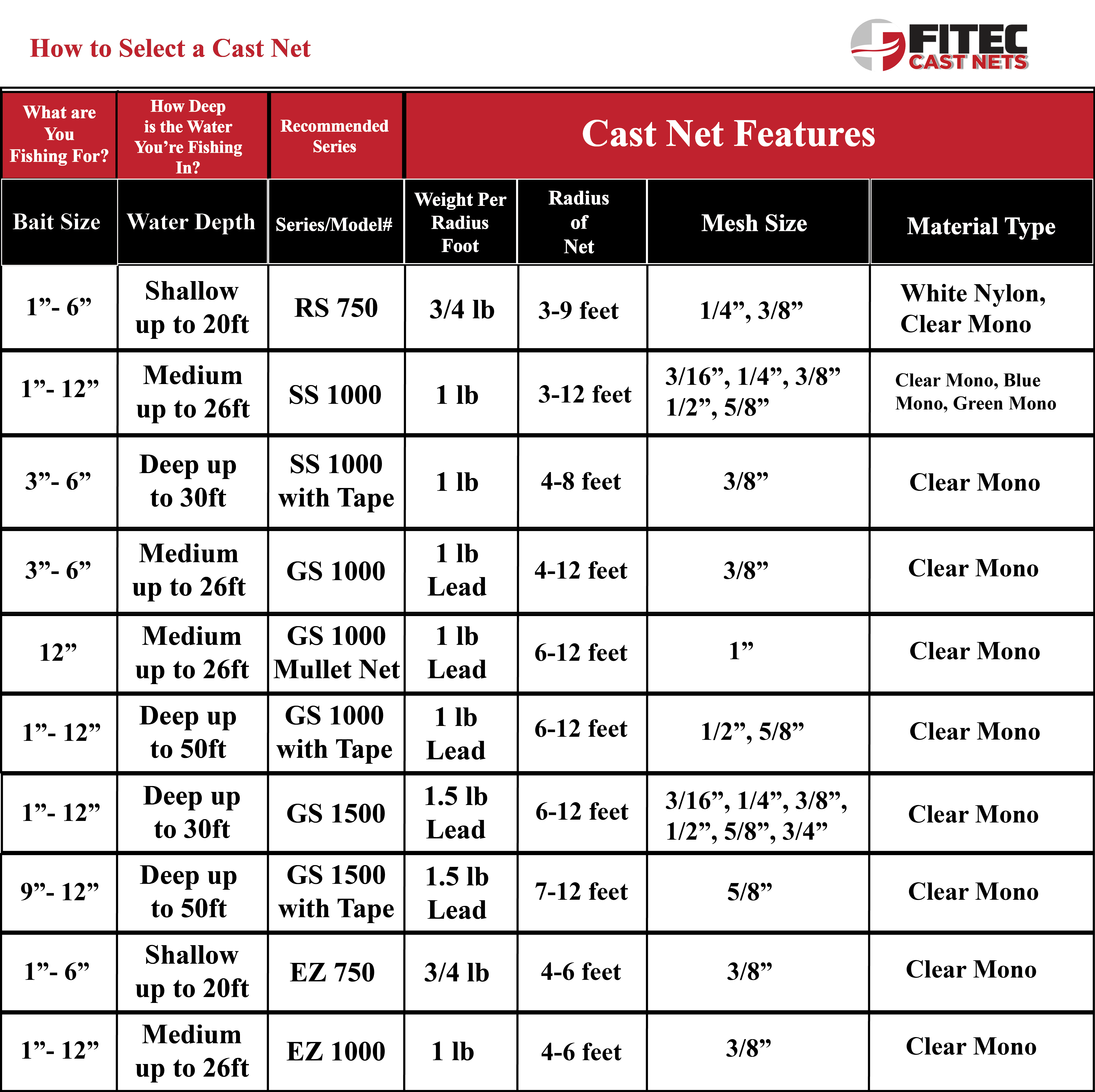
Match net weight to fish depth rather than total water depth. For one to seven feet depth, use 0.75 pounds per foot of radius. For seven to fifteen feet, use 1.0 pound per foot. For depths over fifteen feet, use 1.5 pounds per foot.
Calculating Maximum Net Size
Use the formula: Maximum Radius equals Maximum Lifting Capacity divided by Weight per Foot. For example, fifteen pounds capacity divided by 1.5 pounds per foot equals a ten-foot radius net, ideal for most shore anglers.
Smaller nets offer advantages including lower cost, easier handling, better accuracy, and reduced risk in snag-prone areas.
Maintaining Your Net
Rinse with fresh water after each use to remove salt and debris. Remove algae and barnacles promptly. Repair tears immediately. Store dry and out of sunlight.
A well-maintained net lasts three to five years with regular use.
Advanced Techniques for Better Results
Modern technology can significantly improve your catch rates when used with traditional nets.
Using Fish Finders
Locate fish schools with sonar, then throw your cast net directly on the mark. This technique dramatically improves success rates in open water.
Bubble Trail Navigation
After casting from a boat, reverse engine and turn 360 degrees. The bubble trail will reverse, guiding you back to the net location so you can retrieve it precisely.
Depth Markers for Accuracy
Colored tape every five feet on the hand line helps estimate sinking depth and timing. This is especially valuable in deep water where visual confirmation is impossible.
Frequently Asked Questions About How Fishing Nets Work
How does a fishing net actually catch fish?
Fishing nets catch fish through several mechanisms. Enmeshment traps fish by their gills or fins when they try to back out of mesh that is sized slightly smaller than their body. Encirclement surrounds a school of fish and closes the bottom like a drawstring bag. Trapping uses funnel-shaped openings that allow entry but prevent escape. Sweeping drags the net through the water to collect fish in its path.
What is the difference between a gillnet and a purse seine?
A gillnet is a vertical wall of mesh that catches fish by their gills as they swim into it. A purse seine is a large net that encircles an entire school of fish before closing the bottom with a purse line. Gillnets are typically set and left to fish passively, while purse seines are actively deployed around visible fish schools.
Why do fishing nets have different mesh sizes?
Mesh size determines which fish get caught and which escape. Smaller mesh catches smaller fish but also increases bycatch of juveniles and non-target species. Larger mesh allows undersized fish to escape while retaining larger target species. Regulations often mandate minimum mesh sizes to promote sustainable fishing.
How do cast nets work differently from other fishing nets?
Cast nets rely on differential sinking. The weighted outer edge sinks faster than the center, creating an inverted cone that envelops fish below. After a brief delay, the fisher pulls a hand line to close the bottom, trapping fish inside before they can escape. This is fundamentally different from passive nets that wait for fish to swim into them.
What causes ghost fishing and how can it be prevented?
Ghost fishing occurs when lost or abandoned nets continue catching marine life indefinitely. Synthetic materials do not biodegrade, so lost nets keep fishing. Prevention includes using biodegradable materials when available, properly securing gear, retrieving nets promptly, and participating in ghost net recovery programs.
How do I choose the right size cast net for my needs?
Choose cast net size based on your lifting capacity and target fishing depth. Use 0.75 pounds weight per foot of radius for shallow water under seven feet, 1.0 pound for seven to fifteen feet, and 1.5 pounds for depths over fifteen feet. A practical formula is Maximum Radius equals your lifting capacity divided by weight per foot.
Key Takeaways for Understanding How Fishing Nets Work
Fishing nets work by combining physics, design, and fish behavior to trap aquatic life efficiently. The core principle remains “open wide, close tight, trap within,” whether using a simple cast net or an industrial trawl. Different net types exploit different capture mechanisms: enmeshment for gillnets, encirclement for purse seines, trapping for fyke nets, and sweeping for trawls.
Choosing the right net involves matching mesh size to target species, selecting appropriate weight for water depth, and considering environmental impact. Sustainable practices like using larger mesh, avoiding FADs, and maintaining gear properly help balance catch success with environmental responsibility.
Whether you are casting from shore or operating commercial gear, understanding how fishing nets work helps you use them more effectively and responsibly. Smart net use ensures better results today and sustainable fisheries for tomorrow.