Imagine you’re stranded by a riverbank with no gear. No tackle box, no rod, no net. Hunger sets in. The water teems with life, but how do you get it out? The answer is simpler than you think: you don’t need a fishing rod to catch fish. For thousands of years, humans have relied on ingenuity, natural materials, and time-tested techniques to harvest food from water.
This guide reveals every practical method for catching fish using only what’s around you. From improvised lines and hand lines to traps, spears, and jug fishing, these techniques draw from global traditions and modern survival wisdom. Whether you’re preparing for emergencies or exploring off-grid skills, this article gives you the tools to succeed.
Build an Improvised Fishing Rod

When you lack gear, turn nature into your tackle shop.
Craft a Functional Fishing Stick
A sturdy, flexible branch becomes your rod. Choose green wood like willow or sapling from 4 to 6 feet long. Avoid dry, brittle sticks that snap under pressure. Strip off side branches and smooth the tip where the line will rest.
To attach the line, use a locking knot. Wrap the cord down one side of the stick, back up the other, loop the end through the wrap, and pull tight. Trim excess with a sharp rock or knife.
Make a Hook from Anything
No hook? No problem. Use these alternatives:
• Metal: Straighten a paperclip, safety pin, or nail
• Bone: Carve a fishbone or animal rib into a curved hook
• Wood or thorn: Shape hardwood into a barbed point, or use hawthorn as-is
Sharpen the tip on stone. For metal hooks, rust can help hold soft bait like worms.
Use Natural or Found Line
Fishing line alternatives include:
• Paracord (inner strands work well)
• Shoelaces
• Dental floss (stronger than it looks)
• Plant fibers (inner basswood or milkweed bark)
Tie the hook to the line with a tight clinch knot. If no bait is available, try shiny lures made from foil or bottle caps.
Set Passive Lines Overnight
Fish while you sleep with hands-free methods.
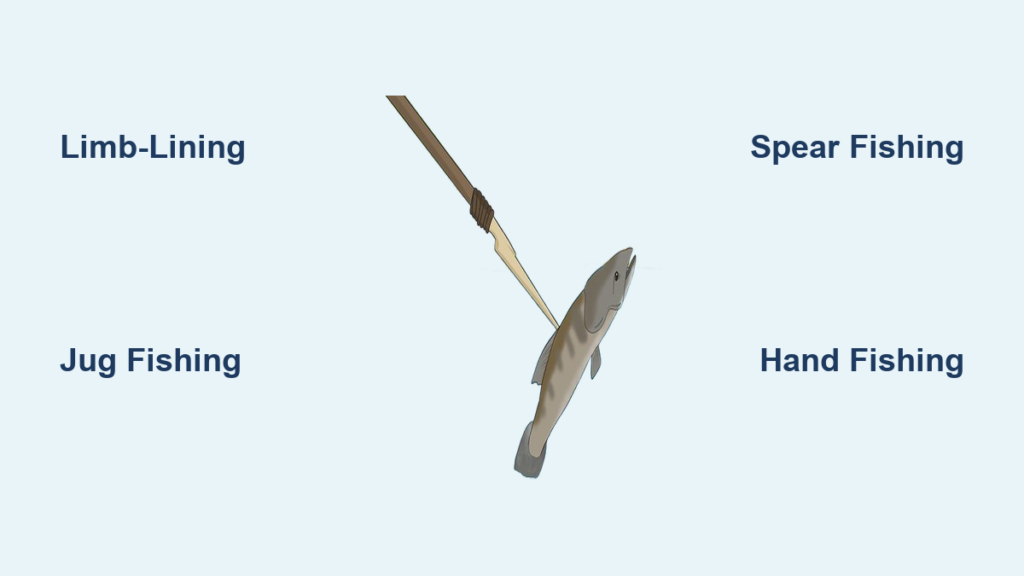
Try Limb-Lining
Use overhanging tree limbs as natural fishing rods.
Steps:
- Tie one end of strong nylon line (20 to 50 lb test) to a springy limb
- Let the other end dangle into the water with a hook, weight, and bait
- Position the hook 2 to 3 feet deep, near the bottom
- Attach a split shot 6 to 8 inches above the hook
Springy limbs absorb fish movement, reducing break-offs. Set dozens of lines to boost success.
Best Bait: Nightcrawlers, fish scraps, or stink bait.
Target Fish: Catfish, bream, carp.
Use Yo-Yo Fishing Reels
An automatic hook-setter boosts catch rates.
How It Works:
• A spring-loaded yo-yo reel holds tension
• When a fish bites, it trips a trigger and line unspools fast, setting the hook
• As the fish tires, the spring re-spooling pulls it in
Setup:
- Attach the yo-yo to a bent tree limb
- Pull out line to lower bait
- Lock depth with the wire trigger
- Bait with wigglers or small minnows
Best Time: Dusk to dawn.
Ideal For: Bluegill, crappie, small catfish.
Float Fish with Jug Lines
Turn plastic bottles into bobbers that hunt fish.
Deploy Jug Fishing Rigs
Plastic 2-liter bottles make perfect floating indicators.
Build a Jug Line:
- Tie nylon line (4 to 10 ft) around the bottle neck
- Attach a 2/0 bait keeper hook to the other end
- Add a split shot 6 to 8 inches above the hook
- Wrap excess line around the jug and secure with a rubber band
Fishing Strategy:
• Launch jugs upwind or upcurrent from feeding zones
• Let them drift over flats, holes, or channels
• Watch for jugs that tip sideways or vanish, which signals a bite
Night Fishing: Paint jugs orange or coat with glow paint. Use a spotlight to scan.
Legal Rules: Many states limit jug numbers. Some require name and ID tags on each jug.
Target Species: Channel catfish, flathead, carp.
Set a Trotline Across Water
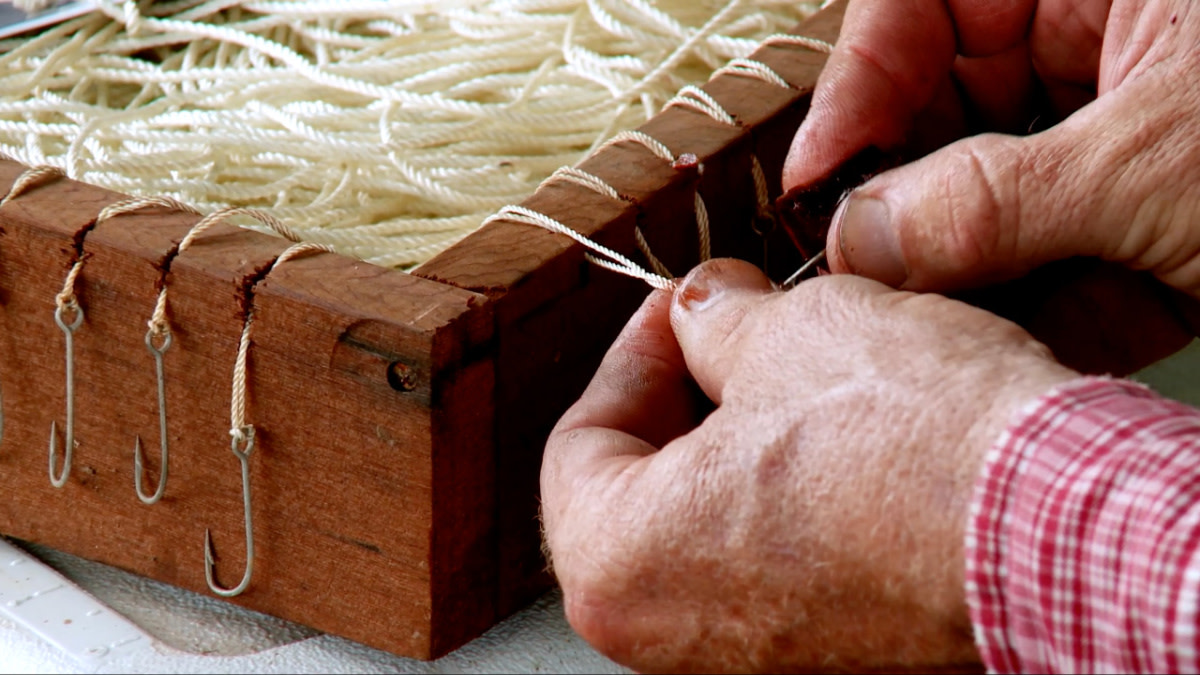
Catch multiple fish at once using this commercial-style method.
String a High-Yield Main Line
A trotline is a long line strung across a river or lake with dozens of baited hooks.
Materials:
• Mother line (100+ ft of heavy nylon)
• Dropper lines with hooks (every 3 to 5 feet)
• Anchors (trees, rocks, or weights)
• Small weights every 5 to 6 hooks
Setup:
- Tie one end to a tree or rock on shore
- Stretch line across the water
- Anchor the far end with a heavy stone
- Attach dropper lines with hooks
- Add weights to keep baits near the bottom
Bait Options: Live minnows, cut fish, grasshoppers, nightcrawlers.
Best Practice: Set in the afternoon. Check at dawn.
Rig a Setting Pole for Catfish
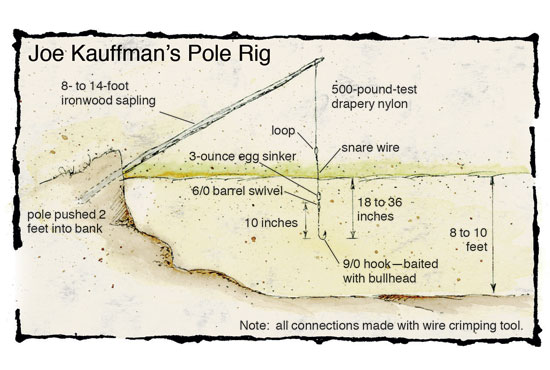
Target big flatheads with a silent, powerful setup.
Build a Night Fishing Pole
This method uses a hardwood sapling anchored in the bank.
Materials:
• 7 to 10 ft forked sapling
• Heavy tarred line
• 4/0 to 6/0 hook
• Bell sinker
• Live bait (goldfish or bluegill)
Steps:
- Drive the pole into the bank at the head of a deep pool
- Angle the fork 3 to 5 feet over the water
- Tie line to a tree, wrap around the pole just below the fork
- Let hook hang 1 foot off the river bottom
- Hook live fish behind the dorsal fin so they swim naturally
Why It Works: Flathead catfish hunt live prey at night. The rig holds tension and sets the hook automatically.
Cast With a Soda Can Reel
Turn trash into a casting tool.
Make a DIY Spool Reel
An aluminum soda can becomes a line spool.
How to Build:
- Tie monofilament line around the can
- Wrap on 20 to 30 feet of line
- Attach hook, sinker, and bait to the free end
Casting Method:
• Hold the can like a spool
• Catch the line with your index finger
• Swing and release; weight pulls line off smoothly
Limitation: Not for repeated casting. Best for one-and-done setups.
Spear or Gig Fish by Hand
No line? No hook? No problem.
Build a Simple Fishing Spear
Sharpen a straight 6 to 8 ft branch into a point.
Types:
• Single-point: Whittle to a sharp tip. Good in clear, shallow water.
• Barbed: Use a forked branch. Shape one tine into a backward-facing barb.
• Gig: Split the end, wedge it open with wood, sharpen both prongs.
Hunting Tips:
• Aim below the fish. Water bends light.
• Use a flashlight at night. Fish freeze in the beam.
• Move slowly. Fish sense vibrations.
Target Species: Catfish, carp, frogs, panfish.
Catch Fish Barehanded (Noodling)
Reach into holes and pull out catfish.
Try Hand Fishing Safely
Also called noodling, this method uses bare hands.
How to Do It:
- Locate undercut banks, rock crevices, or submerged logs
- Slide your hand in slowly
- Feel for a large fish
- Grab it by the gills or upper jaw and yank out fast
Best Time: Summer nights during spawning season.
Risks: Alligators or snakes may share the hole. Catfish can cut with spines.
Legal Note: Allowed in Oklahoma, Texas, Mississippi, but banned in many states.
Build Fish Traps from Scratch
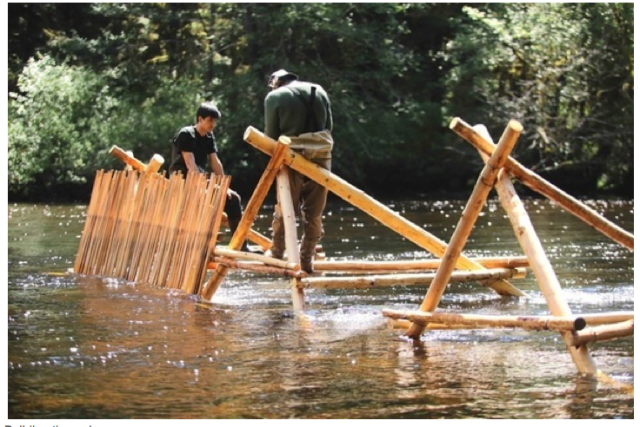
Let fish walk into captivity.
Construct a Weir or Funnel Trap
Use stakes and branches to guide fish into a pen.
Steps:
- Drive wooden stakes into the riverbed in a V-shape
- Narrow end leads to a holding cage
- Weave branches or vines between stakes to block escape
- Bait with food scraps
Best Spots: Narrow streams, tidal zones during rising or falling tides.
Works Best During: Fish migrations or spawning runs.
Weave a Basket Trap
Make a cone-shaped trap from willow or reeds.
Design: Wide entrance narrows inside. Fish enter easily but cannot find the way out.
Bait: Fish guts, bread, or corn.
Check Every 6 to 12 Hours.
Make a Net from Paracord or Vines
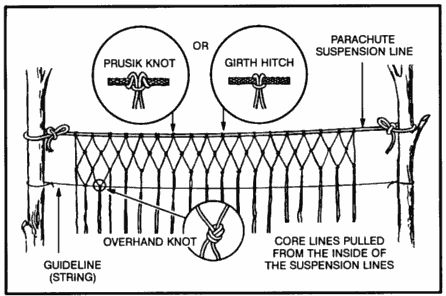
Catch fish in bulk with a homemade net.
Create a Gillnet from Paracord
Extract inner strands (7 to 9 per foot) and weave a mesh.
Steps:
- Knot strands into a grid pattern
- Mesh size: small for panfish, large for catfish
- Attach floats (wood pieces) to the top
- Add weights (stones) to the bottom
- Anchor across a current
Leave overnight. Check at dawn.
Build a Scoop Net
Weave vines or rope into a basket. Attach to a forked stick. Scoop fish from shallow water or surface schools.
Best For: Minnows, fry, or schooling panfish.
Find or Make Bait Anywhere
No bait? No excuse.
Natural Bait Sources
• Worms: Dig under logs or damp soil
• Insects: Shine a light at night; moths and beetles come to you
• Crayfish: Flip rocks in streams
• Crabs/Clams: Found at low tide
• Fish guts: Use stomach contents of caught fish
No-Bait Lures
• Shiny objects: Foil, bottle caps, can tabs
• Feather lures: Tie feathers to a hook
• Twitch the line: Mimic live prey with small jerks
Follow Survival Fishing Rules
Maximize success with smart timing and stealth.
Fish at the Right Time
• Dawn and dusk: Peak feeding
• Night: Catfish, carp, and flatheads roam
• Spawning season: Fish gather in shallow water
Stay Undetected
• Avoid casting shadows
• Move slowly. Fish see and feel vibrations
• Wear muted colors
Know Your Target
| Species | Best Method | Top Bait |
|---|---|---|
| Catfish | Jug, trotline, noodling | Nightcrawlers, live fish |
| Panfish | Yo-yo, hand line | Wigglers, small minnows |
| Trout | Spear, hand line | Insects, fish eggs |
| Carp | Jug, net | Corn, bread |
| Salmon | Hand fishing (spawning) | None. Use timing |
Respect Laws and Nature
Survival does not mean recklessness.
Check Local Laws
• Jug fishing, trotlines, and noodling are banned in many states
• Some require permits or ID tags
• Fishing without a license is illegal, even without a rod
Practice Ethics
• Never abandon gear. Ghost lines kill for years.
• Take only what you need.
• Handle fish humanely.
Frequently Asked Questions About Catching Fish Without a Rod
Can you really catch fish without any fishing equipment?
Yes. Humans have caught fish without rods for thousands of years using improvised tools like sharpened sticks, natural fibers, and handmade traps. Methods like hand fishing, spear fishing, and jug lines have been practiced across cultures worldwide.
What is the easiest method for beginners?
Limb-lining is the simplest method. Tie a line to an overhanging tree branch with a hook and bait, then wait overnight. It requires minimal skill and uses natural materials found near any waterway.
Is noodling (hand fishing) dangerous?
Noodling carries risks. Catfish have sharp dorsal spines that can cause deep cuts. Holes may contain alligators or venomous snakes. Never noodle alone. The practice is also illegal in many states, so check local regulations first.
How do I make bait when I have none?
Use natural alternatives like worms dug from damp soil, insects attracted to light at night, or fish guts from caught fish. You can also use shiny objects like bottle caps or foil as no-bait lures. Corn and bread work well for carp.
Are jug lines legal everywhere?
No. Many states regulate or ban jug fishing. Some limit the number of jugs allowed per person. Others require name and ID tags on each jug. Always check local fishing regulations before using this method.
Key Takeaways for Catching Fish Without a Rod
Knowing how to catch a fish without a fishing rod connects you to ancient human wisdom. Whether you’re surviving in the wild, exploring off-grid, or just testing your skills, these methods prove that necessity breeds innovation. Start with simple techniques like limb-lining or jug fishing before progressing to traps, spears, or hand fishing. Use multiple methods simultaneously to increase your odds, and always check local laws before practicing these techniques. With creativity and basic materials, you can turn sticks, stones, and scraps into sustenance anywhere, anytime.