There’s nothing quite like landing a wild trout in a rushing mountain stream, especially when you’re miles from the trailhead. But once the fish is on your line, the real question begins: how do you carry it safely and responsibly? Whether you’re practicing catch-and-release or harvesting for dinner, the way you handle and transport trout affects fish survival, meat quality, and your overall experience.
This guide covers proven, ethical, and practical methods for carrying trout while fishing, tailored to wading, backpacking, and vehicle-access scenarios. You’ll learn how to keep fish alive, preserve freshness, avoid spoilage, and move freely without compromising ethics or efficiency.
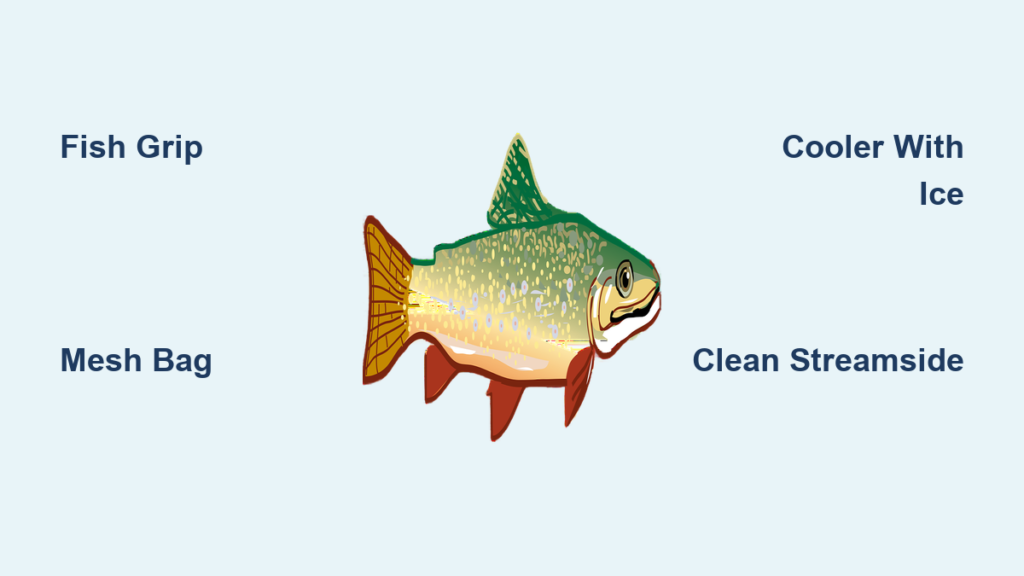
Carry Trout with Fish Grips While Wading

When wading in fast-moving rivers, keeping both hands free is critical for balance and safety. A fish grip with a lanyard is the smartest tool for secure, low-impact handling.
Secure One-Handed Control
Clip the fish grip to your vest or belt with a retractable or fixed lanyard. Clamp onto the trout’s jaw behind the teeth, never squeeze the gills. Lift just long enough to unhook, measure, or snap a photo. This method minimizes stress and physical damage, making it ideal for catch-and-release.
Pro Tip: Choose a BogaGrip-style tool with a built-in length gauge. It doubles as a measuring device, helping you quickly determine if a fish meets legal size requirements.
Limit Air Exposure
Never leave a trout dangling in the air for more than 10 to 15 seconds. Even with a grip, prolonged air exposure damages gill function. Release the fish back into slow water immediately after handling.
Common Mistake: Letting the fish swing freely without body support. Always support its weight with your free hand when lifting to prevent spinal injury.
Store Trout in Mesh Wading Bags

For anglers catching multiple fish in cold water, a mesh wading bag is a game-changer. It keeps trout alive and cool without adding bulk to your gear.
Keep Fish Submerged and Oxygenated
Attach the bag to your belt or pack with a carabiner. Fill with water and place fish inside. Submerge the entire bag in a calm eddy or shallow pool. The open mesh allows constant water flow, mimicking natural conditions. Fish remain calm and oxygenated, drastically increasing survival rates after release.
Best for Cold Water Conditions
This method works best when water temperatures are below 60°F. In warmer water, fish metabolize faster and may suffocate even in flowing bags. Check the bag every 5 to 10 minutes.
Warning: Never seal a live trout in a plastic bag. It will suffocate within minutes due to lack of oxygen.
Use Landing Nets for Short-Term Holding

If you don’t carry extra gear, your landing net can double as a temporary holding tank. This approach requires no additional equipment and keeps fish submerged while you prepare for release or photography.
Anchor Net in Slow Water
After landing a trout, leave it in the net. Place the net in a slow-moving section of the river. Ensure the mesh stays fully submerged. This keeps the fish calm, wet, and stress-free while you prepare for release or take photos.
Know the Limitations
The net can drift away in current if not secured. This method is not suitable for deep or fast water. Never leave the net unattended for more than a few minutes, especially when fishing solo.
Avoid Stringers in Moving Water
Traditional stringers may seem practical, but they’re dangerous and harmful in rivers. Understanding why stringers cause problems helps you make better choices.
Why Stringers Harm Trout
Gill tissue tears easily, leading to infection or death. Fish can thrash and injure themselves on rocks. The line can snag on branches or boulders. This increases mortality rates even in harvested fish.
When Stringers Are Acceptable
Only in still water like ponds or calm backwaters should you consider a rubber or cotton stringer. Even then, use it briefly and keep fish shaded and submerged.
Better Alternative: Use a mesh keep bag anchored in water instead of a stringer for safer fish handling.
Kill Trout Humanely If Keeping Fish
If you’re harvesting trout, quick and humane killing is essential for both ethics and meat quality. Two methods work well in the field.
Deliver a Sharp Head Strike
Use a priest or kill club, or a smooth rock. Grip the trout firmly behind the gills. Strike the top of the head just above the eyes. A single firm blow causes instant unconsciousness and prevents thrashing that bruises the flesh.
Pro Tip: Carry a small aluminum kill club. It’s lightweight, hygienic, and effective for consistent results.
Or Use Spinal Severance
Insert fingers into the gill cavity. Pull the head backward sharply to break the spine at the neck. This also opens the gills, allowing blood to drain. Bleeding improves flavor by reducing blood residue in the meat.
Never use repeated weak blows. It increases suffering and ruins meat quality through stress hormones.
Clean Trout Streamside for Best Freshness

Cleaning your catch on the water keeps it fresh and lightens your load for the hike out. Having the right kit makes this process efficient.
Pack a Streamside Cleaning Kit
Include a sharp fillet knife with a 7 to 9 inch blade. Add a portable cutting mat or flat rock. Bring heavy-duty plastic bags for waste. Carry a bottle of clean water for rinsing.
Step-by-Step Field Cleaning
Remove the head by cutting behind the pectoral fins. Slit the belly from the vent to just below the head. Pull out all guts and dark kidney tissue along the spine. Rinse thoroughly using cold running water inside and out.
Critical: Clean downstream from your fishing spot to avoid contaminating active pools where you might catch more fish.
Never eat a trout with cloudy eyes or slimy gills, as these are signs of spoilage.
Carry Whole Fish with a Forked Stick
The forked stick method is a time-tested, low-tech way to transport whole fish without additional gear. This traditional approach works well in specific conditions.
Make a Natural Fish Carrier
Find a Y-shaped branch, 2 to 3 feet long. Slide the thicker end through the neck wound from the spinal break. Let the fish hang with its head down. Multiple fish can be strung on one stick, keeping them off the ground and allowing airflow.
Best for Cool Weather Trips
This method works well when temperatures are below 55°F. In hot weather, fish spoil quickly unless you take additional cooling measures.
Backpacking Hack: Soak the stick in water before carrying fish to keep them cooler longer through evaporative cooling.
Use Ice Coolers for Warm Days and Long Hikes
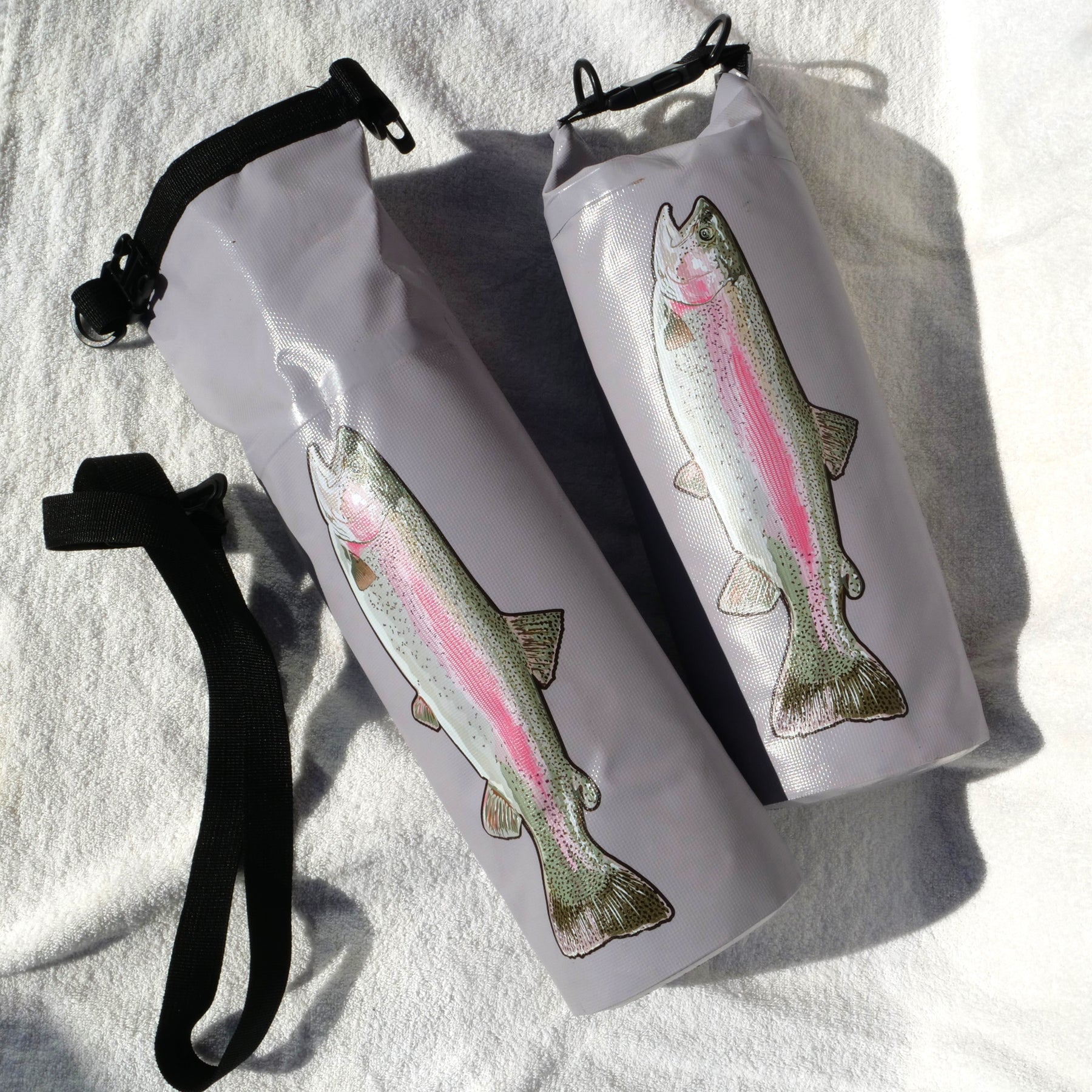
For warm days or multi-hour hikes, a cooler with ice is non-negotiable for keeping harvested trout safe.
Use a Dedicated Fish Cooler
Don’t mix trout with food or drinks because fish odors linger and contaminate other items. Line the bottom with newspaper or towels to absorb meltwater. Place frozen water bottles or sealed freezer packs on top. Keep the cooler shaded and closed as much as possible.
Styrofoam Coolers Work Too
Styrofoam coolers are lightweight and often free from seafood deliveries. They provide excellent insulation and can be disposed of after use to avoid odor buildup. Secure the lid with bungee cords to prevent accidental spills.
Tip: Frozen bottles double as drinking water later, creating zero waste.
Vacuum Seal Trout for Long-Term Storage
Once home, proper storage ensures your trout stays fresh for weeks or months.
Freeze for Long-Term Use
Vacuum seal fillets or whole fish for best results. No sealer available? Wrap tightly in plastic wrap plus aluminum foil, or use freezer paper. Label each package with the date and species, for example, “Rainbow Trout, July 1, 2024.”
Maximum Shelf Life
Trout maintains best quality for 3 months in the freezer. It remains safe for up to 6 months at 0°F, though quality declines after three months. Thaw in the refrigerator overnight, never at room temperature.
Follow Ethical and Legal Rules
How you carry trout isn’t just about convenience. It’s about respect for the resource and compliance with local regulations.
Catch-and-Release Best Practices
Keep fish in water as much as possible throughout the handling process. Limit air exposure to under 30 seconds. Use barbless hooks for quick, clean releases. Never touch the eyes or gills, as these are delicate and easily damaged.
Know Local Harvest Regulations
Some streams are catch-and-release only with no harvesting permitted. Others have bag limits, size rules, or seasonal closures. Put-and-take waters often encourage harvest to prevent overcrowding.
Example: In Western North Carolina, wild brook trout streams are often protected, while stocked rainbow areas allow keeping legal limits. Always check state regulations before keeping any fish.
Manage Odor and Waste Responsibly
Fish guts and blood attract animals and create lingering smells that can ruin gear. Proper disposal and cleaning prevent these issues.
Dispose of Entrails Properly
Return guts to the river away from campsites and trails. This lets nature recycle the nutrients. Never leave waste on shorelines where it can attract predators and create sanitation issues.
Eliminate Cooler Smells
Rinse coolers with a 1:10 bleach-water solution. Dry completely before storing. Use charcoal bags or baking soda to absorb lingering odors.
User Tip: Double-bag fish in a Ziploc plus outer plastic bag to prevent leaks and contain smells.
Frequently Asked Questions About Carrying Trout While Fishing
What is the safest way to hold a trout for catch-and-release?
A fish grip with a lanyard attached to your vest or belt provides the safest handling method. It clamps onto the lower jaw without compressing gills, keeps your hands free for balance, and minimizes scale loss. Limit air exposure to under 15 seconds for best survival rates.
Can I use a stringer to carry trout in a river?
Stringers should be avoided in moving water because they damage gills, tangle on rocks, and increase fish mortality. Use a mesh wading bag submerged in an eddy instead. Stringers are only acceptable in still water like ponds, and even then, use briefly with fish kept shaded and submerged.
How do I keep trout fresh while hiking out?
For warm conditions, use an insulated cooler with frozen ice packs or frozen water bottles. Clean and gut fish before packing to reduce weight and bacterial growth. Place cleaned fish in a sealed bag inside the cooler. Keep the cooler shaded and minimize opening it.
What temperature is safe for storing trout?
Keep trout below 40°F to prevent bacterial growth. In the field, this means using ice or frozen packs. At home, refrigerate cleaned fish and consume within 2 to 3 days, or freeze for longer storage.
How do I clean a trout in the field?
Cut behind the pectoral fins to remove the head. Slit the belly from the vent toward the head. Pull out all organs and dark kidney tissue along the spine. Rinse thoroughly with cold water. Always clean downstream from your fishing spot to avoid contaminating the area.
Key Takeaways for Carrying Trout Responsibly
Carrying trout while fishing requires matching your method to your goal, whether that’s catch-and-release or harvesting for food. Fish grips provide secure one-handed control for wading anglers, while mesh bags keep multiple fish alive in cool water. For harvested trout, prompt cleaning and proper cooling are essential for food safety and meat quality.
Use fish grips for catch-and-release to minimize stress and physical damage. Kill harvested trout quickly using a priest or spinal severance method. Store cleaned fish in a dedicated cooler with ice, and keep the cooler shaded. Always follow local regulations and practice ethical handling regardless of whether you release or keep your catch.
With the right tools and mindset, carrying trout becomes a seamless part of your fishing experience, from stream to release or stream to table.