
You’re standing on a pier, watching a commercial fishing vessel prepare to deploy its gear. Have you ever wondered just how far down those nets can reach? The answer spans the entire ocean, from shallow tidal zones to lightless depths exceeding 2,500 meters. Different net types are engineered for specific depth zones, and understanding this range reveals the incredible scope of modern fishing operations.
This guide covers every major fishing net type and how deep each one operates. You’ll learn what determines deployment depth, which methods pose the greatest environmental risks, and why these distinctions matter for marine conservation.
Gillnets: Vertical Walls Reaching 1,000 Meters

Gillnets hang like invisible curtains in the water, trapping fish by their gills when they try to swim through. Their depth depends entirely on whether they’re anchored to the seabed or allowed to drift with currents.
Set Gillnets Target Deep Coastal Waters
Bottom-set gillnets are anchored directly to the ocean floor in waters up to 1,000 meters deep. These nets catch groundfish like cod, haddock, flounder, and pollock in regions including Alaska, the Northwest Atlantic, and Southeast Asia. The net typically stands 6 to 15 meters tall, with surface buoys marking the anchor points.
Pro Tip: Some set gillnets stretch up to 15 kilometers long, dramatically increasing catch volume but also raising bycatch risks for sharks, marine mammals, and non-target fish species.
Drift Gillnets Float in Upper Water Layers
Drift gillnets are not anchored. They float freely with ocean currents, suspended from the surface down to approximately 200 meters. Historically used for swordfish and tuna, these nets once stretched up to 60 kilometers long, earning the grim nickname “walls of death” due to high marine mammal entanglement rates.
Warning: Drift gillnets have been banned in EU waters since 2008. However, they remain legal in some Pacific fisheries under strict regulatory oversight.
Seine Nets: Encircling Schools From Shorelines to 300 Meters
/rs5081_purse-seine-copy-body.tmb-large1920.png?Status=Master&Culture=en&sfvrsn=f2edd296_1)
Seine nets work by surrounding a school of fish, then closing the bottom like a drawstring bag. Their operational depth varies significantly by type.
Purse Seines Reach 300 Meters Deep
Purse seines are among the deepest-operating seine nets available. A top line with buoys keeps the net afloat while a weighted purse line at the bottom can be drawn tight to prevent escape. These massive nets can extend 300 meters downward and stretch over 1.6 kilometers in length.
The primary targets include tuna, sardines, herring, mackerel, and anchovies. Modern vessels use sonar and spotter planes to locate dense fish schools before deployment. Dolphin-safe regulations now require specific methods to reduce marine mammal bycatch when fishing for tuna.
Beach Seines Stay in Shallow Surf Zones
Beach seines are pulled directly ashore, limiting their use to waters between 0 and 10 meters deep. One end anchors on land while a boat deploys the net in a wide arc before hauling it back. This method works best during salmon spawning runs in estuaries and river mouths, but requires gentle slopes and accessible shorelines.
Lampara and Ring Nets Operate to 100 Meters
Used primarily in the Mediterranean and Southeast Asia, lampara nets form a bag-like trap with long wings that herd fish into position. They operate in waters up to 100 meters deep and target sardines and anchovies. Ring nets function similarly but are fully lifted out of the water, making them ideal for species that dive when threatened.
Trawl Nets: Towed Through Every Depth Zone
Trawls are pulled behind vessels and come in two main configurations: those that scrape the seabed and those that chase schools in open water.
Bottom Trawls Reach 1,500 Meters
Bottom trawls are designed to contact the seafloor, catching cod, sole, shrimp, and other demersal species. These nets operate from shallow continental shelves down to 1,500 meters. Heavy chains, rollers, and otter boards keep the net in contact with the ocean floor while the towing force pulls it forward.
Environmental Impact: Bottom trawling causes severe seabed damage, destroying coral habitats and stirring up sediment that can suffocate filter-feeding organisms.
Midwater Trawls Target Dense Schools at 50–300 Meters
Midwater trawls avoid the seabed entirely, instead targeting dense schools of herring, mackerel, and sardines in the 50 to 300 meter range. The net mouth can exceed the size of a football stadium, controlled by floats, weighted cables, and real-time sonar. This method causes less habitat destruction than bottom trawling but still catches significant amounts of juvenile and non-target species.
Beam Trawls Work Shallow Seabeds to 100 Meters
Beam trawls use a rigid horizontal bar to hold the net open, with attached skids dragging along the seabed. These nets primarily operate in shallow waters up to 100 meters deep, especially in North Sea flatfish fisheries. Tickler chains ahead of the net flush out flatfish and crustaceans hiding in the sediment.
Expert Note: Beam trawling ranks among the most destructive fishing methods due to intense seafloor disruption and high bycatch rates.
Longlines: Hooked Gear Reaching 2,500 Meters
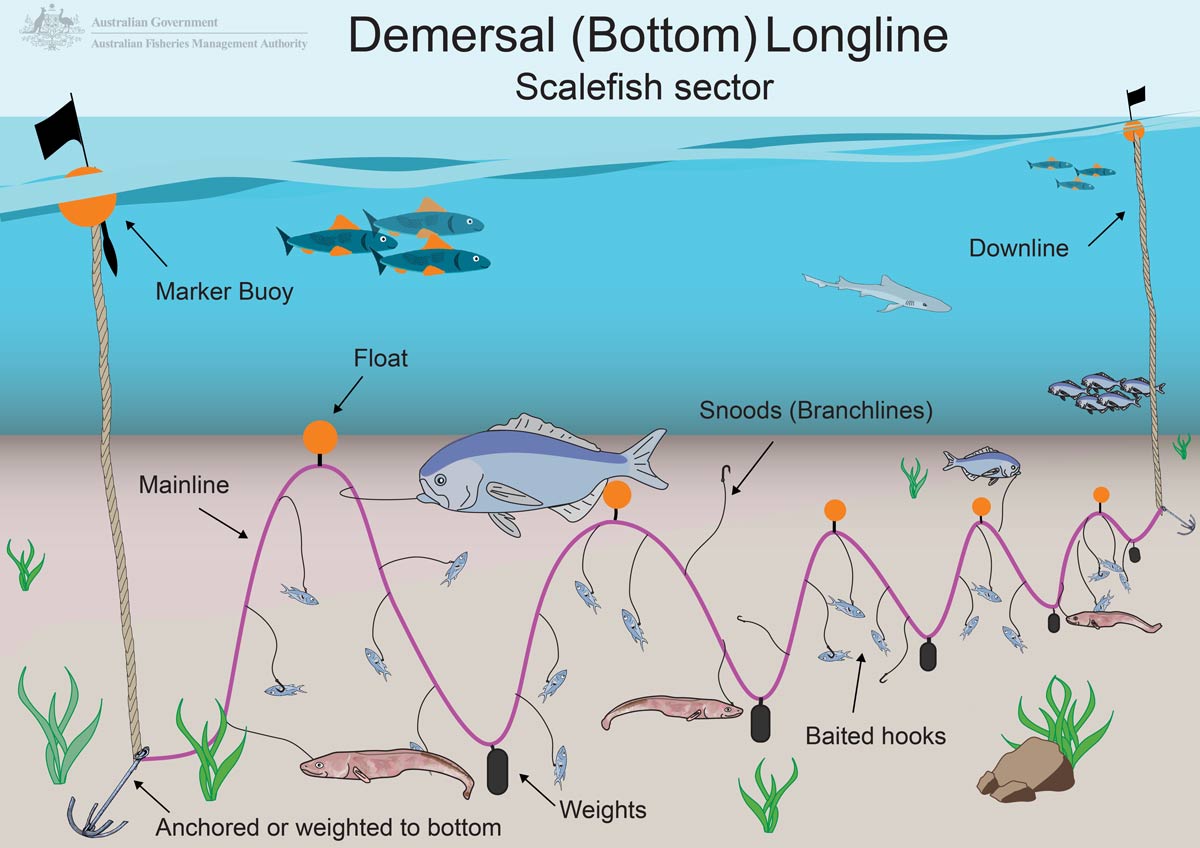
Longlines consist of a main line with thousands of baited hooks suspended at varying depths. The depth depends on whether they’re set near the surface or along the ocean floor.
Pelagic Longlines Target Surface to 200 Meters
Pelagic longlines target tuna, swordfish, and sharks with hooks suspended from the surface down to 200 meters. Branch lines of different lengths create a vertical spread of baited hooks. A single line can stretch up to 130 kilometers with as many as 20,000 hooks.
This method carries high bycatch risk for sea turtles, albatrosses, and non-target shark species. Using circle hooks and weighted lines helps reduce seabird and turtle interactions.
Demersal Longlines Plumb the Deep Sea
Demersal longlines lie directly on the seabed, anchored at both ends. These deep-sea fishing lines reach depths up to 2,500 meters, catching species like halibut, grenadiers, and Patagonian toothfish. While more selective than trawling, they still risk entangling deep-sea corals and sponges that take centuries to grow.
Trap and Pot Nets: Passive Gear in Shallow Zones
Traps and pots rely on fish swimming in but being unable to escape. These passive gears are mostly used in accessible, shallow waters.
Pound Nets Trap Migratory Fish Under 20 Meters
Pound nets use long leader nets to guide fish into a series of progressively smaller chambers. Fixed in estuaries and nearshore areas, they operate in waters less than 20 meters deep. Common targets include striped bass, shad, and salmon during seasonal migration runs.
Fyke Nets Catch Eels in Under 10 Meters
Fyke nets are funnel-shaped and bottom-set in rivers, lakes, and tidal creeks. Multiple inward-facing cones prevent escape, making these nets particularly effective for eels and panfish. They work best in waters less than 10 meters deep and are widely used in both commercial and recreational fisheries.
Hand-Operated Nets for Shallow Water Fishing
These smaller, often manually operated nets target very specific shallow-water situations.
Cast Nets Work Waters Under 10 Meters
Cast nets are circular, weighted nets thrown by hand. They sink quickly in waters under 10 meters, capturing baitfish, mullet, and small game fish. Success depends entirely on the thrower’s skill and timing. Mesh size varies from fine for baitfish to large for bigger species. Common deployment areas include mangroves, riverbanks, and intertidal zones.
Scoop and Dip Nets Are Surface-Only Tools
Scoop nets and dip nets serve as retrieval tools rather than active fishing gear. They operate from the surface to about 5 meters depth, used for landing hooked fish, collecting bait, or scientific sampling. These tools see heavy use in ice fishing, aquarium hobbyism, and marine research.
What Determines How Deep Nets Can Go
Several key factors shape where and how deeply fishing nets are deployed.
Target Species Drive Depth Selection
Pelagic fish like tuna and mackerel live in the epipelagic zone from 0 to 200 meters. Demersal species like cod and halibut stay near the seabed, sometimes in abyssal plains. Migratory species like salmon trigger seasonal net use in rivers and estuaries as they move between freshwater and ocean habitats.
Technology Enables Precise Depth Control
Modern fishing vessels rely on sonar to locate fish schools, GPS for accurate deployment coordinates, and electronic sensors attached to nets that monitor depth, temperature, and orientation in real time. Float and sinker systems allow precise adjustment of net depth based on target species behavior.
Environmental Conditions Affect Stability
Ocean currents can shift drift nets deeper or shallower than intended. Thermoclines, which are temperature layers in the water column, influence fish distribution and require nets to be adjusted accordingly. Seabed topography determines where bottom trawls can safely operate without damaging gear.
Regulations Limit Deployment Depths
The EU driftnet ban prohibits drift gillnets over 2.5 kilometers in all EU waters since 2008. Marine Protected Areas ban or restrict bottom trawling and deep-set gear in sensitive ecosystems. Bycatch rules require escape panels, modified mesh sizes, or depth-specific deployment to reduce harm to non-target species.
Environmental Impacts Vary by Depth Zone
Every depth zone carries distinct ecological risks, especially when nets are poorly managed or left unattended.
| Depth Zone | Primary Bycatch Risks | Common Gear Involved |
|---|---|---|
| Surface (0–20 m) | Sea turtles, dolphins, seabirds | Drift gillnets, pelagic longlines |
| Midwater (20–200 m) | Juvenile fish, non-target pelagics | Purse seines, midwater trawls |
| Deep Sea (>200 m) | Deep-sea corals, sponges, rare fish | Bottom trawls, demersal longlines |
| Seabed Contact | Habitat destruction, benthic invertebrates | Beam trawls, bottom trawls |
Sea Turtle Danger: Gillnets are particularly deadly. Entangled turtles drown if they cannot surface to breathe, and survivors often suffer infections, limb loss, or impaired mobility.
Whale Entanglement: Humpback whales, right whales, and dolphins regularly become tangled in deep-set lines, leading to exhaustion, starvation, and death.
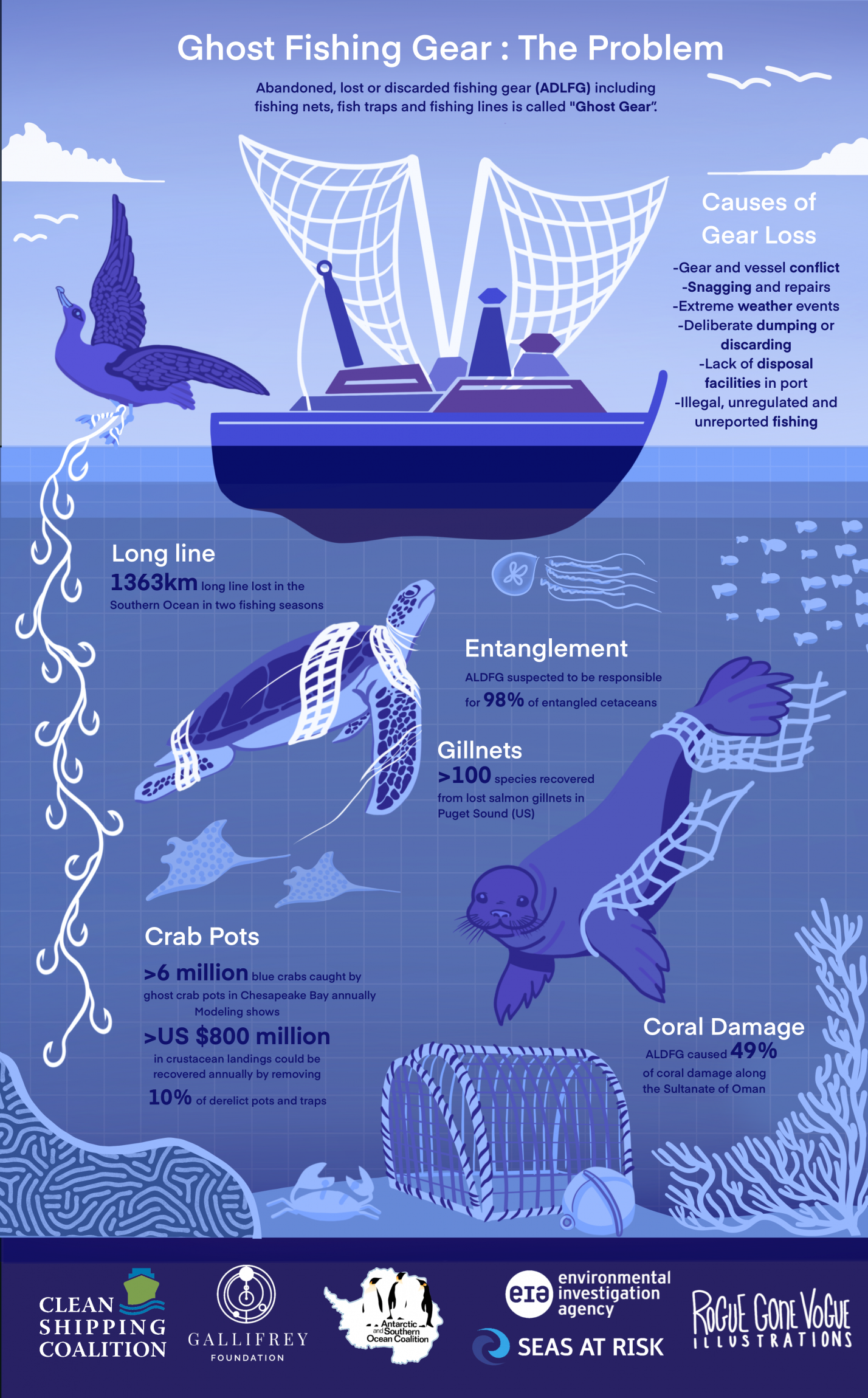
Ghost Nets: Lost Gear That Keeps Killing
Abandoned, lost, or discarded fishing gear, known as ghost nets, continues trapping marine life for years after being left behind. Made of nylon, polyethylene, or polyamide, these nets take 400 to 600 years to decompose in ocean environments.
Lost driftnets can travel thousands of miles, killing indiscriminately across multiple ocean basins. As nets break down, they release microplastics into the food chain, affecting organisms from plankton to marine mammals.
Positive Development: Organizations like Bracenet recycle recovered ghost nets into consumer products like bracelets and leashes, turning an environmental problem into sustainable fashion opportunities.
Quick Reference: Maximum Depths for Every Net Type
| Net Type | Maximum Depth | Best For |
|---|---|---|
| Demersal Longline | 2,500 m | Deep-sea halibut, toothfish |
| Bottom Trawl | 1,500 m | Cod, shrimp, flatfish |
| Set Gillnet | 1,000 m | Groundfish in deep coastal zones |
| Midwater Trawl | 300 m | Herring, mackerel, sardines |
| Purse Seine | 300 m | Tuna, large schooling fish |
| Pelagic Longline | 200 m | Swordfish, tuna, sharks |
| Drift Gillnet | 200 m | Surface to midwater species |
| Lampara / Ring Net | ~100 m | Sardines, anchovies |
| Beam Trawl | ~100 m | Shallow flatfish fisheries |
| Trap Nets | <100 m | Migratory fish in estuaries |
| Cast Net | <10 m | Shallow coastal and river fishing |
Final Thoughts on Understanding Fishing Net Depths
Fishing nets operate across the entire ocean depth spectrum, from surface-level cast nets to deep-sea longlines reaching 2,500 meters. Each method is engineered for specific species, environments, and depth zones, reflecting centuries of technological evolution in pursuit of efficient catches.
The environmental costs are significant and vary by depth. Surface driftnets endanger marine mammals and turtles. Midwater operations catch juvenile fish that haven’t yet reproduced. Deep-sea trawling destroys corals that take centuries to form. Understanding how deep fishing nets go helps consumers, policymakers, and advocates make more informed decisions about sustainable seafood choices and marine protection policies.
The future of responsible fishing depends on smarter gear design, better monitoring technology, and stronger regulations that balance human food needs with ecosystem preservation. The ocean’s depth may be vast, but our responsibility to protect it runs even deeper.
Frequently Asked Questions About Fishing Net Depths
What is the deepest fishing net method?
Demersal longlines are the deepest fishing method, reaching up to 2,500 meters. These bottom-set lines target deep-sea species like halibut, grenadiers, and Patagonian toothfish in the abyss.
How deep can a gillnet go?
Set gillnets can reach 1,000 meters deep when anchored to the seabed. Drift gillnets operate from the surface down to approximately 200 meters, floating with currents.
Do purse seines really reach 300 meters?
Yes, purse seines can extend 300 meters downward. The weighted purse line at the bottom can be drawn tight quickly, preventing fish from escaping downward once the school is encircled.
What is the shallowest fishing net?
Cast nets are among the shallowest, working best in waters under 10 meters. They’re hand-thrown circular nets used in mangroves, riverbanks, and intertidal zones.
Which fishing method causes the most seabed damage?
Beam trawling and bottom trawling cause the most severe seabed damage. These methods drag heavy gear across the ocean floor, destroying coral habitats and stirring up sediment that affects benthic ecosystems.
Are drift gillnets still legal?
Drift gillnets are banned in EU waters since 2008 due to high bycatch of marine mammals and sea turtles. They remain legal in some Pacific fisheries under strict regulations, though many conservation groups advocate for global bans.