Every year, commercial fishing operations harvest nearly 2 trillion wild fish from the oceans, supporting a global industry worth over $194 billion. However, this massive extraction comes at a devastating cost to marine ecosystems, coastal communities, and the workers who risk their lives to bring seafood to our plates. From overfishing and destructive bycatch to habitat destruction and labor abuses, the problems facing commercial fishing are systemic and interconnected. This guide examines the major challenges plaguing the industry, supported by hard data, and explores what can be done to create a more sustainable future.
Overfishing: The Collapse of Marine Fish Populations

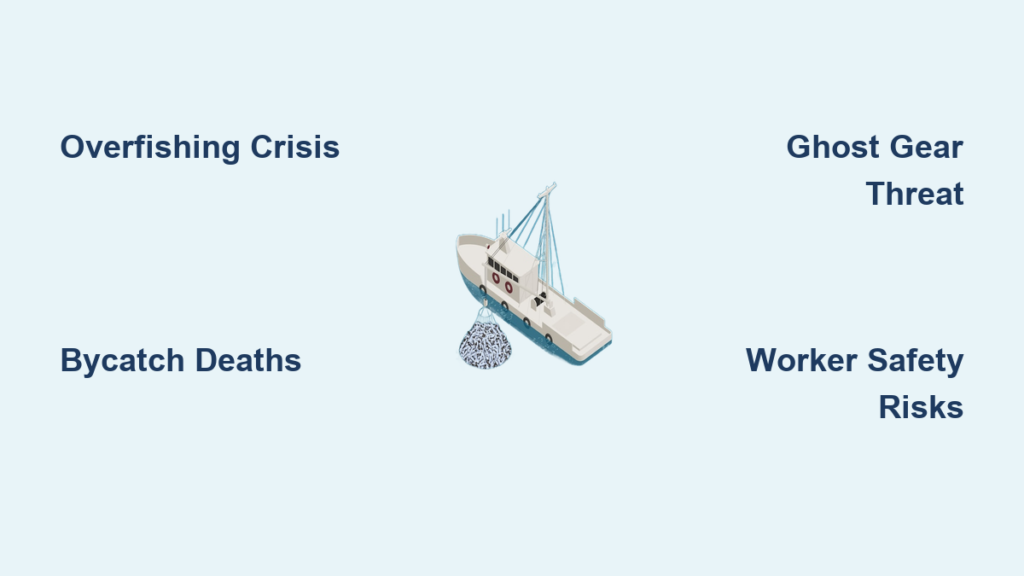
Industrial-scale fishing has pushed many fish populations to the breaking point, threatening long-term food security and ecosystem stability.
90% Decline in Large Predators
Since the 1950s, populations of tuna, swordfish, cod, and halibut have plummeted by 90%, wiped out by high-volume trawlers and longliners. These apex species mature slowly and reproduce infrequently, making recovery nearly impossible under current fishing pressure.
One-Third of Fisheries Already Overfished
According to the FAO, over 33% of global fish stocks are harvested faster than they can replenish. In some regions like the Mediterranean and Black Seas, that number exceeds 60%. Atlantic cod has collapsed so severely that decades of moratoriums still haven’t led to full recovery.
Fishing Down the Food Web
As large fish disappear, fleets increasingly target smaller species like anchovies, sardines, and herring, harvesting over 22 million metric tons annually. This “fishing down” disrupts entire food chains, removing critical prey for marine mammals, seabirds, and remaining predators.
Projected Collapse by 2048
A landmark study warned that if current trends continue, 90% of commercially fished species could face functional extinction by 2048. While some stocks have rebounded thanks to better management, the overall trajectory remains alarming.
Pro Tip: Look for MSC-certified seafood to ensure your purchase supports fisheries using science-based catch limits.
Bycatch Crisis: Unintended Deaths of Marine Life
For every pound of target fish caught, vast numbers of non-target species are hauled up and discarded, often dead or dying.
17–39 Million Tons of Bycatch Annually
Bycatch accounts for up to 40% of total global catch volume. This includes fish, sharks, turtles, dolphins, and seabirds, most of which are thrown back too injured to survive.
Shrimp Trawling: The Worst Offender
Shrimp fisheries have the highest bycatch ratio, with 4 pounds of marine life killed for every 1 pound of shrimp caught. Much of this consists of juvenile fish that would otherwise replenish future stocks.
Sea Turtles Drowning in Nets
An estimated 8.5 million sea turtles were killed between 1990 and 2008. Despite Turtle Exclusion Devices being mandatory in U.S. shrimp trawls since 1987, global compliance remains spotty.
Sharks: 270 Million Killed Each Year
Up to 270 million sharks die annually, many as bycatch. In the northwest Atlantic, species like tiger, hammerhead, and dusky sharks have declined by over 95% since the 1970s.
100,000 Seabirds Die on Longlines
Albatrosses and petrels dive for baited hooks and drown. Bird-scaring lines and night setting can reduce deaths by 80–90%, but adoption varies widely across fisheries.
Quick Fix: Choose pole-and-line or troll-caught tuna, which have near-zero bycatch compared to purse seines or longlines.
Habitat Destruction: How Fishing Devastates Ocean Ecosystems
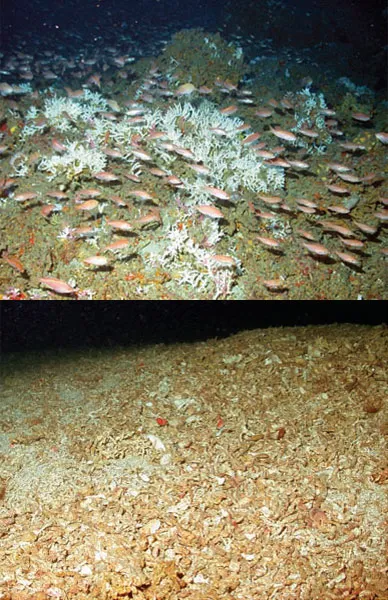
Some fishing methods don’t just catch fish; they destroy entire ecosystems in the process.
Bottom Trawling: Ocean Deforestation
Dragging heavy nets across the seabed flattens coral reefs, buries sponges, and obliterates nurseries for cod, flounder, and shrimp. Scientists estimate trawling releases as much carbon as global aviation.
Dredging Destroys Shellfish Beds
Used for scallops and oysters, dredges scrape the ocean floor, damaging benthic communities and carbon-sequestering habitats.
Coral Reefs Stripped of Predators
Overfishing has eliminated large reef predators like groupers and barracuda in many areas. Without them, ecosystems unravel, leading to uncontrolled algal blooms that smother coral.
Invasive Lionfish Thrive
With no natural predators, lionfish have exploded across the Caribbean and Atlantic. Studies show they reduce native fish survival by 80% in just five weeks.
Visual Cue: Satellite imagery clearly shows trawl scars on continental shelves, visible proof of repeated seabed destruction.
Aquaculture’s Hidden Environmental Costs
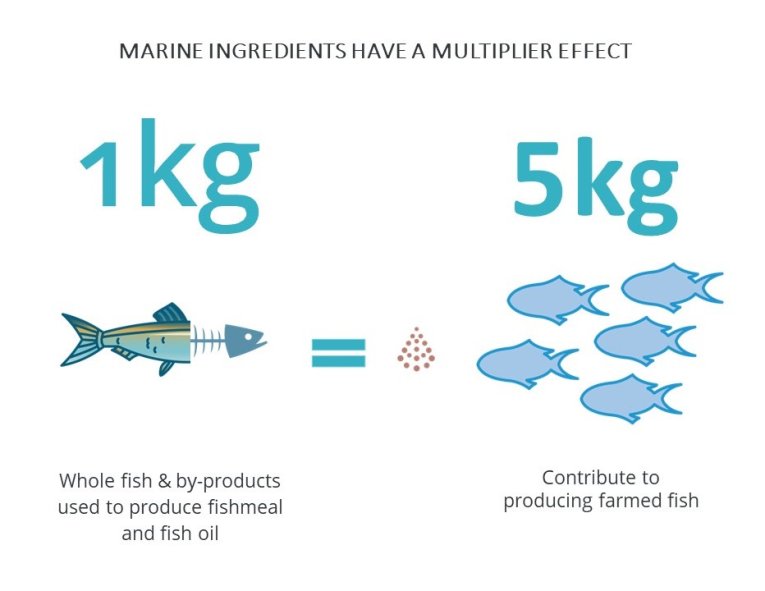
Fish farming now supplies nearly 40% of global seafood, but it creates new problems rather than solving old ones.
25% of Wild Catch Used for Fishmeal
Every year, 20–30 million tons of wild fish are ground into feed for farmed salmon, tuna, and shrimp. It takes up to 5 pounds of wild fish to produce 1 pound of farmed fish.
Pollution and Disease Spread
Overcrowded pens release feces, antibiotics, and chemicals into surrounding waters, causing algal blooms and dead zones. Sea lice from salmon farms infect wild salmon, especially juveniles.
Mangroves Cleared for Shrimp Ponds
In Southeast Asia, mangrove forests have been razed for shrimp farms. During the 2004 tsunami, areas with intact mangroves suffered fewer deaths and less damage.
Escaped Farmed Fish Weaken Wild Stocks
Millions of farmed salmon escape yearly, interbreeding with wild populations and reducing genetic fitness.
Ethical Note: Fish are sentient beings capable of feeling pain, yet they’re treated as commodities rather than animals.
Illegal Fishing: The $23.5 Billion Shadow Industry
Illegal, unreported, and unregulated fishing drains oceans, distorts markets, and exploits vulnerable workers.
One in Five Fish Caught Is Illegal
IUU fishing accounts for 1 in 5 fish caught globally, undermining conservation and giving law-abiding fishers an unfair disadvantage. An estimated 20–32% of U.S. seafood imports are illegal.
Developing Nations Hit Hardest
Foreign fleets often plunder the waters of low-income countries, depriving local communities of food and income. In West Africa, IUU fishing has collapsed artisanal fisheries.
Marine Protected Areas Violated
Even no-take zones are violated due to lack of surveillance. Without enforcement, MPAs are just “paper parks.”
Solution: Support traceability programs like Global Fishing Watch and Seafood Watch to avoid IUU-linked products.
Ghost Gear: Abandoned Nets Killing Marine Life
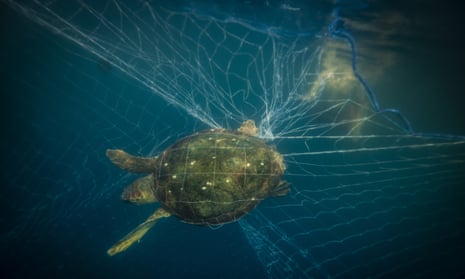
Lost or abandoned fishing gear continues to kill for decades after being discarded.
Nearly Half of Great Pacific Garbage Patch Is Fishing Nets
Most debris in this Texas-sized garbage patch isn’t plastic bottles; it’s ghost gear.
300,000 Marine Mammals Die Annually
Whales, dolphins, and seals drown after becoming entangled in derelict nets and lines. Some carry gear for years, suffering slow deaths from injury and starvation.
Microplastics Enter the Food Chain
As nets degrade, they break into microplastics, ingested by fish, seabirds, and eventually humans.
Pro Tip: Support NGOs like Healthy Seas and Ghost Fishing Foundation that remove ghost gear from critical habitats.
Human Cost: Dangerous Work and Labor Abuses
Commercial fishing is one of the deadliest jobs on Earth, and in some regions, it’s built on human exploitation.
43 U.S. Fishermen Die Annually
Between 2000 and 2019, 878 U.S. commercial fishermen died, averaging 43 deaths per year. The fatality rate is 35 times higher than the average U.S. worker.
Vessel Disasters Cause Half of Deaths
47–48% of fatalities result from capsizing, sinking, or flooding, often during storms or due to overloading.
Falls Overboard: 30% of Deaths
182 U.S. fishermen died falling overboard between 2000 and 2010. None were wearing life jackets in documented cases.
Slave Labor in Asian Fisheries
Investigations have exposed forced labor, beatings, and human trafficking on fishing vessels in Thailand, Indonesia, and Taiwan. Workers report no pay, no food, and no way to leave.
Expert Note: Better training, immersion suits, and satellite monitoring could save many lives. The share-based pay system incentivizes risky behavior during storms or long hauls.
Regulatory Failures: Why Current Management Falls Short
Even where rules exist, enforcement is weak, especially beyond national waters.
Magnuson-Stevens Act: A U.S. Success Story
This law has rebuilt 52 fish stocks since 2000 by setting science-based catch limits and ending overfishing. NOAA manages 506 fish stocks under 45 fishery plans.
Catch Shares Reduce the Race to Fish
By giving fishermen a secure share of the catch, this system lets them fish when weather and prices are favorable, reducing overcapacity and waste.
Marine Protected Areas Need Teeth
While scientists push for 30% ocean protection by 2030, many MPAs lack patrols, cameras, or penalties.
Technology Can Help
Satellite tracking exposes illegal activity. AI-powered cameras monitor bycatch in real time. EPIRBs and immersion suits save lives when disasters strike.
Reality Check: RFMOs set quotas but are often underfunded and ineffective, especially in the Pacific and Indian Oceans.
What Can Be Done: Solutions That Work

The problems are vast, but so are the solutions.
• Expand and enforce Marine Protected Areas, using satellite surveillance to catch violators.
• Mandate bycatch reduction tech like TEDs, BRDs, and bird-scaring lines globally.
• End subsidies that fuel overfishing; redirect funds to sustainable practices.
• Support ethical seafood choices like MSC-certified, pole-caught, or farmed shellfish.
• Improve worker safety through mandatory PFDs, immersion suits, and e-stop systems.
• Invest in transparent supply chains using blockchain and electronic monitoring.
• Reform aquaculture by shifting to low-trophic species like mussels and seaweed.
Frequently Asked Questions About Commercial Fishing Problems
How many fish are killed by commercial fishing each year?
Scientists estimate that 0.97 to 1.97 trillion wild fish are killed annually through commercial fishing operations worldwide.
What percentage of fisheries are overfished?
According to the FAO, over one-third of global fish stocks are overfished, meaning they’re harvested faster than they can reproduce.
Why is bycatch a major problem?
Bycatch accounts for 17–39 million tons annually and includes millions of turtles, sharks, dolphins, and seabirds that are discarded dead or dying. It devastates non-target species populations.
What is ghost gear?
Ghost gear refers to lost or abandoned fishing nets, lines, and traps that continue trapping and killing marine life for decades. It makes up nearly half of the Great Pacific Garbage Patch.
Can fish populations recover?
Yes, marine ecosystems can recover when given a chance. The Magnuson-Stevens Act has rebuilt 52 fish stocks since 2000 through science-based management.
What can consumers do to help?
Choose MSC-certified seafood, select pole-and-line or troll-caught fish, try plant-based alternatives, and support traceability programs that combat illegal fishing.
Key Takeaways for Addressing Commercial Fishing Problems
The commercial fishing industry faces interconnected challenges that threaten marine ecosystems, human lives, and food security. Overfishing has stripped oceans of predator species, with one-third of fisheries already overexploited and projections suggesting 90% of commercial species could collapse by 2048 if current trends continue. Bycatch kills millions of turtles, sharks, and seabirds annually, while bottom trawling destroys seafloor habitats and releases stored carbon. Illegal fishing accounts for one in five fish caught globally, and abandoned ghost gear entangles hundreds of thousands of marine mammals each year. Workers face deadly conditions, with fatality rates 35 times higher than average U.S. jobs, and labor abuses remain prevalent in some regions.
However, solutions exist. Stronger regulations like the Magnuson-Stevens Act have proven successful in rebuilding fish stocks. Technology including satellite tracking, AI cameras, and turtle exclusion devices can reduce bycatch and improve enforcement. Consumer choices matter: look for MSC-certified seafood, support traceable supply chains, and consider plant-based alternatives. The ocean’s resilience is not infinite, but with systemic change, sustainable fishing is still possible.