If your fishing line keeps twisting, your lure isn’t swimming right, or you’ve lost a fish at the swivel, the problem might not be your technique. It could be how you’re using or misusing this small but powerful piece of terminal tackle. A swivel is designed to prevent line twist, connect lines, and streamline rig changes. But when used incorrectly, it can ruin lure action, weaken your setup, or spook cautious fish.
Knowing how to use a swivel for fishing isn’t just about tying a knot. It is about matching the right swivel to the right lure, technique, and environment. This guide breaks down exactly when, where, and how to use a swivel for maximum effectiveness and minimal drawbacks.
Choose the Right Swivel Type for Your Fishing

Not all swivels are created equal. The type you pick determines whether it prevents twist or fails under pressure.
Barrel Swivels: Basic Twist Prevention
Barrel swivels are the most common and affordable option. They consist of two wire arms connected by a rotating brass or steel barrel. They work well for light-duty uses like connecting a leader or stopping a sliding sinker on a Carolina rig.
However, under heavy load or fast retrieval, the internal friction causes them to lock up and stop rotating. Avoid using barrel swivels for trolling or high-speed spinning lures. In saltwater, cheap brass versions corrode quickly, so opt for stainless steel if fishing in brine.
Ball Bearing Swivels: For High-Speed and Heavy Loads
These swivels use internal ball bearings to rotate smoothly even under extreme pressure. If you’re trolling at six knots or fighting a wahoo, a ball bearing swivel is non-negotiable. A standard barrel swivel would seize instantly under those conditions.
Brands like Epic Fishing Co., Billfisher, Diamond, and AFW offer durable stainless steel models with welded rings. These are critical for offshore durability. Use ball bearing swivels for trolling spreads, heavy spinning lures, and big game species like tuna, marlin, or king mackerel.
Snap Swivels: Quick Lure Changes
Snap swivels add a clip for fast lure swaps. While convenient, they come with trade-offs. The snap adds weight and bulk, which can kill the action of topwater lures, dampen vibrations in jerkbaits, or attract weeds in heavy cover.
Use snap swivels only when both twist prevention and rapid changes are needed, like switching spoons on a long day of trolling. For finesse fishing, skip the snap entirely.
3-Way and Specialized Swivels
Three-way swivels let you build dropper rigs, perfect for suspending bait above the bottom in current. Connect the main line to the top eye, the sinker to the bottom eye, and the leader with the hook to the side eye.
Wind-on swivels are streamlined for offshore trolling, allowing you to reel the leader connection through rod guides without snagging. Dredge swivels handle extreme pressure from teaser rigs.
Know When to Use a Swivel and When to Skip It

Using a swivel is not automatic. The decision depends on your lure, technique, and target species.
Use a Swivel When
Spinning lures are in play. Spoons and inline spinners rotate 360 degrees during retrieval. Without a swivel, that spin transfers to your line, causing kinks, weak spots, and tangles. Always use a swivel, preferably ball bearing for fast retrieves.
Trolling at speed creates constant line twist, especially with multiple lures. Use ball bearing swivels on every line and place them between the main line and leader or attach directly to lures that spin.
Using braid with a leader is another situation where swivels help. Braided line casts far but is visible underwater. Most anglers tie on a fluorocarbon or mono leader for stealth. A swivel makes this connection quick and secure, especially if you are not confident with advanced knots like the FG or Albright.
Running sliding rigs is a third use case. In Carolina rigs or drop shot setups, a swivel acts as a stopper for the sliding sinker. It protects your knot and keeps the weight from sliding down to the hook.
Fishing deep water also benefits from swivels. In deep drop-shotting, retrieving line from 100 feet or more can twist it severely. A swivel above the weight prevents twist from reaching the reel.
Avoid Swivels When
Fishing topwater plugs is the first situation where you should skip a swivel. The added weight of a swivel, even a tiny one, can pull the nose of a popper or walking bait underwater. This kills its action. Tie directly to the lure or use a loop knot for natural movement.
Using jerkbaits or soft plastics is another scenario where swivels hurt performance. These lures rely on subtle vibrations and erratic darting. A swivel dampens that action. For jerkbaits, a loop knot gives better action. For soft plastics, tie directly or use a lightweight snap only if absolutely needed.
Targeting wary fish in clear water is a third case. In clear lakes or pressured fisheries, fish see hardware. A shiny swivel or snap can spook trout, smallmouth, or pike. Go minimalist with direct ties, fluorocarbon leaders, and no extra gear.
Fishing in heavy weeds is a fourth situation to avoid swivels. Swivels and snaps collect weeds like magnets. In grass or lily pads, a clean knot is less likely to snag. Save swivels for open water or structure fishing.
Rigging live bait is the fifth scenario. Live bait needs to swim naturally. A swivel can restrict movement or make the bait look unnatural. Tie directly unless using a specialized trolling or planer board rig.
Match Swivel Size to Your Line Strength

Swivel sizes are counterintuitive. Smaller numbers mean larger swivels. A Size 1 is bigger than a Size 7.
Always match the swivel break strength to your line or go slightly stronger.
| Swivel Size | Ball Bearing Rating | Best For |
|---|---|---|
| Size 7 | 25 to 40 lb | Trout, flounder, light inshore |
| Size 5 | 50 to 75 lb | Redfish, stripers, small kings |
| Size 3 | 75 to 150 lb | King mackerel, cobia, mahi |
| Size 1 | 150 to 250 lb | Tuna, wahoo, heavy trolling |
| Size 1/0 | 250 to 400 lb | Marlin, large tuna |
| Size 3/0+ | 400 plus lb | Giant bluefin, dredge rigs |
The rule of thumb is simple. If using 30lb braid with a 50lb fluorocarbon leader, choose a Size 5 ball bearing swivel. Oversizing slightly is safer than risking failure.
Pick the Right Snap for Secure Connections
Not all snaps are equal. Choose based on strength and reliability.
Single clips are weak and should be avoided. Interlock snaps offer medium strength and work okay for small fish. Dual lock snaps are reliable for average use. Cross lock snaps are strong but hard to open on small eyes. Coast Lock snaps are the strongest and most secure, ideal for saltwater and big fish.
Pro Tip: Coast Lock snaps do not open under pressure. Use them for offshore work. Avoid cross lock snaps on lines over 30lb because they can fail.
Where to Place the Swivel in Your Rig
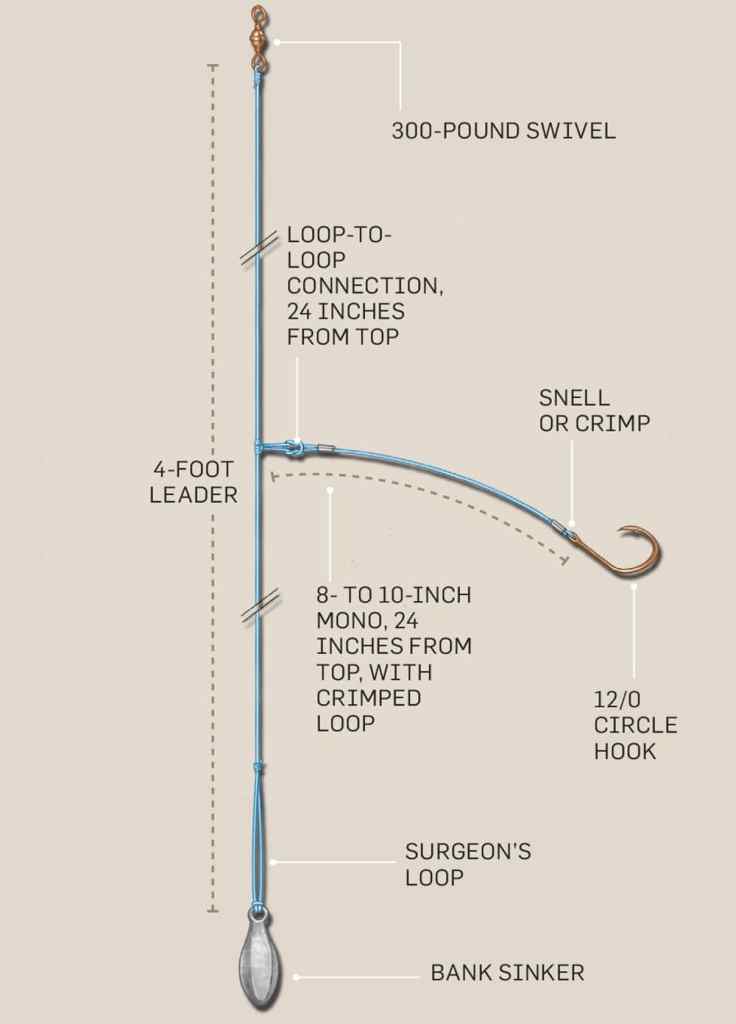
Placement affects performance. Get it wrong, and your lure will not swim right.
The 8 to 12 Inch Rule for Up-Line Swivels
For spinning lures or braid-to-leader setups, tie a two to four foot leader to the swivel, then attach the lure to the leader. Keep the swivel eight to 12 inches up the line from the lure.
This placement prevents twist from reaching the reel, keeps the lure clean and natural-looking, and maintains sensitivity and stealth. Use this setup for inline spinners, spoons, and jerkbaits when twist is an issue.
Direct-to-Lure Attachment
Tie the swivel or snap directly to the lure eye. This is common for spoons and spinners where rotation must be stopped at the source.
Caution: Do not use a large swivel on a small lure. It ruins balance and action. Match size to lure weight.
Leader Systems for Braid Connections
When using braid, tie a fluorocarbon or mono leader to the swivel. This gives you braid’s casting distance combined with the leader’s invisibility and abrasion resistance. In deep water, use a longer leader so the swivel does not interfere with the lure’s action.
Tie the Right Knot for Your Line Type
A weak knot is the weakest link. Use the right knot for your line type.
Improved Clinch Knot for Mono and Fluoro
This knot works best for monofilament and fluorocarbon.
- Thread the line through the swivel eye.
- Wrap the tag end around the standing line five to seven times.
- Pass the tag through the small loop near the eye.
- Pass the tag back through the large loop.
- Moisten the knot with saliva or water.
- Tighten by pulling the standing line while holding the swivel.
- Trim the excess tag end.
Palomar Knot for Braided Line
This knot is strongest for braided line.
- Double six inches of line.
- Pass the loop through the swivel eye.
- Tie an overhand knot with the doubled line, keeping the swivel inside the loop.
- Pull the swivel through the knot loop.
- Moisten and pull both ends to tighten.
- Trim the tag.
The Palomar works well because it has minimal twists, high strength, and resists slippage.
Loop Knot for Enhanced Lure Action
Use this when you want a free-moving lure like a topwater popper without a swivel.
- Tie an overhand knot but do not tighten it.
- Pass the tag through the lure eye.
- Run the tag back through the overhand knot.
- Wrap the tag around the standing line two to three times.
- Pass the tag back through the knot.
- Tighten.
This creates a free-swinging loop that enhances lure action.
Maintain and Test Your Swivels
A seized swivel is worse than no swivel. It creates a weak, stiff point in your line.
Rinse After Saltwater Use
Salt crystals build up inside swivels and cause them to freeze. Rinse all swivels in fresh water after every saltwater trip.
Test Rotation Before Fishing
Hold the swivel body and spin one end. It should rotate smoothly and freely. If it feels gritty or sticks, replace it.
Inspect for Damage
Check for bent bodies, which compromise strength. Check for sharp burrs, which can cut your line. Check for pressed rings, which can open under pressure. Always choose swivels with welded rings.
Troubleshoot Common Swivel Problems
Line Still Twisting
The swivel may be locked up or too small. Upgrade to a ball bearing model. If using braid, ensure the swivel is rated for high-speed rotation.
Lure Swimming Weird
The swivel is likely too heavy or too close to the lure. Try a smaller size, a micro swivel, or move it 12 or more inches up the line.
Breaking at the Swivel
Check three things. First, knot quality: was it moistened and tied correctly? Second, corrosion: is the ring rusted or pitted? Third, pressed rings: did the eye open under load? Use only welded ring swivels.
Swivel Damaging Rod Guides
Never reel a swivel into your rod guides. The metal can scratch or crack ceramic inserts. Use a long enough leader so the swivel stays outside the rod tip during retrieval.
Expert Tips and Final Checklist

The Snap Swivel Debate
Many pros avoid snap swivels entirely. They add bulk, create weak points, and encourage lazy rigging. Use them only when you need both quick changes and twist prevention, when you have physical limitations like arthritis, or when fishing in low-visibility, high-action scenarios.
Otherwise, use a simple snap for changing lures or a dedicated swivel for twist control.
Top Swivel Brands
For offshore and trolling, use Epic, Billfisher, Diamond, and AFW. For inshore and light tackle, use AFW Mighty Mini and SPRO Coast Lock. For budget options, use Booya Boo Flex and Eagle Claw. Avoid unbranded brass swivels, especially in saltwater.
Final Swivel Checklist
Do you need it? Check if you have a spinning lure, are trolling, or using a braid leader.
Right type? Choose ball bearing for speed, barrel for static rigs.
Correct size? Match or exceed line strength.
Proper material? Use stainless steel for salt, black nickel for stealth.
Welded rings? Always choose welded, never pressed.
Right knot? Use Clinch for mono, Palomar for braid.
Tested rotation? Spin it before you cast.
Frequently Asked Questions About Using Swivels for Fishing
What does a swivel do in fishing?
A swivel prevents line twist, connects different types of line, acts as a stopper in sliding rigs, and allows quick lure changes when equipped with a snap.
Should I use a swivel with a spinner bait?
Yes. Spinner baits rotate during retrieval, and a swivel prevents that rotation from twisting your main line. Use a ball bearing swivel for the best performance.
Can a swivel scare fish?
Yes. In clear water or when targeting wary fish, a shiny swivel or snap can spook them. Use a black nickel finish or tie directly for stealth.
What size swivel should I use for bass fishing?
For bass, a Size 5 or 7 ball bearing swivel works well with 15 to 25lb line. Match the swivel strength to your line or leader strength.
How do I know if my swivel is locked up?
Hold the swivel and spin one end. If it feels gritty, sticks, or does not rotate freely, it is locked up and needs replacement.
Can I use a swivel with topwater lures?
No. The added weight of a swivel can pull a topwater lure underwater and kill its action. Tie directly to the lure or use a loop knot instead.
Key Takeaways for Using Swivels Effectively
A swivel is a tool, not a default. Use it with purpose. When chosen and placed correctly, it prevents line twist, protects your gear, and keeps lures swimming true. When misused, it sabotages your presentation.
The most important factors are matching the swivel type to your technique, sizing it correctly for your line strength, and placing it in the right position. Ball bearing swivels are essential for trolling and spinning lures. Barrel swivels work for static rigs. Skip swivels entirely for topwater, jerkbaits, and finesse presentations.
Master the how, when, and why of swivels, and you will land more fish, especially the big ones that fight hard and twist line fast.