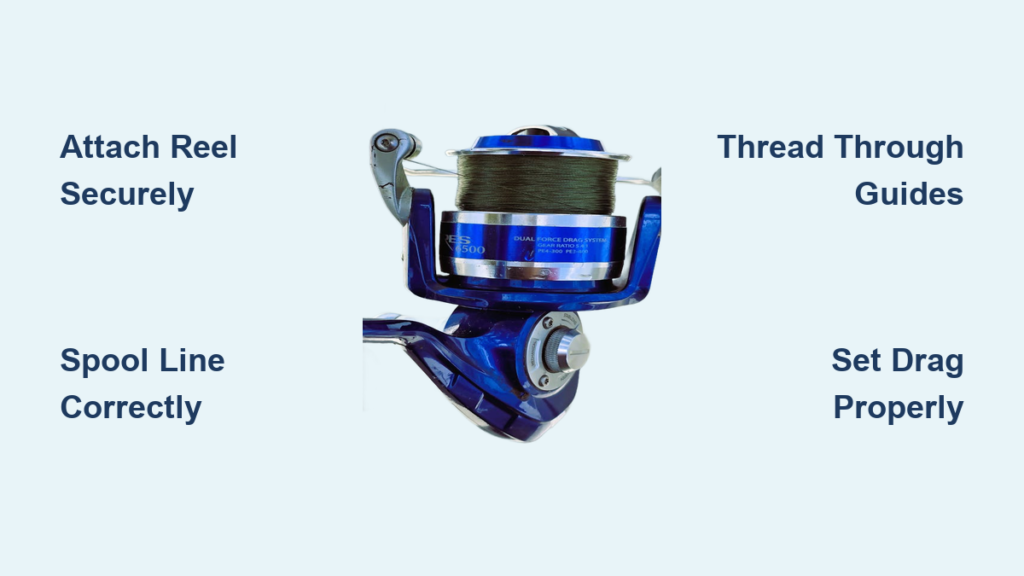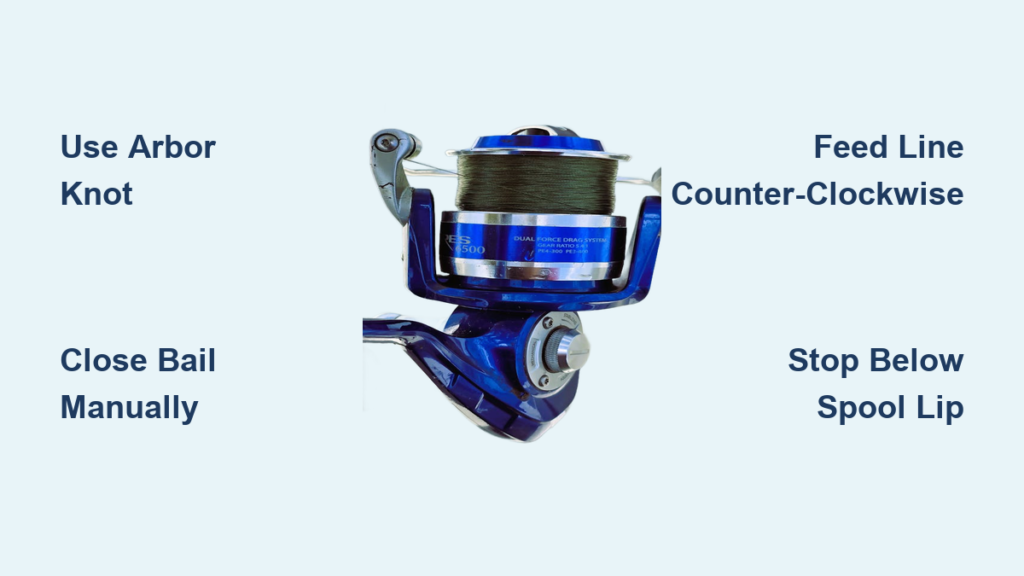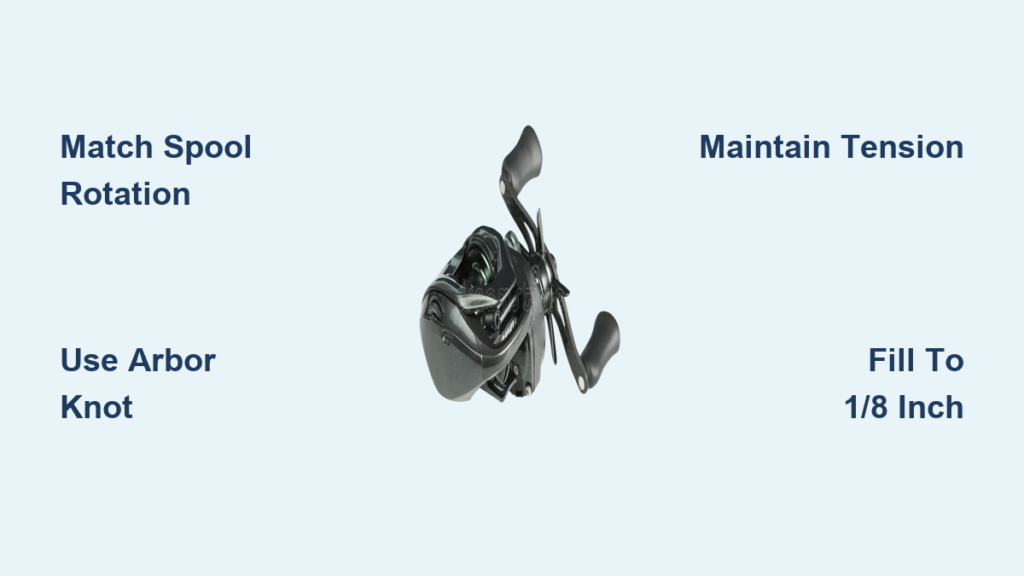
Spooling a fishing reel might seem straightforward, but doing it wrong can ruin your day on the water. A poorly spooled reel leads to wind knots, reduced casting distance, line twist, and even lost fish under heavy drag. On the flip side, a properly spooled reel ensures smooth line release, maximizes sensitivity, and extends the life of both your line and gear. Whether you’re using braided, monofilament, or fluorocarbon line, the key lies in precision. This guide walks you through every step of how to spool a fishing reel like a pro, with real-world tips, line-specific techniques, and troubleshooting for common issues.
Match Line to Reel Capacity
Before touching the spool, confirm your line choice matches your reel specs. Using the wrong line weight or diameter affects casting performance and can damage your reel.
Check Reel Line Recommendations
Every spinning reel has a label or manufacturer guide listing ideal line weight and capacity, such as “140 yards of 10 lb test.” Exceeding or falling short affects performance. Too little line reduces casting momentum, while too much causes overfilling that leads to line ballooning and tangles.
Use thinner superlines like braid carefully. Lines under 10 lb test often do not fill the spool enough, risking slippage. In these cases, add monofilament backing to raise the base layer before spooling the main line.
Run Line Through All Rod Guides
Skipping this step guarantees cone-shaped spooling, which creates narrow coils at the base and flared coils at the top. This uneven distribution leads to tangles and poor line release.
Thread Line from Tip to Reel
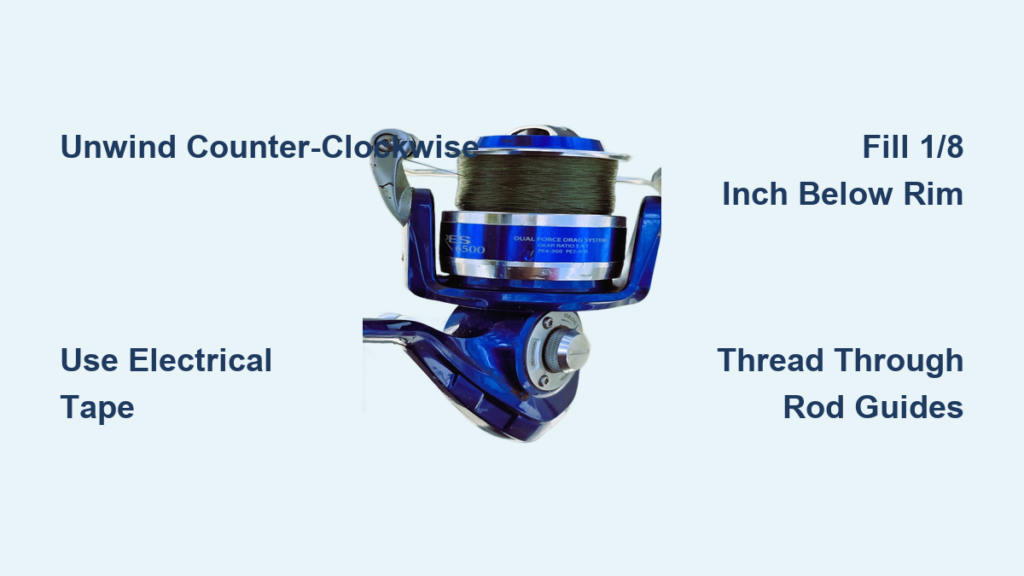
Start by pulling the line through all rod guides, beginning at the tip guide and working down to the reel. This aligns the line path with real casting conditions, guiding it straight into the spool for even distribution.
If you skip threading, the line enters at an angle, creating uneven coils that lead to tangles, poor lay, and wind knots. This step takes only 30 seconds, so do not skip it.
Secure Line to Spool Correctly
A loose knot means your line detaches under pressure. Using the right knot for your line type prevents this disaster.
Use Arbor Knot for Mono and Fluoro
The arbor knot is ideal for monofilament and fluorocarbon. Here is how to tie it:
- Open the bail
- Wrap the line around the spool arbor
- Tie an overhand knot around the standing line
- Make a second overhand knot with the tag end
- Pull both knots tight so they seat snugly against the spool
This double-knot design prevents slippage even under maximum drag.
Use Uni Knot for Braided Line
Braided line is slick and can slip with standard knots. The Uni knot grips better:
- Form a loop with the tag end
- Pass the tag through the loop
- Wrap it around the standing line 4 to 6 times
- Moisten, pull tight, and trim
This knot is the go-to for superlines because it holds securely even under heavy drag.
Prevent Slippage with Electrical Tape
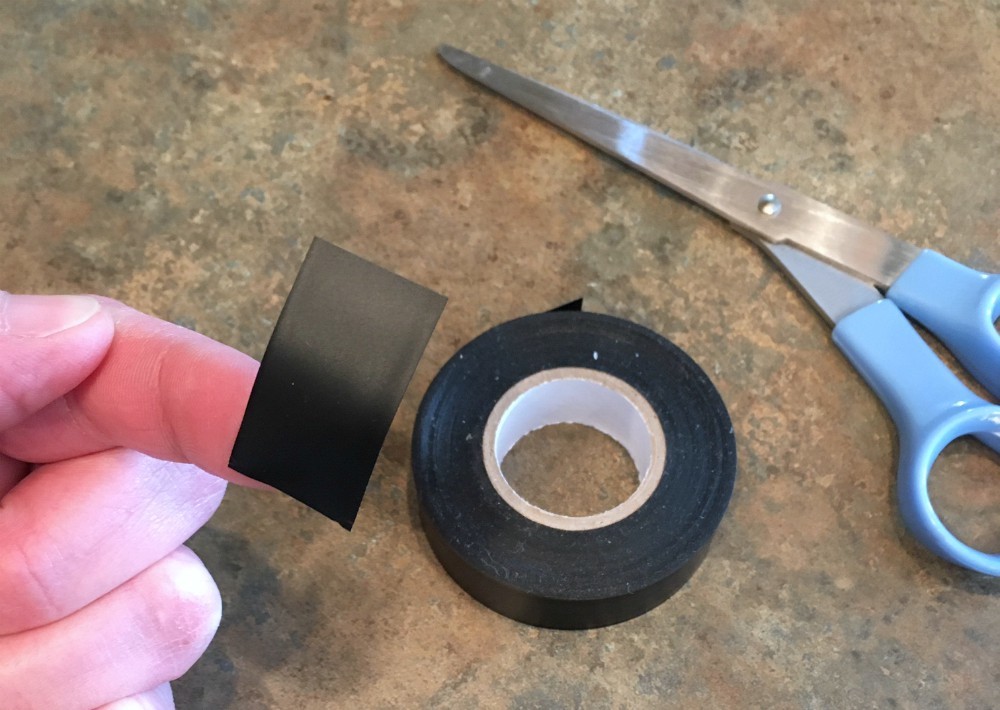
Even a perfect knot can fail if the first few wraps spin loose under tension. Adding tape creates friction that anchors the line.
Apply Tape Before Winding
Place a 1 to 2 inch strip of electrical tape across the spool where the first wraps will go, especially when spooling braid. The tape adds friction, preventing the line from rotating under drag tension.
Leave the tape in place during use. Remove it only when changing lines. Many pros use tape even with mono or fluoro for consistent anchoring.
Orient Filler Spool for No Twist
This is the most critical step to avoid line twist. The orientation of your filler spool determines whether the line coils naturally or fights against itself.
Feed Line with Counter-Clockwise Unwind
Spinning reels release line in coils. To match that motion, the filler spool must unwind counter-clockwise. Here is how to achieve this:
Place the filler spool on a flat surface with the label facing up. Pull line from the top of the spool. If someone is helping, have them hold the spool with the label facing them.
Alternative method: Hold the spool vertically so line comes off the bottom, ensuring counter-clockwise spin.
Never let the filler spool spin freely. This introduces straight-line feed, which forces the line into unnatural coils on the reel, creating twist that causes wind knots later.
Apply Consistent Winding Tension
Too loose creates tangles. Too tight damages the line and embeds coils into lower layers. Finding the right pressure is essential.
Maintain Finger Tension
Hold the line between your index and middle fingers, about 12 inches above the spool. Apply gentle to medium pressure, just enough to keep the line snug as it winds.
Avoid squeezing hard. Over-tensioning burns your fingers, stretches or weakens the line, and causes upper layers to dig into lower ones. Keep tension steady throughout the entire spooling process.
Use a Helper or DIY Spool Holder
Manual control beats free-spinning every time. The ideal setup is having a friend hold the filler spool with the label facing them, applying light resistance.
No helper? Try these alternatives. Insert a pencil or dowel through the spool center. Thread it through the holes of a pair of Crocs or flip-flops. Squeeze your feet together to control tension while reeling.
Another option: place the spool on the ground and lightly press a foot on it to prevent rolling, not spinning.
Submerge Spool in Water for Stiff Lines
For stiff monofilament or fluorocarbon, place the filler spool in a bucket of water. Water reduces line memory and allows smoother feeding. This technique works well for braid too, just do not soak it for hours unless heat-treating.
Fill to 1/8 Inch Below Rim
Overfilling is a top cause of casting disasters. The line expands under pressure and flares outward when you cast, causing friction and tangles.
Stop at the Fill Line
Fill the spool until the line is 1/8 inch (3 mm) below the outer rim. Most reels have a laser-etched fill line, so use it as your guide.
Why this matters. Overfilled spools cause line to flare during casting, increasing friction and tangle risk. Underfilled spools reduce casting distance and cause uneven line lay.
Check every 10 to 20 yards as you reel. Flip the reel side to side occasionally to distribute line evenly across the spool width.
Line-Specific Spooling Tips
Each line type needs slightly different handling. Understanding these differences prevents common mistakes.
Spooling Braided Line
Braided line requires special attention because it is thin and slick. Use electrical tape or mono backing to prevent slippage. Fill to 1/8 inch from the rim since braid diameter is so small that overfilling happens easily. Apply medium-high tension because braid has zero stretch, so control is key. Most anglers add a fluorocarbon leader for stealth in clear water.
Spooling Monofilament
Monofilament grips well on its own, so no backing is needed. Apply medium tension, and consider using line conditioner or soaking the line in hot water for 30 to 60 minutes to reduce coiling. High-memory lines benefit especially from this conditioning.
Spooling Fluorocarbon
Fluorocarbon is stiffer than mono, so go slow when applying tension. If the line has high memory, use Trilene 100% Fluoro XL, which is engineered for spinning reels with better flexibility. Wipe with line conditioner to minimize twist and improve lay.
Condition Line for Peak Performance
Even perfect spooling cannot fix factory memory. Taking extra steps to reset the line improves performance significantly.
Hot Water Soak Method
Remove the spool from the reel and take out drag washers to avoid water damage. Submerge the spooled line in hot (not boiling) water for 1 hour. Re-spool immediately after soaking.
Heat relaxes the line, letting it conform permanently to the spool shape. This method works best for high-memory monofilament and fluorocarbon.
Apply Line Conditioner
Wipe or spray line with KV Line Lure Conditioner or KVD Line and Lure as it passes through your fingers. Avoid Real Magic on monofilament because it can dissolve the line. Real Magic is safe only for braid and fluorocarbon.
Benefits of line conditioner include reduced memory, prevention of wind knots, and improved castability.
Prevent Twist After Spooling
Twist can creep in even after perfect spooling. Developing good habits prevents problems before they start.
Close the Bail After Spooling
Never leave the bail open while walking or storing. Wind or movement can twist the exposed line. Always close the bail, opening it only just before casting.
Fix Twist In Water
If line starts coiling during use, tie the end to a fixed object like a tree or trailer. Walk backward, pulling line taut. Reel in under tension, stretching firmly several times.
This technique resets memory and removes accumulated twist.
Reel In Under Tension
Every few hours, let out 20 to 30 feet, then reel it back slowly under light drag. This smooths out developing kinks before they cause problems on your next cast.
Troubleshoot Common Spooling Problems
Knowing what goes wrong helps you fix it fast.
Line Twists into Corkscrews
Cause: Filler spool rotated clockwise instead of counter-clockwise. Fix: Re-spool with label up, pulling from top. Or flip the spool (label down) and try again.
Wind Knots Appear on Cast
Cause: Loose tension, high memory, or no backing on braid. Fix: Re-spool with consistent pressure. Use backing and tape for braid. Apply line conditioner.
Cone-Shaped Spooling
Cause: Line not run through rod guides. Fix: Always thread guides first. This step is non-negotiable.
Line Slips Under Drag
Cause: Poor knot or no tape. Fix: Retie with arbor or Uni knot. Add electrical tape for security.
Overfilled Spool Causes Ballooning
Cause: Ignored the 1/8-inch rule. Fix: Trim excess line. Never fill beyond the spool lip.
Bird’s Nests Form Immediately
Cause: Mix of twist, overfill, and loose bail. Fix: Re-spool correctly. Maintain tension throughout. Close bail after spooling.
Frequently Asked Questions About Spooling a Fishing Reel
What happens if I spool my reel backwards?
Spooling backwards means the line unwinds in the opposite direction it was wound, creating severe twist. This causes wind knots, poor casting, and line memory problems. Always ensure the filler spool unwinds counter-clockwise.
Can I use monofilament as backing for braided line?
Yes, monofilament makes excellent backing for braid. It adds friction to prevent slippage and fills the spool to the proper level. Use 10 to 20 yards of mono backing before adding your braided main line.
How tight should the line be when spooling?
Apply gentle to medium tension with your fingers, holding the line about 12 inches above the spool. The line should feel snug but not stretched. Too tight damages the line, too loose causes tangles.
Should I soak my fishing line before spooling?
Soaking helps high-memory lines like monofilament and fluorocarbon. Submerge the filler spool in hot water for 30 to 60 minutes before spooling. This reduces coiling and improves the line lay on the reel.
Why does my line keep twisting?
Twist comes from incorrect filler spool orientation, free-spinning spools, or high line memory. Always unwind counter-clockwise, maintain tension, and consider using line conditioner to reduce memory.
How do I know when my spool is filled correctly?
Fill to 1/8 inch (3 mm) below the spool rim. Most reels have a laser-etched fill line as a guide. The line should be even with the rim but never above it.
Key Takeaways for Spooling Your Fishing Reel
Proper spooling is the foundation of trouble-free fishing. Always unwind your filler spool counter-clockwise to match how the reel releases line during casts. Use electrical tape, especially for braided line, to anchor the first wraps securely. Maintain steady finger tension throughout winding, and fill to 1/8 inch below the spool rim to prevent ballooning and tangles.
Thread the line through all rod guides before tying to the spool, or you will get cone-shaped distribution that causes casting problems. Condition high-memory lines with hot water soaks or line conditioner for smoother performance. Finally, develop the habit of closing the bail after spooling and opening it only just before casting to prevent twist accumulation.
Take the time to spool correctly, and your reel will perform like a well-tuned machine every time you hit the water.