
You’re excited for a day on the water, envisioning sunrise over the open ocean and the thrill of the catch. But for many anglers, that dream can quickly become a nightmare once the boat leaves the dock. Dizziness, nausea, cold sweats, and the overwhelming urge to vomit are common experiences that cut fishing trips short. The good news is that seasickness is preventable, and you don’t have to let motion sickness rob you of your time on the water.
This guide provides science-backed strategies to keep seasickness at bay, from pre-trip preparation and medication timing to onboard positioning and emergency responses. Whether you’re a first-time angler or a seasoned offshore veteran, these actionable tips will help you stay alert, comfortable, and ready to catch fish.
Choose the Right Boat and Timing
Your odds of getting seasick start before you even step on board. Smart planning around boat type, weather conditions, and trip timing can drastically reduce your risk of motion sickness.
Select a Stable Vessel
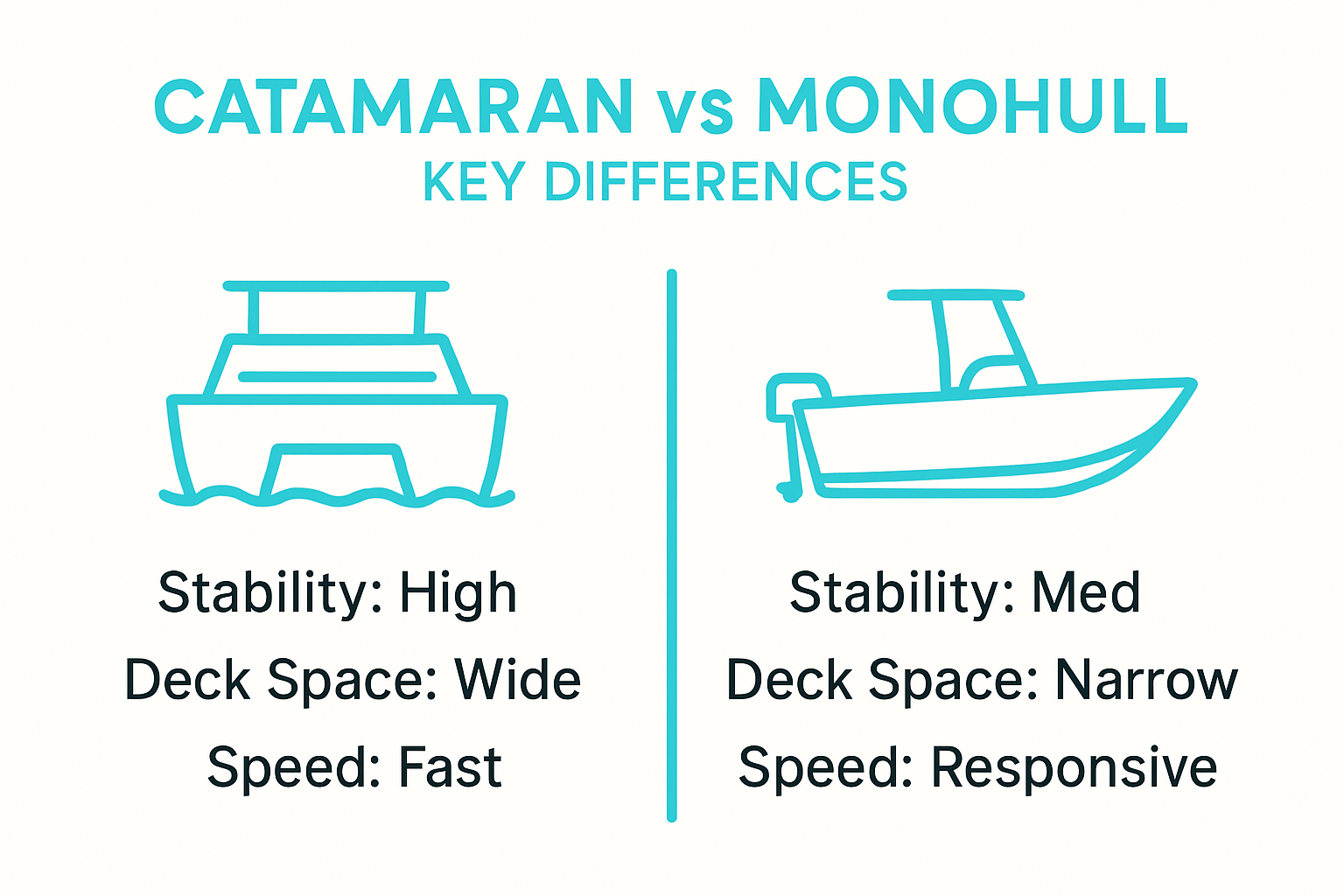
Not all boats handle waves the same way. Stability matters more than speed when preventing motion sickness.
Catamarans are the gold standard for stability. Their wide beam and twin hulls cut through waves smoothly, reducing the side-to-side rolling motion that triggers nausea. Larger boats over 30 feet ride over swells instead of slamming into them, offering a gentler motion that sensitive anglers tolerate better. Boats equipped with gyroscopic stabilizers actively reduce roll by up to 90 percent, making them ideal for those prone to seasickness. Avoid small center consoles or open skiffs in rough offshore conditions, as they amplify every wave and increase sensory conflict.
Fish During Calm Conditions
Always check marine forecasts using NOAA or Windy.com for wind speed, wave height, and sea state before planning your trip. Ideal conditions feature winds under 15 knots and wave heights under 3 feet. Avoid booking trips during storm systems, sudden wind shifts, or seasonal swell events. If you’re prone to motion sickness, stick to inshore or protected waters like bays, estuaries, or nearshore reefs where waves are smaller and visible fixed points like land and buoys help your brain stabilize.
Schedule Around Your Body
Timing your trip around your menstrual cycle can help, as studies show women are more susceptible to seasickness during menstruation due to hormonal fluctuations. Also avoid fishing the day after drinking alcohol, as a hangover severely increases nausea risk. If you’re on antibiotics or other medications, consult your doctor, as some drugs worsen motion sickness.
Prep Your Body Before Departure
What you do 24 to 48 hours before your trip sets the foundation for success. Prevention begins well before you board the boat.
Avoid Alcohol and Get Adequate Rest
No alcohol the night before your trip is essential. Even one drink increases dehydration and inner ear sensitivity, making you far more susceptible to nausea. Sleep 7 to 8 hours before your outing. Fatigue significantly lowers your threshold for motion sickness, and a well-rested brain handles conflicting sensory signals much better.
Eat Smart and Consider Supplements
Stick to bland, familiar foods in the days leading up to your trip. Toast, oatmeal, bananas, and plain rice are excellent choices. Avoid greasy breakfasts like bacon and eggs or spicy dishes that might upset your stomach. Skip acidic drinks like coffee and orange juice, as they stimulate stomach acid. Instead, opt for herbal tea or water. Taking Vitamin B6 at 50 to 100 mg daily starting a few days before the trip can help reduce nausea. You can find this vitamin in chickpeas, salmon, or supplements.
Start Medications Early
Most seasickness medications must be taken before symptoms appear. Waiting until you feel sick is too late, as these drugs work preventively rather than curatively.
| Medication | When to Take | Drowsiness Level | Prescription Required |
|---|---|---|---|
| Scopolamine Patch | 6 to 8 hours before (often night before) | Mild | Yes |
| Bonine (Meclizine) | 1 to 2 hours before | Low | No |
| Dramamine | 30 to 60 minutes before | High | No |
| Zofran (Ondansetron) | Can be taken after nausea starts | None | Yes |
Pro Tip: If you’re prone to severe seasickness, consider combining Bonine the night before with a Scopolamine patch applied behind the ear. This dual approach covers all bases and provides maximum protection.
Use Natural and Non-Drug Remedies
If you want to avoid drowsiness from medications or prefer natural options, several alternatives can help, especially when combined with other strategies.
Try Ginger for Mild Cases
Ginger has been used for centuries to settle the stomach. While study results vary, many anglers swear by it. The best forms include ginger gum, capsules, or fresh root steeped in hot water. A typical dose ranges from 250 to 1000 mg every 4 to 6 hours. The main advantage is no drowsiness, and it’s generally safe for most people. Onboard hack: suck on ginger candy or chew gum during rough stretches to maintain protection.
Wear an Acupressure or Electronic Band
Static wristbands like Sea-Band apply pressure to the P6 (Neiguan) point on the wrist. They’re cheap and drug-free, but effectiveness is mixed. Many users report no benefit, making this a hit-or-miss solution. Electronic bands like ReliefBand send gentle pulses to the same point and are more effective than static bands, with user success rates reaching up to 80 percent. These devices cost around $200 and require conductive gel for proper function. Tip: turn on the electronic band before boarding, as it works best as a preventive tool rather than a rescue measure.
Optimize Your Position Onboard
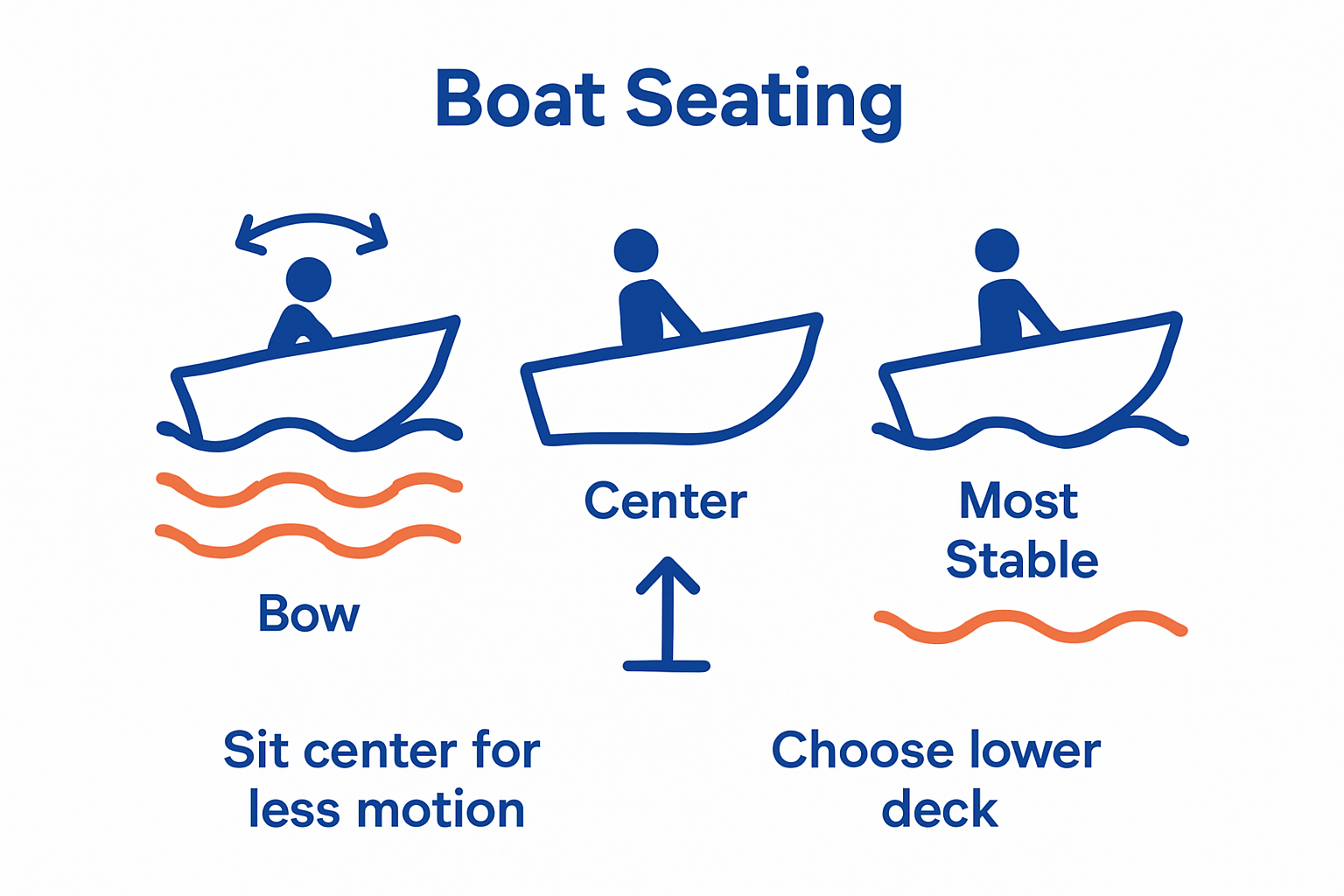
Once on the boat, where you stand, sit, and look makes a huge difference. Motion sickness is often a matter of positioning and visual focus.
Stay in the Center or Stern
The midship (center) position is the boat’s pivot point, experiencing the least movement in all directions. The stern (back) experiences less vertical motion than the bow and is typically the best spot if wind allows. Always avoid the bow, as it amplifies up-and-down motion and increases sensory conflict between your eyes and inner ear.
Never Go Below Deck
The cabin is the worst possible place to be when prone to seasickness. It’s enclosed, stuffy, often filled with diesel fumes, and offers no visual horizon. If you feel sick, go up, not down. Stay on the main deck or in the cockpit where you can see the horizon and breathe fresh air.
Keep Your Eyes on the Horizon
This is one of the most effective zero-cost strategies for preventing seasickness. Your eyes confirm motion, aligning with what your inner ear feels and resolving the brain’s confusion. Pick a distant, stable point like the horizon, land, or a cloud and focus on it, especially during rough patches. Avoid reading, using your phone, or staring at fishing gear, as these activities force your eyes to report stillness while your body feels motion.
Adopt Smart Onboard Habits
Small behavioral tweaks can keep nausea at bay, especially during the ride out to your fishing spot.
Maintain a Wide Stance
Stand with feet shoulder-width apart to stabilize your head and torso. This reduces motion input to the inner ear, and studies show this can cut seasickness risk by up to 20 percent. If you must sit, keep your back supported and your feet flat on the deck.
Lean Into the Motion
Don’t stiffen up against the boat’s movement. Let your knees bend slightly and move with the boat’s roll. Fighting the motion increases stress and amplifies nausea.
Stay Cool and Hydrated
Heat worsens nausea, so wear a hat, sunglasses, and light layers that you can remove as the sun rises. Sip water or electrolyte drinks every 15 to 20 minutes. Dehydration mimics and amplifies seasickness symptoms. Avoid caffeine and alcohol, as both dehydrate and irritate the stomach.
Distract Yourself with Fishing
Once you start actively fishing, your brain shifts focus and symptoms often disappear. Over 80 percent of people who feel sick on the ride out recover once they’re actively engaged. Hold the rod, watch the line, or talk with the crew. Catching a fish releases adrenaline, which can reset your balance system.
Eat and Drink the Right Things
Your stomach doesn’t need extra stress. What you consume onboard can either calm or trigger nausea.
Eat Light, Dry, and Salty Snacks
Crackers, pretzels, dry toast, or saltines are the best options. They absorb stomach acid and settle the gut. Eat small amounts every 30 to 60 minutes, and don’t let your stomach get empty.
Try Carbonated or Ginger Drinks
Ginger ale, Coke, or club soda can help. Carbonation releases gas pressure, and burping often brings relief. Ginger tea or mint are natural stomach soothers that many anglers find effective.
Avoid greasy food, coffee, orange juice, and heavy meals. These increase acid production and worsen nausea.
Act Fast If Symptoms Start
Even with precautions, you might start feeling queasy. Act immediately rather than waiting for symptoms to escalate.
Immediate Response Steps
First, look at the horizon immediately. This is the most critical step. Second, move to the stern or midship to get to the most stable spot on the boat. Third, get fresh air and step away from exhaust fumes. Fourth, sip water or ginger ale and start rehydrating. Fifth, eat a cracker to settle your stomach. Sixth, cool down by splashing water on your face or neck.
Advanced Recovery Tactics
Lie flat on the deck with your eyes closed and let your body reset. Use a life jacket as a pillow. If it’s safe and conditions allow, jumping in the water removes the rocking sensation entirely and resets your vestibular system. If you have Zofran (Ondansetron), take it now. This is the only common anti-nausea medication that works after symptoms start.
Know When to Call It
If vomiting becomes uncontrollable and you can’t keep fluids down, request to return to shore. Dehydration and exhaustion are real risks offshore. Pride isn’t worth a medical emergency.
Special Cases and Long-Term Tips
Some people need extra care, whether they’re new to boating or recovering from injury.
First-Time Anglers
Start with short, inshore trips to build tolerance. Don’t panic, as nausea is temporary and anxiety makes it worse. Use Bonine combined with horizon focus and ginger gum as a starter combination.
Children
Keep them engaged and cool. Let them spot birds or fish. Use child-safe ginger products or ask a pediatrician about low-dose meclizine. Avoid letting them play games that involve jumping, as this worsens motion confusion.
Post-Head Injury or Sensitivity
Recent concussions or inner ear issues dramatically increase seasickness risk. The vestibular system may already be compromised. Use stronger prophylaxis like Scopolamine patches, avoid rough conditions until fully recovered, and consider desensitization training.
Frequently Asked Questions About Preventing Seasickness While Fishing
Does taking seasickness medication guarantee I won’t get sick?
No medication provides 100 percent protection, but combining medication with behavioral strategies significantly increases your success rate. The most effective approach combines pre-trip medication, proper positioning, horizon focus, and natural remedies.
What’s the best seasickness medication for fishing?
Bonine (meclizine) is often preferred by anglers because it’s less drowsy than Dramamine while still being effective. For severe cases, the Scopolamine patch provides long-lasting protection with minimal drowsiness. Zofran is unique because it can be taken after symptoms start.
How long does it take to develop sea legs?
Most regular anglers develop tolerance within a few trips. Your brain can adapt to the sensory conflict, and many experienced fishermen eventually stop needing medication. Building sea legs takes repeated exposure to boat motion.
Can I drink alcohol while on a fishing trip if I’ve taken seasickness medication?
No. Alcohol dehydrates you and worsens seasickness symptoms. It also interacts negatively with most seasickness medications. Save the celebrations for after you return to shore.
What should I do if I’m already feeling sick and don’t have medication?
Look at the horizon immediately, move to the stern or midship, get fresh air, sip ginger ale or water, eat crackers, and cool down. If available, Zofran is the only medication that works after symptoms appear. Lying down with eyes closed on the deck can also help reset your system.
Key Takeaways for Preventing Seasickness While Fishing
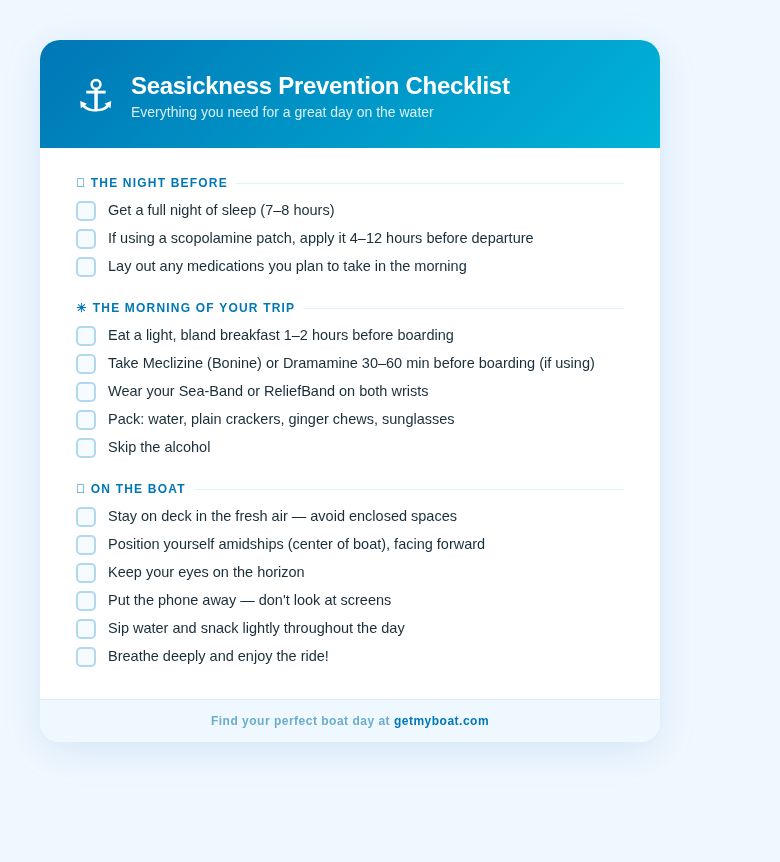
Seasickness doesn’t have to ruin your fishing trip. With the right pre-trip preparation, onboard habits, and quick response when symptoms appear, you can stay alert, active, and nausea-free. The most important strategies include taking medication before symptoms start, choosing stable boats and calm conditions, positioning yourself at the stern or midship, and keeping your eyes on the horizon. Combine medications like Bonine or Scopolamine patches with natural remedies like ginger and proper positioning for maximum protection. Now get out there and enjoy your time on the water without the fear of seasickness holding you back.