You’ve been there: standing on the dock or knee-deep in a river, frantically digging through a jumbled tackle bag, hooks tangled, lures lost, and that one perfect jig nowhere to be found. By the time you rig up, the fish have stopped biting. Disorganized gear doesn’t just waste time; it costs catches. The good news? Organizing fishing gear isn’t about perfection; it’s about strategy. A smart system turns chaos into confidence, so you spend less time searching and more time casting.
The best anglers don’t just collect gear; they curate it. Whether you’re targeting bass after work, chasing walleye on weekends, or prepping for a tournament, a tailored organization method keeps your setup fast, efficient, and ready for action. This guide breaks down proven strategies, storage solutions, and real-world workflows so you can build a system that works, no matter your budget or target species.
Choose Your Fishing Gear Organization Method
The first step to organizing fishing gear is selecting a system that matches your fishing style. Not every method works for every angler, so consider how you fish most often before committing to a setup.
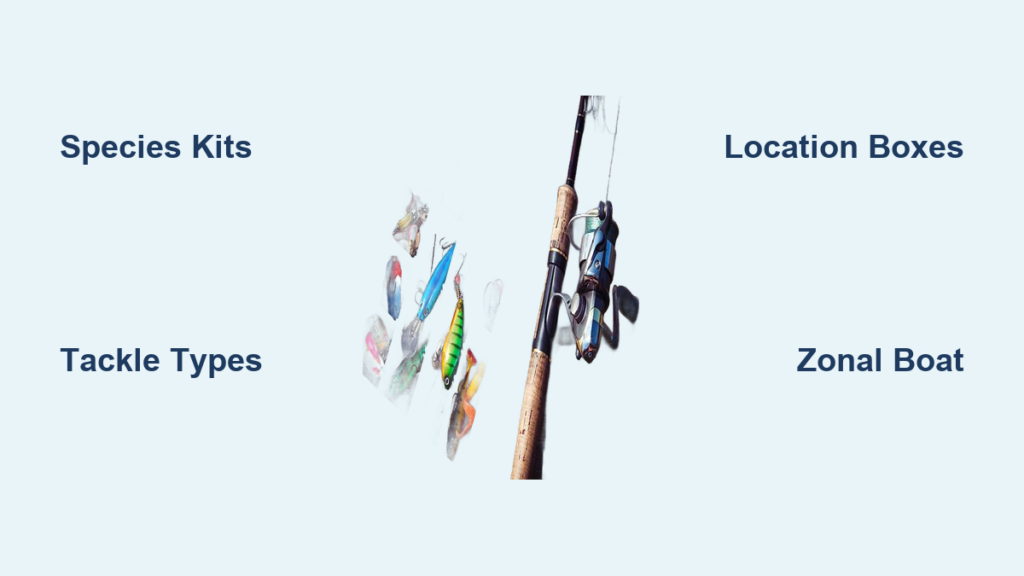
Species-based organization works best if you plan trips around specific fish. You build dedicated kits for bass, trout, or walleye, grabbing only what you need for that particular outing. This eliminates guesswork and keeps your bag light.
Type-based organization suits anglers with extensive gear collections who fish multiple species. You centralize all hooks, sinkers, and terminal tackle in master boxes, pulling from each category to build custom kits for any trip.
Location-based organization is ideal for multispecies anglers or those with limited time. You create boxes containing only the baits that work at specific lakes or ponds, reducing decision fatigue when you’re fishing without a set target.
Zonal boat organization maximizes efficiency on the water. You divide your boat into functional zones by weight and tackle type, placing heavy gear in the rear, soft plastics in the middle, and light lures up front.
Build Species-Specific Tackle Kits

Creating dedicated tackle kits for each fish you chase transforms your fishing efficiency. This grab-and-go method eliminates guesswork when time is tight. For example, a striped bass trip needs different lures than a panfish outing. Pack everything for one species in a single box or bag: hard baits, soft plastics, jigs, and terminal tackle.
Label each box clearly using masking tape and a Sharpie. Use color-coded tape for instant recognition. Red tape might signal bass gear, while blue indicates trout tackle. When you’re heading out, just grab the right box and go.
Example Striped Bass Kit Configuration:
- Hard Baits: Plugs and metal jigs in a divided tray. Keep only a few per section to prevent tangles.
- Soft Plastic Jigs: Separate tray sorted by jig head weight, ranging from 1/8 oz to 1/2 oz.
- Soft Baits: Three labeled Ziploc bags organized by size: 3-inch, 4-inch, and 5-inch tails.
On the water, you’ll know exactly which jig size works best for current conditions without digging through unrelated gear. This method shines when you plan trips around a single species. You save time, reduce clutter, and increase your odds of matching the hatch fast.
Sort Fishing Gear by Tackle Type
If you fish multiple species or build rigs on the fly, organizing by tackle type keeps everything accessible. Keep all hooks, sinkers, swivels, and snaps in one master box. A Plano slotted box works perfectly because its precision slots prevent small hooks from falling out, even when tipped upside down.
Divide the box into rows. Row one holds circle hooks sorted smallest to largest. Row two contains J hooks. Row three stores EWG hooks. This setup doubles as a refill station for species-specific kits or a standalone unit for bottom fishing.
Apply the same logic for sinkers. Dedicate rows to types like pyramid, egg, or bank sinkers, and sort by weight within each row. Need a 2-ounce pyramid for strong current? You’ll find it in seconds.
Surplus Storage Tips:
- Keep extra lures sorted by type in labeled cardboard boxes stored in a closet or garage.
- Separate backup line, sprays, and attractants into their own designated boxes.
- Group crankbaits, spinnerbaits, and jigs individually for easy restocking.
This centralized approach means you never lose track of terminal tackle, and building custom kits takes minutes instead of hours.
Organize Gear by Fishing Location
For multispecies anglers or quick after-work trips, organize gear by body of water rather than species. This method cuts decision fatigue when you’re fishing a local pond or lake without a set target. Your box becomes a high-confidence arsenal containing only the baits that work in that spot.
Freshwater Pond Setup Example:
- Hard Baits: One each of key profiles, including a jerkbait, squarebill crankbait, lipless crank, topwater frog, and inline spinner.
- Pre-rigged Plastics: Sections for Senkos, Ned rigs, and paddletails.
- Terminal Tackle: Extra EWG hooks and jig heads.
- Soft Plastics: One labeled bag with Senkos, creature baits, and paddletails.
You’re ready for anything: bass on the edges, bluegill in the weeds, or pike ambushing near drop-offs. This system keeps gear lean but versatile, making it ideal for urban anglers with limited time, weekend explorers hitting the same lakes, or families fishing together with varied targets.
Set Up Zonal Boat Organization

Tournament-grade zonal organization maximizes efficiency, weight distribution, and speed. This system organizes your boat itself into functional zones, using specific box types and color-coding for instant recognition.
Rear Zone: Heavy Tackle Storage
Keep the heaviest gear in the rear of your boat for balanced weight distribution. Use Slim Tough Tainers or Flambo trays; they’re built to handle tungsten weights, skirted jigs, and terminal tackle without collapsing.
Organize weights sequentially from 1/16 oz to 1/2 oz. Store drop shot and Carolina rig components in separate trays. Label boxes with bright orange duct tape for instant identification. Mark both the top and sides so you can identify the box without opening it.
Middle Zone: Soft Plastics
Store worms, creature baits, tubes, and trailers in open Flambo 7000R boxes with dividers removed. Stack multiple bags of the same plastic vertically, like files in a cabinet. For example, group 3 to 4 bags of June Bug creature baits together.
Use purple duct tape to mark soft plastic boxes. This prevents folding, tangling, and gives you a full day’s supply of a proven pattern in one spot.
Front Zone: Light Tackle and Crankbaits
Place crankbaits, jerkbaits, and topwater lures up front. Use Slim Tough Tainers for durability. Sort by size and color.
Never carry just one of any key color. Keep at least two to four of high-performing profiles like Chartreuse/Blue Back. If you snag one, you’re not heading back to the truck.
Select the Right Tackle Boxes and Storage

Choosing the correct storage containers makes or breaks your organization system. Each box type serves a specific purpose.
Box Types and Their Best Uses
Plano Slotted Boxes excel at terminal tackle storage. The tight slots keep tiny hooks and swivels secure. Stackable and modular, they’re perfect for a workbench or trip bag.
Wrap Stack Boxes open with a single lever, resist wear, and hold more than standard trays. Fit up to seven in a main trip bag. Ideal for swimbaits, drop shot rigs, and crankbaits.
Flambo 7000R boxes offer large, open storage for bulk soft plastics. No dividers means maximum vertical stacking. Keeps baits flat and tangle-free.
Slim Tough Tainers measure about half the thickness of standard boxes but built like tanks. Thick walls resist cracking in cold weather. Use for heavy weights, crankbaits, or any gear needing rugged protection.
Northland Yellow Tackle Box (3600) features fixed compartments and a slim profile. Perfect for spinner blades; keeps finishes intact and sorted by size and color in craft bags.
Protect Lures with Specialized Storage Solutions
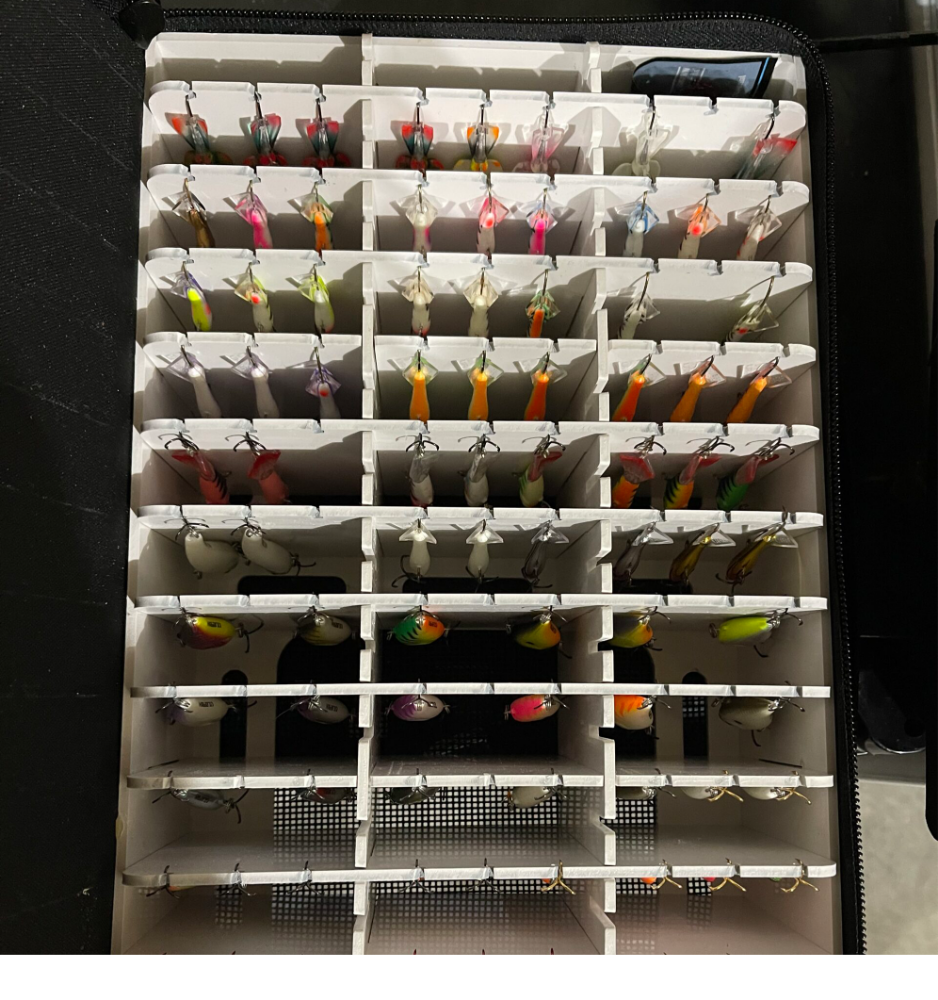
Expensive lures deserve protection beyond basic tackle boxes. Specialized storage prevents damage and extends the life of your gear.
Lure Vault
This solution prevents damage to glide baits and horizontal jigs like Rapala Jigging Raps. The hanging hook design keeps lures suspended during transport, preventing rolling and chipped paint. It fits in 3700-size compartments and proves essential for ice anglers or boat anglers hitting rough water.
Lure Locker and Caddy
The Lure Locker holds over 100 crankbaits with a small footprint, great for long-term storage. The Lure Caddy serves as a low-profile working box for on-deck use. It keeps active lures dry, untangled, and rust-free with airflow. Unlike airtight boxes, breathable caddies prevent moisture buildup.
Lure Wallet
A foam binder with clear plastic sheets functions like a tackle wallet. Hooks press into foam for security. Write weight or hook size directly on the foam.
Lure wallets work perfectly for ice fishing setups, stinger hooks, pre-rigged swimbaits, and miscellaneous working tackle. They come in small for jacket pockets, medium fitting 3600 boxes, and large accommodating 3700 boxes.
Custom Jig Box with Foam Padding
Dense foam protects jigs from damage and paint chipping. Top pockets store leaders, scents like Billy Rub, and spare line spools. Keeps rigs separated and ready for action.
Create a Garage Tackle Station
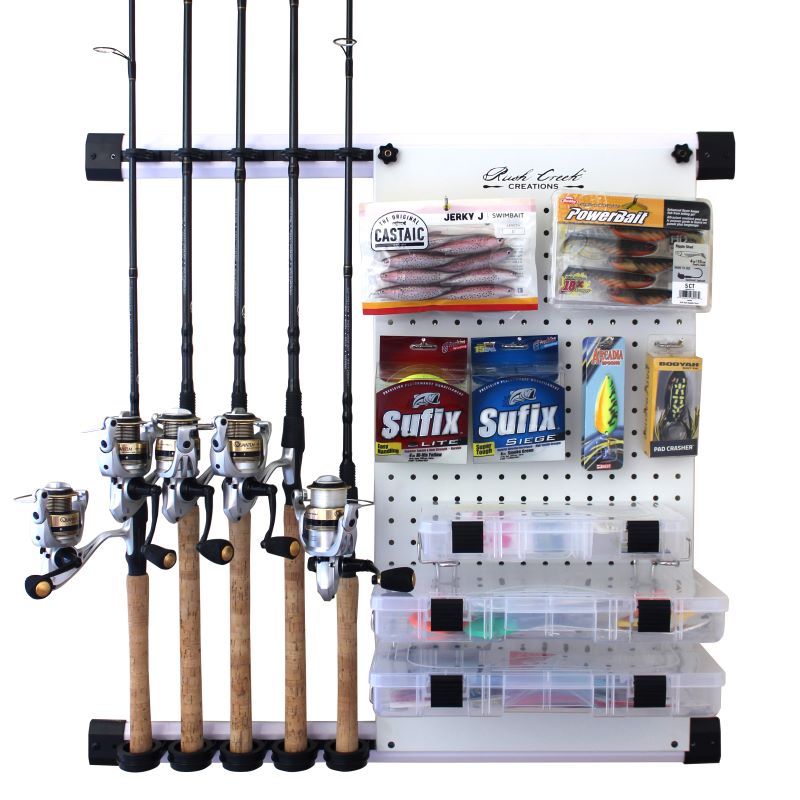
Building a garage tackle station transforms gear management from a chore into a streamlined system. Your garage workbench becomes the central command for preparation.
Workbench Hub Setup
Make your garage workbench the central hub for gear prep. Keep pliers, cutters, and tools within immediate reach. Use this space to swap out tackle boxes, spool new line, inspect lures, and organize for trips. Add a window AC unit if you organize during summer; comfort matters during long sessions.
Bait and Bulk Storage Zone
Set up an aerator with a 110-volt system powering two minnow buckets. Add a mini fridge for live bait storage. Mount a pegboard for battery chargers and tools. Use sturdy shelving for plastic bins holding extra plastics, bobbers, reels, and sharpening kits.
Trolling Gear Corner
Dedicate bins to specific purposes. One bin holds Great Lakes gear like planer boards, Dipsy divers, and trolling spoons. Another stores walleye tackle including crankbaits, crawler harnesses, and bottom bouncers. Leave bins in the garage until needed to prevent clutter on the boat.
Hidden Storage Cupboard
Store off-season or loose items out of sight: spare reels, reel maintenance kits, fly fishing gear, bulk line in spools and packs, spawn bags, and salmon rigs. This keeps the main area clean and focused.
Store Fishing Rods Efficiently

Proper rod storage prevents damage and extends their lifespan. Choose a system based on how often you use each rod.
Rod Rack Options
Rolling Rod Racks prove mobile and tall, fitting under ceiling height. Perfect for trolling rods that need to move around the shop.
Round Rod Racks work best for long-term storage of rods you don’t use daily. Less accessible, but they keep rods safe and protected.
Berkeley Quick-Grab Racks are designed for fast deployment. Mount near the door for your most-used rods.
Ceiling Rod Racks serve double duty as winter storage for trolling rods or drying racks for ice rods after a trip.
External Lean-To structures provide extra rod storage outside the garage, protecting from weather and organizing overflow.
Display Racks show off vintage rods or lures on wooden wall displays. Use pegboards for lure walls, keeping collections visible and accessible.
Mobile Gear: Trip Bags and Backpacks
Your gear needs to travel efficiently. Mobile solutions ensure you’re ready to fish within seconds of arriving at the water.
Main Trip Bag
A quality trip bag holds seven tackle boxes. Transition to wrap stack boxes for durability. Side pockets store bass jigs and Texas rig gear for instant access. Grab bag plus two rods equals ready to fish.
Kayak and Canoe Backpack
Use a PC Fun Backpack with a large compartment for 3600-style boxes. Multiple pockets hold line, tools, and slime rags. External clips secure pliers. This setup works perfectly for panfish trips or portable fishing adventures.
Specialty Bags
Keep a bass gear bag stocked with bladed jigs, Ned rig plastics, and craw trailers. Leave a panfish bag in the boat with small finesse baits for surprise opportunities.
Maintain Gear and Prevent Damage
Proper maintenance keeps your investment lasting seasons. Organized gear lasts longer and performs better.
Damage Prevention Tips
Use foam inserts to stop paint chipping on expensive lures. Lure Vaults protect plastic tails from damage. Breathable caddies prevent rust; avoid airtight boxes for working tackle.
Cold Weather Considerations
Standard plastic boxes crack in freezing temperatures. Switch to Slim Tough Tainers, mesh Money Bags, or indoor climate-controlled storage during winter months.
Reduce Tangles
Use dividers, foam inserts, and noodle wraps for long rigs. This saves time and preserves leader integrity. Tangle-free gear means more time fishing and less time untangling.
Environmental Benefits of Organized Fishing Gear
Organization benefits more than just your catch rate. It also protects the environment.
Reduce Lost Tackle
Disorganized tackle increases the risk of losing hooks, lures, and line, which contributes to environmental pollution. Neat arrangement ensures gear is accounted for, reducing accidental disposal.
Wildlife Protection
Organized anglers are less likely to leave behind broken line or discarded hooks. Fewer lost tackle means safer waterways for fish, birds, and marine wildlife.
Sustainable Fishing
A curated selection of confidence baits reduces waste. You’re not constantly buying duplicates of lost lures or discarding unused gear. This approach is kinder to your wallet and the planet.
Build Your System: Step-by-Step
Ready to organize? Follow this workflow to create your perfect system.
Step 1: Audit Your Gear
Sort everything in your garage. Group items by species, lure type, location, or season. This reveals what you actually have and what you need.
Step 2: Choose Your Method
Pick the system matching your style. Species-based works for dedicated trips. Type-based suits multispecies anglers. Location-based helps quick outings. Zonal organization maximizes boat efficiency.
Step 3: Assemble Kits
Pull gear from master storage. Use Ziploc bags for soft plastics. Label everything clearly with tape and markers.
Step 4: Load for the Trip
Place kits in your bag or boat using zonal logic. Heavy tackle goes rear, soft plastics in the middle, light lures up front.
Step 5: On-Water Maintenance
Use Lure Caddies or Wallets for active lures. Return gear to its spot after each use to maintain organization.
Step 6: Reset After Fishing
Clean rods and reels. Dry wet gear using ceiling racks. Replenish used lures. Return seasonal gear to storage.
Frequently Asked Questions About Organizing Fishing Gear
What is the best way to organize fishing tackle for beginners?
Start with species-specific kits using basic Plano boxes and Ziploc bags. Label everything clearly. As you grow your collection, graduate to specialized storage solutions like Lure Wallets and Flambo boxes.
How do I organize soft plastics without tangling them?
Store soft plastics in open Flambo 7000R boxes without dividers. Stack multiple bags of the same lure vertically like filing cabinet folders. Use Ziploc bags for transport, keeping each size in separate bags.
What tackle box is best for bass fishing?
Slim Tough Tainers work well for crankbaits and hard baits. Flambo trays handle soft plastics. Plano slotted boxes store terminal tackle. Combine these for a complete bass system.
How do I prevent my lures from getting damaged?
Use Lure Vaults for glide baits and horizontal jigs. Foam inserts prevent paint chipping. Breathable caddies stop rust. Never use airtight boxes for working tackle.
Should I organize fishing gear by species or by type?
Choose based on your fishing style. Species-based works if you target specific fish on dedicated trips. Type-based suits multispecies anglers with extensive collections.
How do I store fishing rods in my garage?
Use a rolling rod rack for frequently used trolling rods. Ceiling racks work for seasonal storage or drying wet rods. Display racks showcase vintage collections.
Key Takeaways for Organizing Your Fishing Gear
Organizing fishing gear isn’t a one-time chore; it’s a habit that pays off every time you hit the water. Start by choosing a method matching your fishing style, whether species-based, type-based, location-based, or zonal boat organization. Invest in quality storage solutions like Plano slotted boxes for terminal tackle, Flambo 7000R boxes for soft plastics, and Slim Tough Tainers for durability.
Protect expensive lures with specialized solutions like Lure Vaults and breathable caddies. Build a garage tackle station for efficient preparation and storage. Maintain your system by returning gear to its spot after each trip and auditing your collection seasonally.
Whether you use budget-friendly Ziploc bags or tournament-grade zonal systems, the goal remains the same: spend less time managing gear and more time catching fish. Start small, stick to your system, and watch your efficiency and success soar.