Crab fishing is one of the most fun and rewarding outdoor activities you can enjoy with family or friends. Whether you are standing on a dock, wading along a shoreline, or setting traps from a boat, catching crabs comes down to using the right gear, choosing effective bait, knowing where and when to go, and following local rules. With minimal equipment and a little know-how, you can catch fresh, delicious crabs in just a few hours.
This guide breaks down everything you need to start crabbing like a pro, no experience required. You will learn the best methods, top baits, ideal locations, and expert tips that ensure more crabs in your bucket and fewer missed opportunities.
Choose Your Crabbing Method
The method you pick depends on your skill level, location, and how many crabs you want to catch. Each technique has pros and cons, but all are effective when used correctly.
Try a Crab Hand Line First
A hand line is the easiest way to start crab fishing. Tie bait to a strong fishing line with a weight at the bottom, drop it into the water, and wait for crabs to grab on. When you feel a tug, slowly pull up and use a dip net to scoop the crab before it escapes.
Pro Tip: Wrap your bait in pantyhose or mesh to keep it intact longer and release scent steadily. This stops fish from stealing your bait and helps attract more crabs.
Best for: Piers, docks, and shallow shorelines
Difficulty: Beginner
Time per catch: 5 to 15 minutes
Use a Ring Crab Net
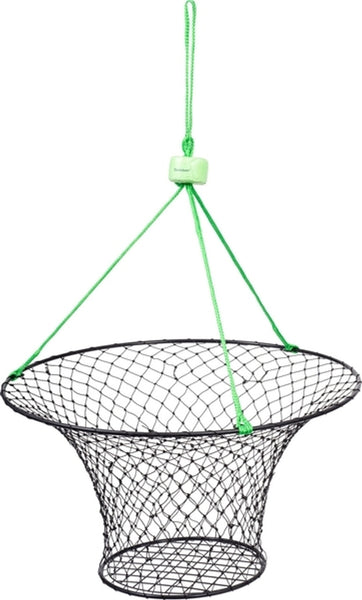
Ring nets are circular frames with netting and weights that close when pulled. Load bait into the center, lower it to the bottom using a rope, wait 10 to 30 minutes, then yank the line sharply to close the net and trap feeding crabs.
Top Pick: Danielson Deluxe Crab Net includes a float for visibility and a durable vinyl-coated steel frame.
Best for: Calm bays, tidal creeks, and pier fishing
Success Tip: Combine with passive fishing. Toss a hook while waiting to catch fish too.
Set a Pull Trap for Bigger Catches
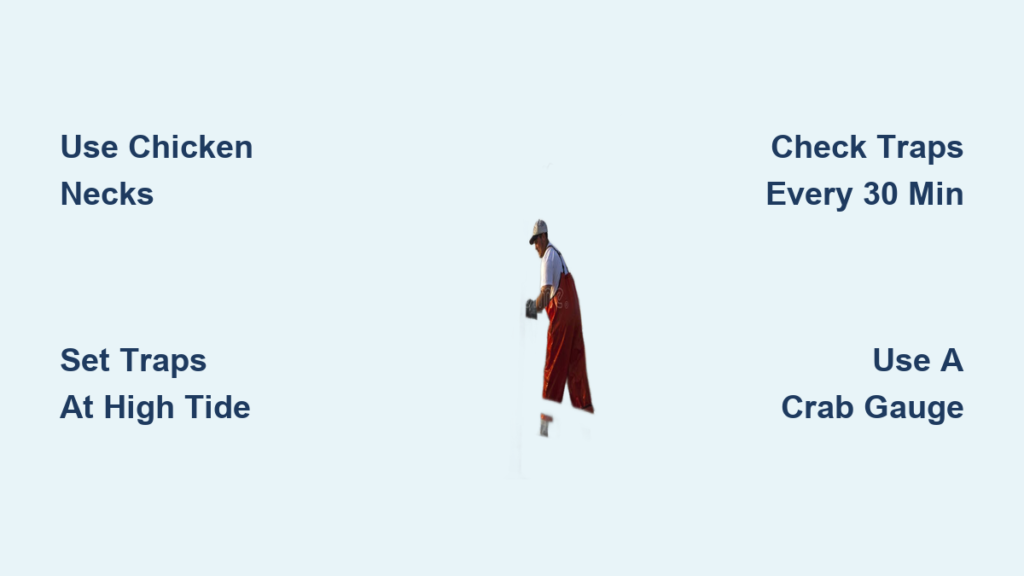
Pull traps, also called box traps or crab pots, are ideal for catching multiple crabs at once. Bait the trap with chicken necks, fish parts, or cat food inside. Secure with zip ties or a bait cage. Attach rope and a bright float, then drop to the bottom.
Soak time ranges from 30 minutes to 2 hours. Rotate traps every 30 minutes for best results. When you pull, give a sharp tug to close entry doors and trap the crabs inside.
Best for: Boats, deeper water, higher yields
Ideal Depth: 5 to 7 feet during peak season
Pro Move: Set traps near cuts, creek mouths, or underwater humps. Crabs love these spots.
Skip Trot-Lining for Now
Trot-lining uses a long main line with multiple baited hooks and can catch dozens of crabs. However, it is messy, time-consuming, and hard to manage. This method is not recommended for beginners or families due to complexity and cleanup. Stick with pull traps, which offer the best balance of catch rate and ease.
Pick the Best Bait for Crabs
Crabs are scavengers and will eat almost anything, but some baits work far better than others. The right bait can mean the difference between a full bucket and an empty one.
Top Baits Ranked
| Bait | Why It Works | Prep Tip |
|---|---|---|
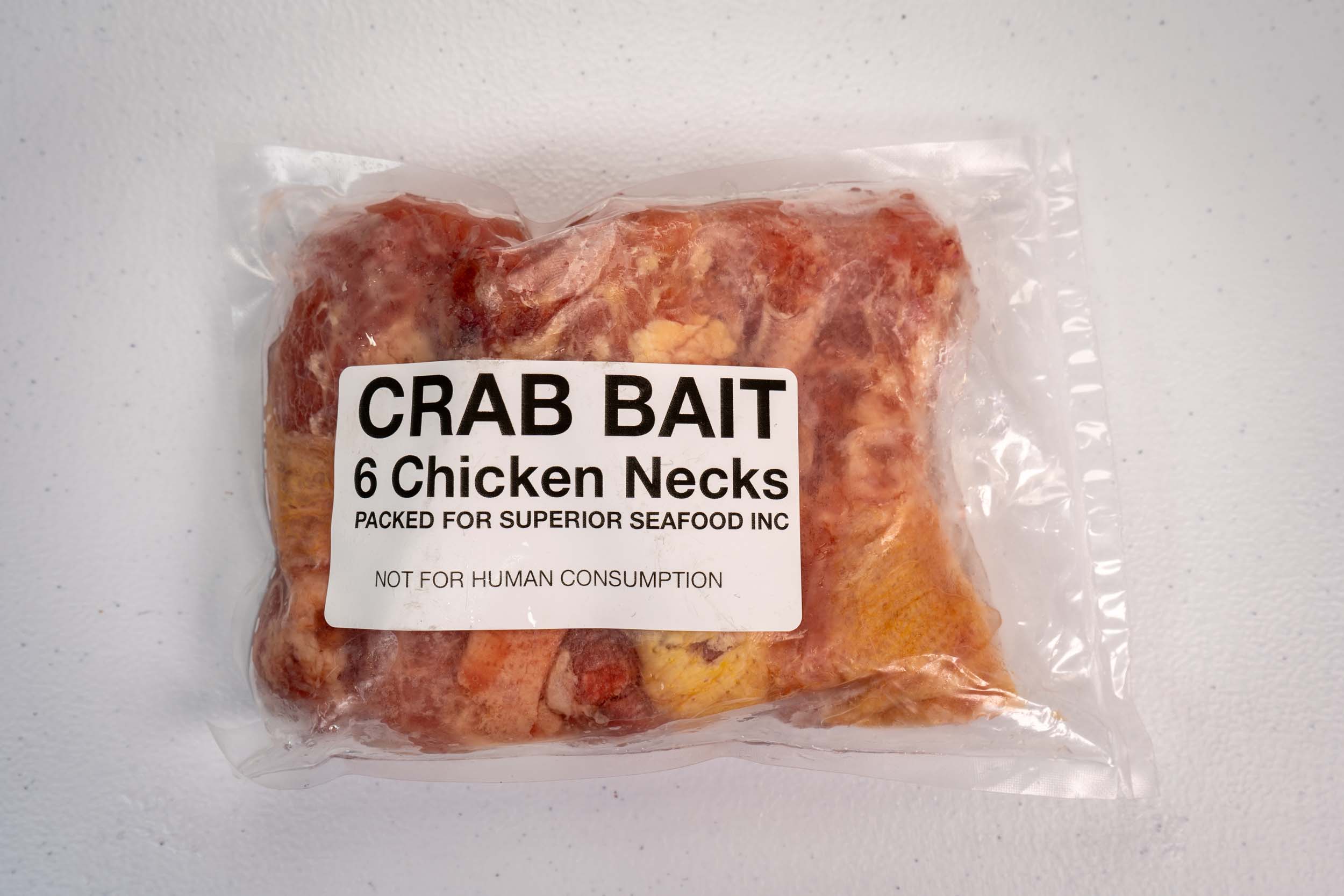
| Chicken Necks | Cheap, smelly, lasts long | Use frozen or pre-packaged crab bait |
| Fresh Fish Parts | Natural scent trail | Mullet, croaker, bluefish heads and guts |
| Razor Clams | Commercial secret weapon | Dig your own or buy frozen |
| Canned Sardines | Oily, strong odor | Keep in oil for extra scent |
| Canned Cat Food | Surprisingly effective | Punch holes in can and drop in trap |
Bait Hacks That Work
Use bait bags or mesh socks to slow down bait loss. Secure with zip ties to prevent fish from pulling it loose. Replace bait every few hours if heavily damaged.
Pro Tip: Stick with chicken necks. They are durable, cheap, and crabs cannot easily tear them off.
Essential Gear You Need

You do not need much, but these tools make crabbing safer, easier, and more productive.
• Crab trap rope, 100 to 150 feet per trap, bright color for visibility
• Crab gauge, required in most states to check size limits
• Crab tongs or grabber to handle live crabs without getting pinched
• Dip net, essential for hand lines and ring nets
• Bucket or cooler with lid to keep crabs alive and cool
• Float or marker buoy to mark trap location and warn boaters
• Work gloves to protect hands from claws and bait mess
Must-Have Combo: Trap plus rope plus float plus gauge plus gloves equals instant success.
Where to Go Crab Fishing

Location is everything. Crabs stick to specific habitats, especially near food and shelter. Choosing the right spot dramatically increases your chances of success.
Best Spots to Try
• Fishing piers over calm bays or estuaries
• Dock areas near marinas or residential waterfronts
• Creek mouths where tides bring in food
• Underwater structures like bars, humps, and drop-offs
• Shallow flats in 5 to 7 feet of water during peak season
How to Find Hotspots
Ask at a local bait shop. Clerks know what is biting and where. Watch other crabbers. Where they set traps is usually productive. Look for bird activity. Herons and egrets often feed where crabs are present.
Pro Move: Set traps on both sides of a point or jetty. One side may have stronger current and more crabs.
Best Time to Go Crabbing
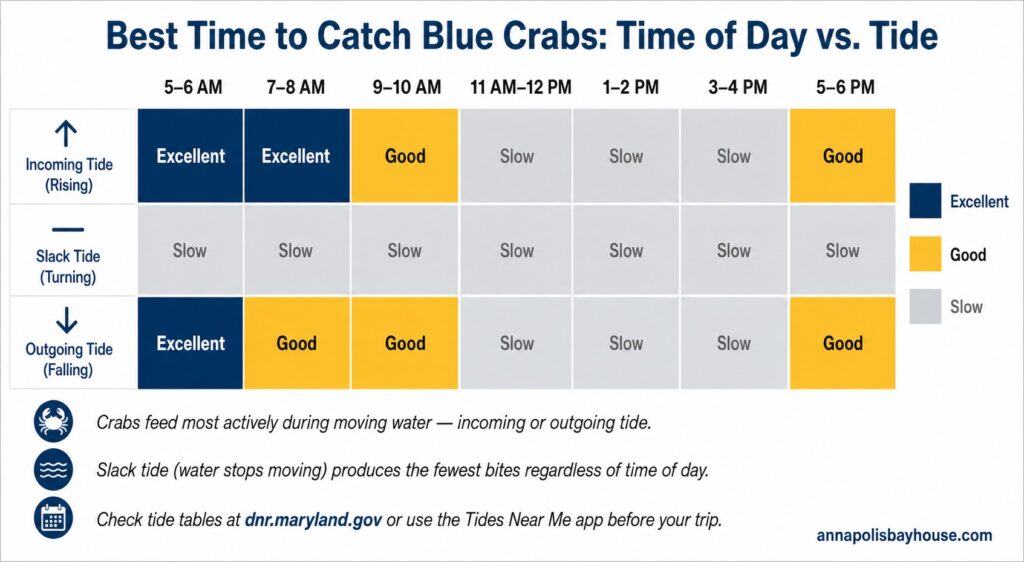
Timing affects your catch more than you think. Understanding when crabs are most active leads to better results.
When Crabs Are Most Active
Early morning and late evening offer low light and peak feeding. High tide and incoming tide bring crabs into shallows to feed. Avoid midday heat because crabs retreat to deeper, cooler water.
Season by Region
| Region | Season | Peak Months |
|---|---|---|
| Chesapeake Bay | April to November | June to August |
| Pacific Northwest (Dungeness) | December to August | Winter to Spring |
| Gulf Coast | Year-round | Spring and Fall |
Always Check: Your state fish and wildlife website for exact dates and closures before heading out.
Follow Crabbing Rules and Stay Legal
Breaking regulations can lead to fines or worse, harm crab populations. Knowing the rules keeps you legal and protects the fishery.
Common Rules to Know
Size limits apply in most areas. Blue crabs must measure about 5 inches tip to tip across the shell. Dungeness crabs typically require 6.25 to 6.5 inches, varying by state. Bag limits usually allow 25 to 50 crabs per person per day. A fishing or crabbing permit may be required. Escape rings are mandatory in many areas to release small crabs.
Use a Crab Gauge
A gauge is not optional. It is essential. Measure from claw tip to claw tip across the carapace. If it does not fit, throw it back.
Practice Sustainable Crabbing
Release female crabs with eggs, known as sponge crabs. Return soft-shell crabs unless harvesting for market. Use escape-ring traps to support healthy populations. You help protect the fishery and ensure future crabbing trips stay successful.
Pro Tips to Catch More Crabs
These insider tricks come from decades of real-world crabbing experience. Use them to fill your bucket faster.
Expert Strategies That Work
Set traps on both sides of a point. Currents favor one side. Test both, then focus on the productive side. Use 12 feet of line per trap. Most crabbing happens in 5 to 10 feet of water. Wrap excess line around the float if needed. Stick with chicken necks. They are messy but unbeatable. Grocery stores often sell them in crab bait packs.
Rotate traps every 15 to 30 minutes. Do not let them soak too long. Fresh bait means more crabs. Constant rotation keeps your catch rate high. Crab during high or incoming tide. Crabs leave hiding spots to feed as water rises. Plan your trip around the tide chart.
Bring a fishing rod while waiting. You might catch spot, croaker, or even a small trout. Stack and secure traps using bungee cords to hold multiple traps together on a boat or dock. This saves space and prevents tangles. Wear gloves to protect your hands from pinches and keep bait mess off your skin.
Process and Enjoy Your Catch
Once you have caught crabs, handle them properly for the best taste. Proper storage and cooking make all the difference.
Store Live Crabs Properly
Keep crabs in a cooler with wet seaweed or ice. Cover with a damp towel. Do not submerge in fresh water. They will die.
Cook Methods
Boil crabs for 10 to 15 minutes in seasoned water using Old Bay, beer, or vinegar. Steam for 20 minutes with spices and lemon.
Clean Before Eating
Remove the back shell, also called the apron. Pull out the gills, known as dead man’s fingers. Rinse out internal organs. Break into quarters if desired.
Save Extra Meat
Pick meat from unused crabs and store in an airtight container. Freeze for crab cakes, soups, or salads later.
Frequently Asked Questions About Crab Fishing
What is the easiest method for beginners to catch crabs?
A crab hand line is the easiest method for beginners. It requires minimal equipment, just a weighted line, bait, and a dip net. You simply lower the baited line into the water, wait for a tug, and slowly pull it up to scoop the crab with a net.
How long does it take to catch crabs?
With a hand line, each catch takes about 5 to 15 minutes. With traps, you should check them every 15 to 30 minutes. Leaving traps longer than two hours results in destroyed bait and fewer crabs.
What is the best bait for crab fishing?
Chicken necks are the best all-around bait. They are cheap, readily available, durable, and highly attractive to crabs. The smell draws them in, and they are hard for crabs to tear off the line.
Do I need a license to go crab fishing?
In most states, you need a fishing or crabbing permit. Regulations vary by state, so check your local Department of Fish and Wildlife website before heading out. Size limits and bag limits also apply.
Where is the best place to catch crabs?
The best spots include fishing piers over calm bays, dock areas near marinas, creek mouths where tides bring in food, and underwater structures like humps and drop-offs. Shallow flats in 5 to 7 feet of water during peak season also produce well.
What is the best time of day for crabbing?
Early morning and late evening are best because crabs are most active during low-light periods. High tide and incoming tide also bring crabs into shallower areas to feed. Avoid midday heat when crabs retreat to deeper water.
Key Takeaways for Successful Crab Fishing
Learning how to go crab fishing does not require fancy gear or years of experience. With a simple hand line or pull trap, some chicken necks, and a trip to a local pier or dock, you can start catching crabs today. The key is knowing where and when to go, using the right bait, and following local rules.
From beginners to seasoned anglers, crabbing offers excitement, fresh seafood, and quality time outdoors. Use the techniques in this guide. Choose the right method for your situation, rotate your traps frequently, and time your trip with the tide. You will be pulling in crabs like a pro in no time.
Now grab your gear, head to the water, and bring home a bucket full of fresh, delicious crabs, straight from the bay to your dinner plate.