Nothing ruins a long day on the water faster than a fishing rod that feels awkward, tiring, or unresponsive. More often than not, the culprit is an unbalanced rod and reel setup. Balancing a fishing rod and reel is not just for pros. It is a simple tweak that transforms comfort, casting, sensitivity, and control. Whether you are drop-shotting for bass or casting jigs from shore, a well-balanced system reduces fatigue, sharpens accuracy, and helps you feel every subtle bite.
Yet most anglers overlook balance, assuming their gear should just work. The truth is that modern lightweight reels and longer rods often create tip-heavy setups that strain your wrist and dull performance. The good news is that with a few quick tests and easy fixes, like adding a cheap rubber tip to the butt, you can tune your rod to feel effortless in hand. This guide shows you exactly how to test, adjust, and optimize your rod-reel balance based on real-world data, expert insights, and proven techniques.
Test Your Rod’s Balance

Before fixing imbalance, you need to diagnose it. These two simple methods reveal how your rod-reel combo behaves in real fishing conditions.
Perform the Finger Balance Test
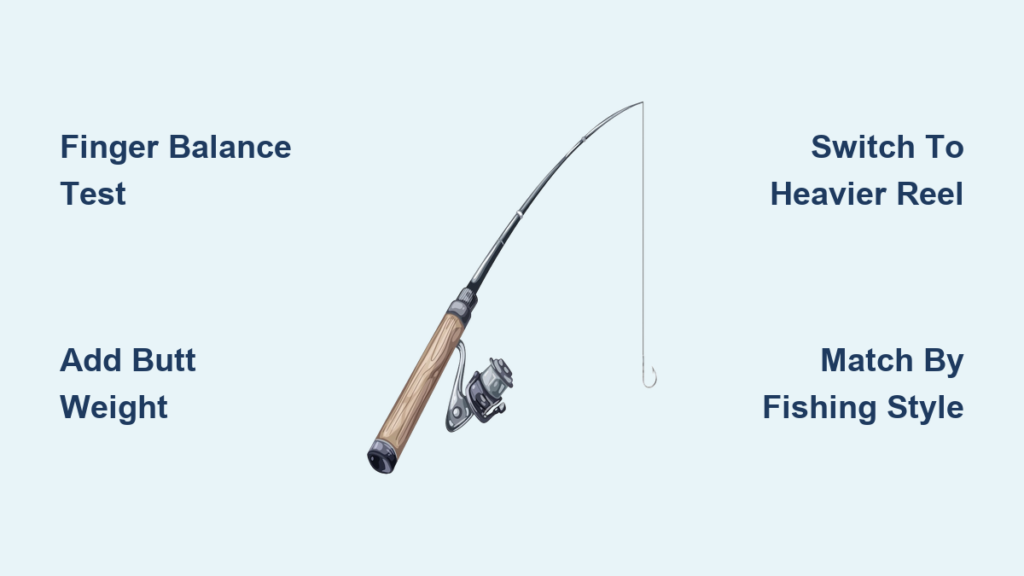
This is the most accurate way to find your rod is balance point. Follow these steps:
- Attach your reel securely and tighten the reel seat.
- Hold the rod horizontally with your dominant hand.
- Place your index finger under the rod handle and slowly slide it forward and backward.
- Stop when the rod stays level without tipping up or down.
Results interpretation:
• If it balances at the top of the grip → neutral.
• If you must move your finger toward the reel → tip-heavy.
• If you must move your finger toward the butt cap → reel-heavy.
Pro Tip: Use the edge of a table or ruler for precision, but your finger works fine in the field. This test mimics where your hand naturally rests during casting. A neutral balance here means minimal effort to hold and maneuver the rod.
Try the Grip-and-Release Check
Simulate actual fishing posture with this quick real-world test. Here is how it works:
- Hold the rod as if retrieving a lure, parallel to the ground.
- Lightly loosen your grip. Do not drop it, just relax.
- Observe which end dips.
Results interpretation:
• Tip drops → tip-heavy.
• Butt sinks → reel-heavy.
• Stays level → balanced.
This method reveals how the rod feels during extended use. If the tip constantly pulls down, you are fighting gravity all day, leading to fatigue and reduced sensitivity.
Fix a Tip-Heavy Rod

A rod that dives at the tip is the most common imbalance, especially with modern lightweight reels on longer rods. Here is how to correct it.
Add Butt Weight the Cheap Way
One of the cheapest and most effective solutions is adding weight to the rod is butt. Rubber leg tips are ideal for this fix.
Materials needed:
• Rubber leg tips (1-inch size, about $4 for a pack of four)
• Each tip adds approximately 1 oz (28g)
• Slides snugly over most rod butts
• UV-resistant, removable, and will not damage the finish
Steps to apply:
- Slide one rubber tip onto the butt cap.
- Retest balance using the finger method.
- Add coins (two quarters equals approximately 11g) inside the tip for fine-tuning.
- Secure with a wrap of electrical tape if needed.
Real example: A 7 is 3 inch medium-power rod with a 6.5 oz Shimano Stradic 2500 felt tip-heavy. One rubber tip restored neutral balance, eliminating wrist strain and improving lure feedback.
This fix works because adding 1 to 2 oz at the far end counteracts the tip is downward pull. Even small weights make a big difference due to leverage. However, do not overdo it. Too much weight makes the rod sluggish and hard to cast.
Upgrade to a Heavier Reel
Sometimes the reel is just too light for the rod. Swapping to a heavier reel shifts balance rearward, turning a floppy rod into a stable, responsive system.
Examples of heavier reels:
• Penn Slammer III 3500: 403g loaded
• Shimano Twin Power XD C3000HG: 250g loaded
Angler feedback: After switching from a 250g to a 403g reel on a 148g DAM Effzett 9-foot rod, one angler said the rod felt significantly better with more heft. This fix costs more but improves durability and power, making it ideal for surf or offshore fishing.
Correct a Reel-Heavy Setup

When the butt end drops, your rod fights you during casting and topwater work. Here is how to fix it.
Switch to a Lighter Reel
Magnesium or carbon-body reels reduce rear weight without sacrificing strength. These options work well:
• Shimano CI4+ reels: Lightweight, rigid, ideal for finesse.
• Daiwa Zaion reels: Ultra-light, corrosion-resistant.
• Vanford 4000XG: 232g loaded. Light yet powerful.
Pair these with high-modulus rods to maintain sensitivity while achieving neutral balance.
Expert Tip: ReelMechanic.com offers tutorials on embedding internal tungsten weights in the rod butt for precise tuning. This approach works great for custom builds.
Shorten the Handle If Possible
Some rods allow grip modifications. A shorter foregrip moves your hand forward, balancing a heavy reel. An extended rear grip can help, but only if designed into the rod. Most anglers cannot modify grips easily, so reel swap is usually the better fix.
Match Balance to Fishing Style

Perfect balance is not universal. It depends on what you are fishing for and how you fish.
Topwater: Slight Tip-Heavy
Ideal for walking baits, poppers, and frogs. Gravity assists downward twitches, reducing effort. The tip dips slightly, making aggressive pulls easier. A Zara Spook walk-the-dog retrieve benefits from a rod that wants to tip forward.
Drop-Shotting: Neutral to Rear-Weighted
Ideal for finesse bass and deep presentations. This keeps the tip elevated with less wrist strain. The butt dips slightly, and the rod stays up naturally. Add a rubber tip or use a longer rod with a heavier butt to achieve this.
Jigging and Flipping: Neutral or Slightly Rear-Weighted
Ideal for vertical presentations and heavy cover. This makes it easier to maintain high rod angles and set hooks quickly. Add one to two quarters inside a rubber butt cap for fine-tuning.
Surf Fishing: Neutral or Slight Upward Bias
Ideal for long casts and all-day sessions. Long rods amplify imbalance, so added weight stabilizes the setup. Use a 4000 to 5000 size reel or add butt weights. Some anglers prefer heavier setups in surf for better casting momentum.
Crankbait Fishing: Less Critical
Constant retrieve motion masks imbalance. Frequent casting favors lighter gear over perfect balance. Sensitivity matters more than static equilibrium. Still, a neutral setup reduces fatigue during back-to-back casts.
Debunking Balance Myths
Myth: A Balanced Rod Is Lighter
Truth: Balancing does not reduce actual weight. It redistributes it. But a balanced rod feels lighter because you are not fighting gravity. This feather-light sensation comes from efficiency, not mass. Think of carrying a backpack with uneven straps. You tire fast even if the pack is light. Balance fixes the strain.
Myth: Balance Hurts Sensitivity
Truth: The opposite is true. A balanced rod reduces hand fatigue, letting you stay connected to the tip longer. A tired wrist misses subtle bites. Anglers report better bite detection after balancing, especially in finesse scenarios.
Myth: All Rods Should Be Perfectly Neutral
Truth: Technique matters more than perfection. A topwater rod should not be neutral. It should aid downward action. A drop-shot rod should not be tip-heavy. One angler followed a detailed balance guide, achieved perfect neutrality, then sold the rod. It felt wrong for his style. Balance is personal.
Prevent Imbalance Before It Starts
Avoid problems by choosing gear with balance in mind.
Test Before You Buy
Never buy a rod and reel combo without testing balance. Visit a shop with demo models. Assemble your intended combo. Run the finger test before purchasing. Many tackle stores allow test assembly. Ask politely.
Choose Rods Designed for Balance
Higher-end rods often feature denser butt sections, strategic weight distribution, and longer handles to shift grip position. Examples include G. Loomis NRX, engineered for neutral balance, and DAM Effzett Intenze, ultra-light but pairs well with heavier reels. These rods cost more but save time and modifications later.
Use Adjustable Weight Systems
Try before you commit. Removable butt weights slip on and off for testing. Internal tungsten slugs work for custom builds. The coin-in-rubber-tip method is cheap, reversible, and effective. These let you experiment without permanent changes.
Key Takeaways for Balancing Your Fishing Rod and Reel

Balance equals comfort and control. It aligns the rod-reel center of gravity with your grip. Test with the finger method. It is fast, accurate, and requires no tools. If your setup is tip-heavy, add butt weight or use a heavier reel. If it is reel-heavy, switch to a lighter reel or adjust your grip.
Balance by technique. Topwater fishing calls for slight tip-heavy. Finesse fishing calls for neutral to rear-weighted. All-around use calls for neutral at the top of the grip. Perceived weight drops when balanced, even if total weight increases. There is no universal perfect balance. What works for one angler may not suit another.
Final Advice: The best-balanced rod is the one that lets you fish longer, cast farther, feel more bites, and enjoy every moment. Do not guess. Test, tweak, and tune. With a cheap rubber tip or a smart reel swap, your rod can go from tiring to effortless.
Frequently Asked Questions About Balancing a Fishing Rod and Reel
What is the easiest way to test if my rod and reel are balanced?
The finger balance test is the simplest method. Hold your rod horizontally, place your index finger under the handle, and slide it until the rod stays level. If it balances at the top of your grip, you have neutral balance. If you must slide toward the reel, it is tip-heavy. If you must slide toward the butt, it is reel-heavy.
Does balancing a fishing rod make it feel lighter?
Balancing does not reduce actual weight, but it makes the rod feel significantly lighter. When the center of gravity aligns with your grip, you stop fighting gravity. This reduces muscular effort and fatigue, creating a feather-light sensation even if total weight increases slightly.
How much weight do I need to add to fix a tip-heavy rod?
Most anglers need 1 to 2 oz of added weight at the butt. A single rubber leg tip (about 1 oz) often does the trick. You can add coins inside the tip for fine-tuning. Two quarters add approximately 11g. Start small and test frequently to avoid over-weighting the setup.
Can I use any reel to balance my rod, or does it need to be specific?
You can adjust balance by swapping to either a heavier or lighter reel. For tip-heavy rods, upgrade to a larger, heavier reel (4000-size or higher). For reel-heavy setups, switch to a lighter magnesium or carbon-body reel. The goal is finding a reel that counteracts your rod is natural tendency to tip.
Does balance matter for crankbait fishing?
Balance matters less for crankbait fishing because the constant retrieve motion masks imbalance. Frequent casting often favors lighter gear over perfect balance. However, a neutral setup still reduces fatigue during long days with back-to-back casts. Sensitivity typically matters more than static equilibrium for crankbaits.