
If you have ever stood by a mountain stream, watching an angler gracefully cast a delicate line that lands like a whisper on the water, you have seen fly fishing in action. At first glance, it looks like any other fishing method, but how is fly fishing different? The answer goes far beyond appearance. Fly fishing is a fundamentally distinct approach to angling, built on unique physics, specialized gear, and a philosophy rooted in precision and connection to nature.
In this guide, we will break down exactly how fly fishing differs from conventional spin fishing across 12 key areas: casting mechanics, gear design, technique, target environments, learning curve, cost, and more. Whether you are considering picking up a fly rod for the first time or simply want to understand what sets this method apart, you will gain a clear, practical understanding of why fly fishing stands in a category of its own.
Casting Mechanics: Why the Line Does the Work
The most fundamental difference between fly fishing and spin fishing lies in what provides the casting weight. This distinction changes every other aspect of the sport.
The Fly Line Drives the Cast
In fly fishing, the artificial fly has almost no weight. Made from feathers, fur, or synthetic materials, it cannot pull a line off the reel like a metal spoon or plastic worm. Instead, the thick, weighted fly line provides the mass needed for casting. When you make a back-and-forth motion with the rod, you are loading energy into the rod blank, and the heavy line unfurls forward, carrying the fly with it.
This requires rhythm, timing, and smooth acceleration, not brute force. A successful cast depends on forming tight loops, controlling the backcast, and managing line speed. Techniques like the double haul, where you pull the line during the cast, add distance and power. Roll casts allow fishing in tight spaces with no room for a backcast.
Key Insight: You are not casting the fly. You are casting the line, and the fly is just along for the ride.
Spin Casting: The Lure Does the Work
In contrast, spin fishing uses a lightweight line and a heavy lure. When you flick the rod forward, the lure is momentum pulls the line off the spool. The cast is a single, quick motion that is simple, intuitive, and effective. No backcast is needed, and there is little need for line control after the lure hits the water.
Because the lure carries the weight, spin rods are stiffer and designed to handle the stress of casting dense metal or plastic baits. The reel does the work of retrieving, making it easy to cover large areas of water quickly.
Why It Matters: You cannot cast a fly with a spinning rod more than a few feet. Likewise, you cannot efficiently cast a heavy lure on a fly rod. The system is not designed for it.
Gear Design: Built for Different Physics
Fly fishing gear is not just different. It is engineered for a completely different set of rules.
Rods: Flexibility Over Power
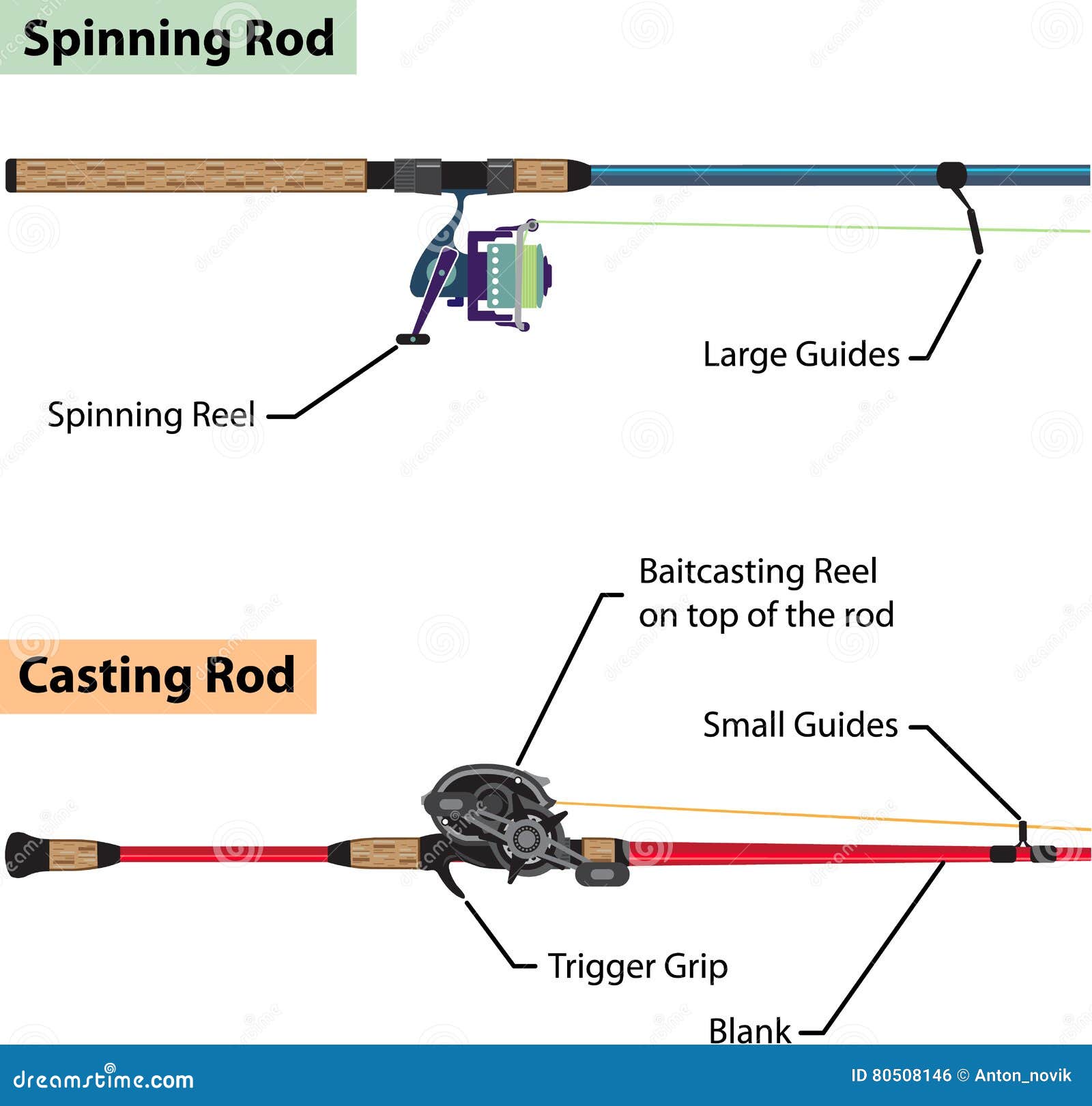
Fly rods are long, ranging from 7 to 10 feet, and highly flexible. They are designed to load up with energy during the casting stroke, acting like a spring to propel the heavy line. They are rated by line weight, such as 5-weight, not power, because they must match the mass of the fly line. The deep bend allows for delicate presentations and shock absorption when fighting fish.
Spin rods, by comparison, are shorter and stiffer, built to launch lures and handle structure like weeds or rocks. They prioritize backbone over finesse.
Pro Tip: Using a spinning lure on a fly rod results in poor casting and weak hook sets. Each system is purpose-built.
Reels: Storage vs. Retrieval
Fly reels are simple. Their main job is holding backing and fly line, not driving retrieval. Many anglers strip line by hand during the fight, creating a direct, tactile connection to the fish. High-end reels feature smooth drag systems for saltwater species like tarpon or bonefish. Retrieval is often minimal, just enough to keep tension.
Spin reels are mechanical powerhouses. The crank and gear system retrieves line quickly, which is essential for working lures like crankbaits or jigs. They are designed for repeated casting and retrieval, not long runs.
Visual Cue: Watch an angler fight a trout on fly gear. They are often pulling line with their hand, not cranking the reel.
Lines and Leaders: A Multi-Layer System
Fly fishing uses a four-part line system. First, backing is thin, strong line that fills the reel and provides reserve for long runs. Second, the fly line is 60 to 100 feet of PVC-coated, weighted line that comes in floating, sinking, or intermediate types. Third, the leader is tapered monofilament, typically 7.5 to 12 feet, that transfers energy from heavy line to light tippet. Fourth, the tippet is fine-diameter line tied directly to the fly for invisibility and flexibility.
This tapered design ensures the fly turns over smoothly and lands gently, which is critical when imitating tiny mayflies on a calm pool. Spin fishing uses a single, uniform line spooled directly to the reel. Leaders are optional and typically used only in clear water or abrasion-prone environments.
Flies vs. Lures: Imitation or Attraction

What you tie to the end of your line reveals the philosophical split between the two methods.
Flies: Mimicking Nature in Detail
Flies are designed to imitate insects at all life stages. Dry flies mimic adults on the surface. Nymphs imitate underwater larvae. Emergers represent the transitioning stage. Streamers mimic small fish. They are tiny and lightweight, often smaller than a grain of rice. Hooks range from size 28 for micro midges to 4/0 for large saltwater patterns.
Success depends on matching the hatch, selecting a fly that looks like what bugs are currently active on the water.
Example: On a trout stream during a mayfly hatch, a size 18 Adams dry fly drifting naturally can outperform any lure.
Lures: Triggering Reaction Strikes
Lures are built to mimic baitfish, crustaceans, or create vibration. They are made of metal, plastic, rubber, or wood, heavy enough to cast. Common types include spinners, crankbaits, soft plastics, and topwater plugs. They rely on flash, wobble, scent, and noise to attract fish.
Key Difference: Lures often provoke reaction strikes from aggressive fish. Flies aim for selective feeding, convincing a cautious trout it is eating a real insect.
Technique: Why Fly Fishing Requires More Skill
Fly fishing is more interactive, requiring constant engagement with the line.
Casting: A Dance of Timing
Fly casting requires a back-and-forth motion to build momentum. Techniques include the roll cast for tight spaces, the reach cast to reduce drag in currents, and stack mends to extend drift. Beginners often struggle with wind knots, tailing loops, and poor turnover.
Spin casting is a one-motion flick. Most people can learn it in under 10 minutes.
Data Point: It takes hours to learn fly casting and weeks to refine. Spin casting is intuitive from the start.
Presentation: Drift Over Action
In fly fishing, especially nymphing or dry fly fishing, the goal is a dead-drift, letting the fly move naturally with the current. Anglers use mending, lifting and repositioning line, to eliminate drag and extend the drift. Retrieves are hand-stripped, allowing precise control over speed and movement.
Spin fishing relies on reel-driven retrieves. The lure is built-in action does the work. Less line manipulation is needed. You cast, reel, and repeat.
Expert Note: A well-mended drift can double your catch rate on selective trout.
Where Each Method Excels: Target Species and Environments

Each method shines in specific environments.
Best for Fly Fishing
Fly fishing excels for trout in clear, cold streams where fish feed selectively on insects and require delicate, accurate casts. It is ideal for bonefish and permit on shallow flats where wary fish demand stealth and precision. Salmon and steelhead are drawn to drifting nymphs or swinging streamers. Smallmouth bass in rivers respond well to poppers and crawfish imitations.
Real-World Edge: On Georgia is Toccoa River, wild trout ignore spinning lures but rise to perfectly matched dry flies.
Best for Spin Fishing
Spin fishing is best for largemouth bass in lakes where heavy cover demands strong rods and lures that can be ripped free. It excels for walleye and pike in deep water where jigs and crankbaits reach bottom quickly. Striped bass in surf benefit from long casts with heavy sinkers that outperform fly gear. Catfish and muskie require power, not finesse.
Limitation: Fly fishing struggles in deep water or heavy cover. Conventional gear dominates here.
Learning Curve: Why Fly Fishing Takes Longer to Master
Fly fishing has a high initial barrier. Mastering casting, reading water, and entomology takes practice. Your first catch may take days or weeks as a beginner. Advanced skills include fly tying, hatch matching, and multiple casting styles. It is often described as a lifelong pursuit.
Spin fishing is beginner-friendly. The cast and retrieve is intuitive. Most new anglers catch fish within the first hour. Mastery involves lure tuning, electronics, and deep-water tactics. Proficiency comes in months, not years.
Recommendation: Try a guided fly fishing trip before buying gear. Many outfitters offer half-day lessons with all equipment included.
Cost Comparison: Is Fly Fishing Really More Expensive?
A fly fishing setup typically ranges from $150 to $500 or more. You need a rod, reel, fly line, leader, tippet, and flies. Additional gear includes waders, boots, vest, nippers, and forceps. High-end setups exceed $1,000. Guided trips for beginners cost $150 to $300 for a half-day.
A spin fishing setup ranges from $50 to $400. You need a rod, reel, line, and lures. A tackle box and extra line round out the basics. You rarely need waders. Self-teaching is common.
Myth Busted: Fly fishing is not just for the wealthy. Starter kits are comparable in price to mid-range spin gear.
Conservation Impact: Which Method Is Safer for Fish?
Fly fishing has inherent advantages for fish survival. Lower gut-hooking rates occur, especially with dry flies. Barbless hooks are standard, enabling quick release. Long, flexible rods absorb shock, reducing injury. There is a strong catch-and-release culture in fly fishing.
Spin fishing has higher chances of deep hooking, especially with bait. Shorter, stiffer rods transmit more force. Proper handling, including wet hands, support, and quick release, is key to survival regardless of method.
Expert View: Fly fishing generally results in lower fish mortality, but angler behavior matters more than gear.
The Experience: Art and Intimacy vs. Efficiency
Fly Fishing: A Meditative Practice
Fly fishing is immersive, technical, and nature-focused. It requires knowledge of insect life cycles, water flow, and fish behavior. It rewards precision, patience, and observation. The process is as important as the catch.
Quote: Fly fishing is not just catching fish. It is understanding the water.
Spin Fishing: Practical and Productive
Spin fishing is efficient, versatile, and results-driven. It focuses on location, lure selection, and retrieval speed. It is ideal for covering water and catching multiple species. It is fast-paced and action-oriented.
Balance: Many top anglers use both methods, choosing the right tool for the water.
Common Myths About Fly Fishing
Several myths persist about fly fishing that need debunking.
Myth: Fly fishing is only for the rich. Reality: Starter kits start under $300, same as mid-tier spin gear.
Myth: You cannot catch big fish on a fly rod. Reality: Tarpon, sharks, and salmon are regularly taken on fly rods.
Myth: It is boring. Reality: Many find it more engaging due to constant interaction.
Myth: You can use flies on spinning rods. Reality: A fly lacks weight. It will not cast more than a few feet.
Final Word: There are no wrong answers. Many anglers use both methods.
When to Choose Fly Fishing vs. Spin Fishing
| Feature | Fly Fishing | Spin Fishing |
|---|---|---|
| Casting Power | Line weight | Lure weight |
| Best For | Trout, flats, clear streams | Bass, deep water, heavy cover |
| Accuracy | High | High |
| Distance | 30 to 50 feet | 100+ feet |
| Learning Curve | Steep | Gentle |
| Gear Cost | $150 to $500+ | $50 to $400 |
| Experience | Technical, immersive | Efficient, fast-paced |
Frequently Asked Questions About How Fly Fishing Is Different
What is the main difference between fly fishing and spin fishing?
The main difference is what provides the casting weight. In fly fishing, the weighted line carries a nearly weightless fly. In spin fishing, the lure or sinker pulls the lightweight line off the reel.
Can you use the same rod for both fly fishing and spin fishing?
No. Fly rods are designed to cast weighted lines and cannot handle heavy lures. Spin rods are too stiff to cast fly lines effectively. Each system is purpose-built.
Is fly fishing harder to learn than spin fishing?
Yes. Fly fishing has a steep learning curve involving casting mechanics, line control, and often entomology. Spin fishing is intuitive and most beginners can cast within minutes.
Does fly fishing cost more than spin fishing?
Entry-level setups are comparable, typically $150 to $500 for fly fishing and $50 to $400 for spin fishing. However, fly fishing requires additional gear like waders, and high-end setups can exceed $1,000.
Can you catch big fish with fly fishing?
Yes. Tarpon, sharks, salmon, and pike are regularly caught on fly gear. Appropriate tackle size matters more than the method itself.
Which method is better for conservation?
Fly fishing generally results in lower fish mortality due to barbless hooks, better hook placement, and strong catch-and-release practices. However, proper handling matters most regardless of method.
Key Takeaways for Understanding Fly Fishing Differences
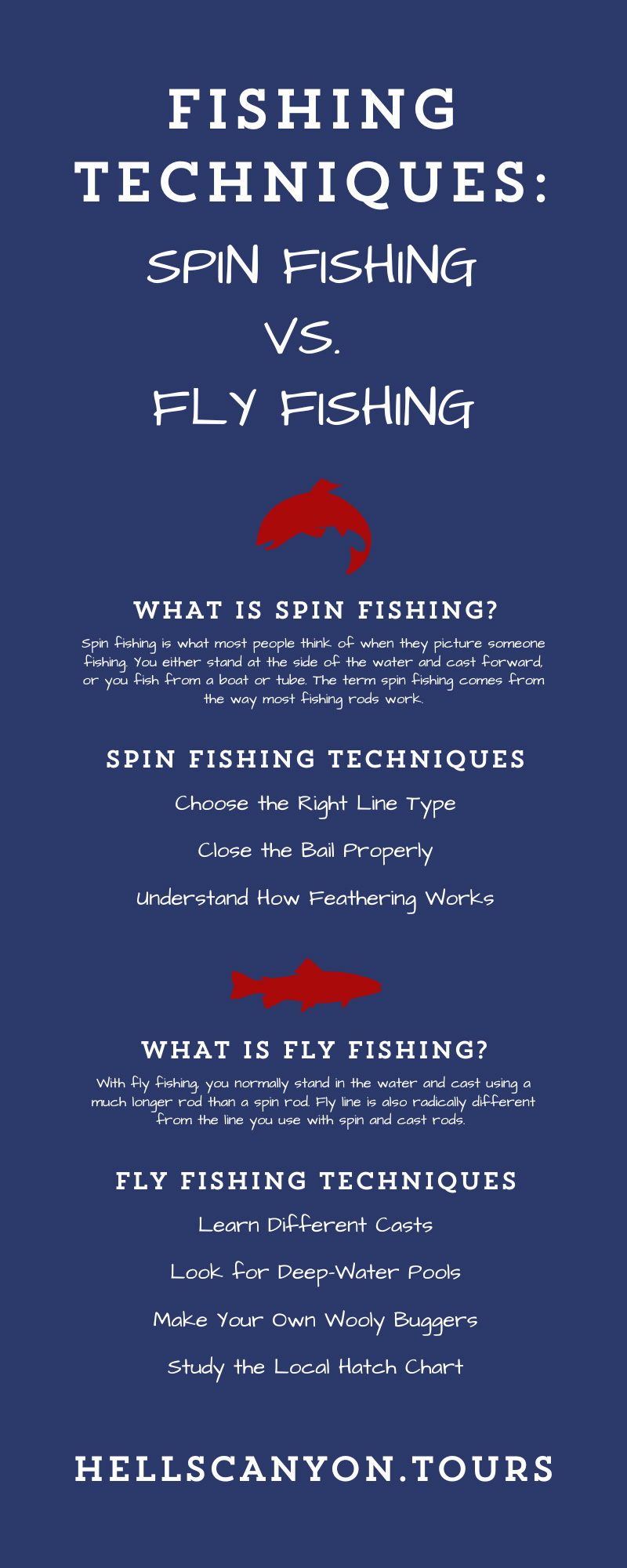
Fly fishing is fundamentally different from spin fishing in mechanics, gear, technique, and philosophy. The weighted line system, specialized rods and reels, and emphasis on natural imitation create a unique angling experience. Fly fishing excels in clear streams, shallow flats, and situations requiring delicate presentation. Spin fishing dominates in deep water, heavy cover, and scenarios requiring long-distance casting.
The learning curve is steeper, but the rewards are different. Fly fishing offers a meditative, technical connection to nature that many anglers find deeply satisfying. It is not better, just different. The smartest anglers master both methods and choose the right tool for each situation. A spinning rod for the lake, a fly rod for the stream. That versatility defines a true fisherman.