
There’s nothing quite like the heart-stopping explosion of a bass or redfish slamming a topwater lure in the early morning calm. If you’ve ever wanted to master one of the most exciting techniques in fishing, learning how to walk the dog is your next skill. This method uses a cigar-shaped stick bait to create a lifelike, side-to-side zig-zag motion across the water’s surface, mimicking an injured baitfish that predatory fish cannot resist.
In this guide, you’ll discover the exact rod, line, and lure setup you need, step-by-step retrieval mechanics that work, and pro-level tricks to make your lure dance and trigger explosive strikes from largemouth bass, redfish, snook, and trout.
Choose the Right Rod and Reel for Walking the Dog
The gear you select makes or breaks your walk-the-dog success. Using the wrong rod or reel turns this exciting technique into a frustrating struggle.
Pick a Soft-Tip, Medium-Length Rod
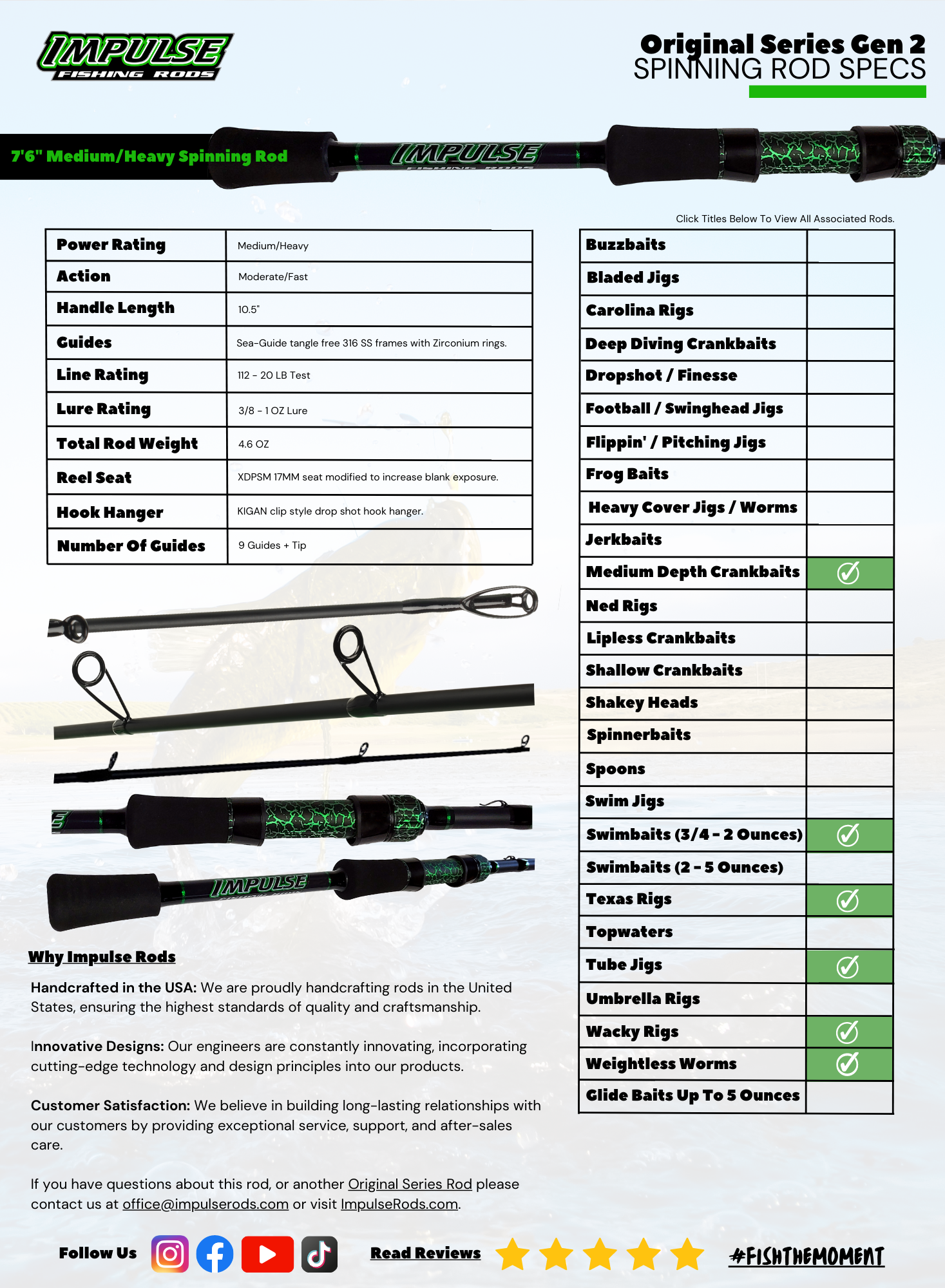
A successful walk-the-dog retrieve starts with the right rod. You need a 7’6″ medium-action spinning rod with a soft or slow-action tip. This flexibility allows the rod to load during the twitch and transfer energy smoothly to the lure without yanking it out of the water. Fast-action rods are a poor choice because they snap back too quickly and tend to lift the lure airborne instead of making it walk.
While 7’6″ is ideal for casting distance and line control, rods between 6 and 7 feet also work, especially in tight cover or windy conditions. The key is a supple tip that bends easily with minimal pressure. Anglers targeting smaller fish or finesse situations may opt for a light-action rod, but always prioritize a soft tip over power.
Match With a Smooth Spinning Reel
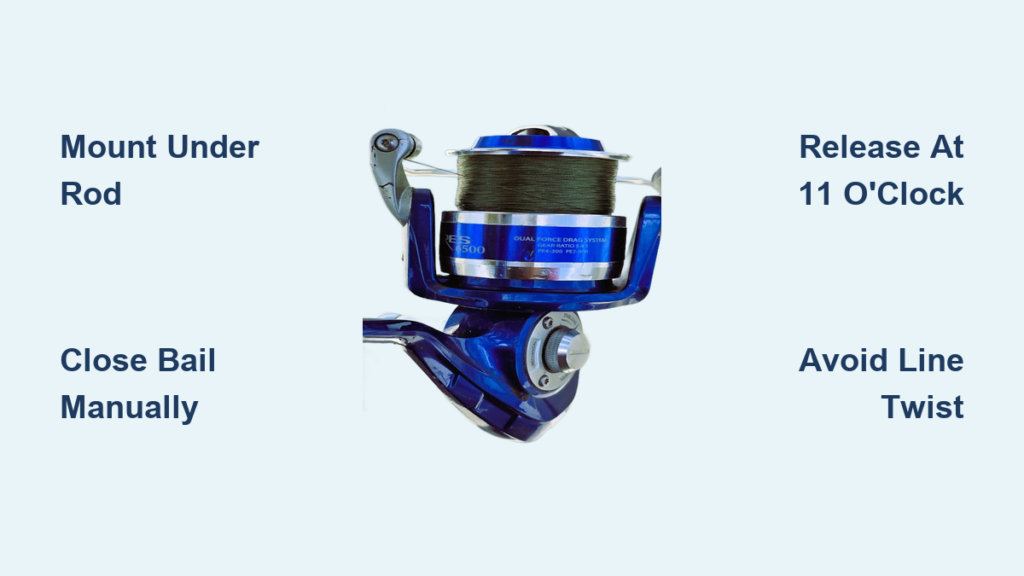
Pair your rod with a 2500 to 3000 size spinning reel that offers smooth drag and fast retrieve ratio (6.2:1 or higher). A high-speed reel helps you pick up slack quickly between twitches, keeping the rhythm tight and consistent. Make sure the reel is balanced with the rod. Too heavy, and it’ll tire your wrist during long sessions of twitching.
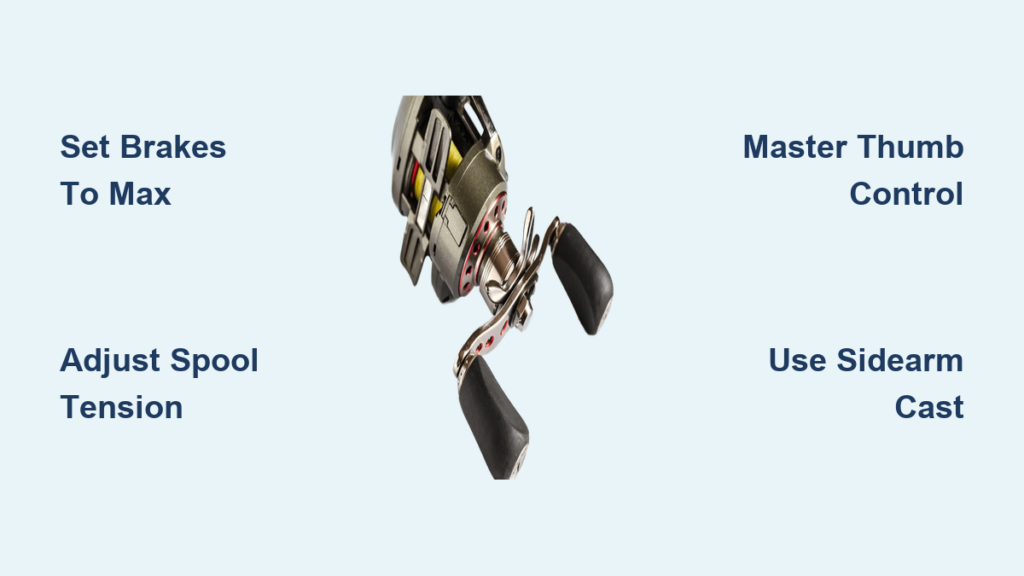
Avoid baitcasting reels for this technique unless you’re highly experienced. Their stiffer response and thumb control make slack management harder, increasing the chance of pulling the lure out of the strike zone.
Select the Best Line and Lure Setup

Your line choice directly affects how well your lure walks. Making the wrong choice kills the subtle action needed for a proper zig-zag.
Skip Fluorocarbon and Use Mono or Braid
Never use fluorocarbon as your main line for walk-the-dog fishing. It sinks, dampens vibration, and kills the subtle action needed for a proper zig-zag. Instead, choose between two top performers.
Monofilament offers stretch and buoyancy, helping keep the line on the surface and enhancing the pop with each twitch. This makes it ideal for beginners.
Braided line provides superior sensitivity and casting distance. It’s great for fishing in wind or around heavy cover. The downside is that braid has no stretch, so you must use a lighter touch to avoid ripping the lure from a fish’s mouth.
Many pros use braid as a main line with a 3-foot monofilament leader (25lb test) tied with a line-to-line knot. This gives you the best of both worlds: casting power, sensitivity, and surface action.
Tie With a Loop Knot and Avoid Swivels
Always tie your lure directly to the line using a loop knot, such as the uni-knot or perfection loop. A loop allows the lure to move freely side to side, maximizing its natural wobble and darting motion. Never use a swivel. It restricts movement and ruins the walking action.
Pick the Right Stick Bait
Walk-the-dog lures are slender, cigar-shaped topwater plugs with no propellers or cupped faces. They’re often called pencil lures, spooks, or stick baits. Popular models include the Rapala Skitter Walk, River2Sea Rover, Bomber Badonkadonk, and Heddon Zara Spook.
Choose a lure between 4 and 6 inches long. This size matches most baitfish and is easiest to manipulate. Larger lures (7 to 8 inches) cast farther and attract bigger fish but require more skill to walk properly. Lighter lures are often easier to start with because they respond faster to subtle twitches.
Color matters more than you think. Since fish attack from below, focus on belly color. Top choices include white for high visibility, chartreuse for low light conditions, black for night fishing, and red and white for proven trout and redfish action. Fancy sides or holographic finishes look great to you but not to the fish.
Master the Walk-the-Dog Retrieve Step by Step
The core motion is a continuous cycle of twitch, slack, reel, and repeat. Getting this rhythm right transforms your lure into a dying baitfish that fish cannot resist.
Start With the Cast and Settle
Begin with a long cast toward likely ambush points: weed edges, docks, fallen trees, or shallow flats. Let the lure land softly and sit still for 5 to 10 seconds. Many strikes happen on the pause right after splashdown.
Once settled, point your rod tip directly at the lure and reel in slack until the line is taut, but not tight. This is your starting position.
Execute the Twitch-and-Slack Rhythm
Now comes the core motion. Follow these steps to create the signature zig-zag.
- Hold the rod low with the tip just above or skimming the water surface.
- Flick your wrist sharply sideways (left or right), moving the tip about 4 to 6 inches. Use only your wrist. Keep your elbow locked.
- Immediately return the rod tip to center, creating slack in the line.
- Reel just enough to take up the slack, no more. If you reel while tight, you pull the lure straight back.
Each twitch makes the lure dart to one side. The next twitch pulls it the opposite way, creating the signature zig-zag or S pattern. At the right pace, it looks like a panicked baitfish trying to escape.
Find the Right Cadence
The ideal rhythm depends on conditions and fish mood. For a normal retrieve, use 1 twitch per second. This covers water and triggers aggressive fish.
For a slow and erratic retrieve, twitch every 2 to 3 seconds with long pauses. This mimics a dying baitfish on calm days.
For burning the flats, use rapid, constant motion. This works when bait is active or fish are chasing.
Watch the lure as you practice. If it’s not walking, adjust your twitch force or slack timing.
Handle the Strike Like a Pro

The moment a fish explodes on your lure is exciting, but your reaction determines whether you land it or lose it.
Don’t Set the Hook Immediately
When a fish strikes, there’s often a violent blow-up: a splash, boil, or full breach. Your instinct will be to yank back hard. Resist it. Setting too early pulls the lure out of the fish’s mouth before the hooks engage.
Use the Drop-and-Wait Method
Instead of reactively setting the hook, follow this proven method.
- Drop your rod tip toward the fish the instant you see the strike.
- Count “one-one-thousand” (about 1 second).
- Only when you feel the solid weight of the fish, sweep the rod back firmly to set the hooks.
This pause gives the fish time to turn and swallow the lure. It dramatically increases your hook-up ratio.
Adapt to Conditions and Fish Behavior
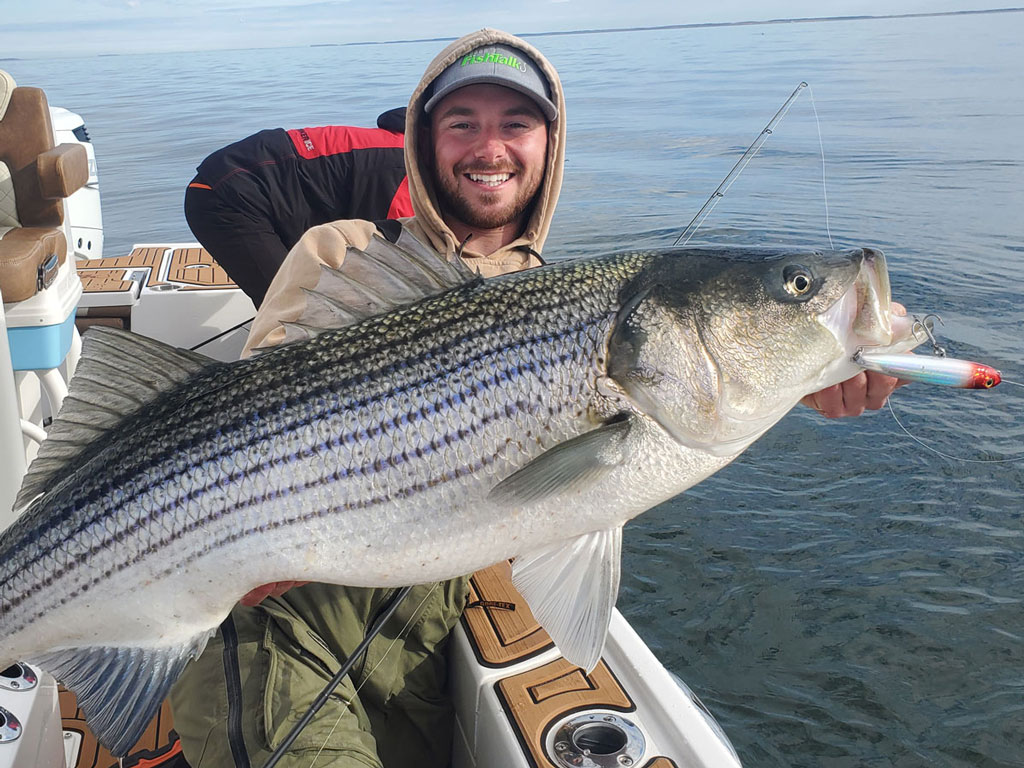
Walk-the-dog works best under specific conditions. Understanding when and where to use this technique separates consistent anglers from occasional success.
Fish at the Right Time and Place
Walk-the-dog works best under specific conditions. Low light at dawn, dusk, or overcast skies triggers surface feeding. Warm water above 60°F (15°C) keeps fish active. Cold water shuts down surface feeding entirely.
A light ripple helps break the surface and masks your line. Target shallow, covered areas near weeds, docks, mangroves, or drop-offs where predators lie in ambush.
Avoid dead-calm days or strong winds. If the water is glassy, try a slower, more subtle retrieve. In heavy wind, switch to a popper or chugger that cuts through waves.
Trigger Followers With Smart Pauses
If a fish follows but won’t strike, change your presentation. The Death Pause involves stopping completely. Sudden stillness often triggers a last-second bite.
Burst and Stop means reeling 3 to 4 quick cranks, then freezing. This mimics a fleeing bait that gives up.
Subtle Twitching uses tiny, weak twitches to make the lure look injured or unbalanced.
Change Direction involves altering your retrieve angle slightly to show a new profile.
Troubleshoot Common Problems
Even experienced anglers run into issues when learning how to walk the dog. Here’s how to fix the most common problems.
Lure Pulls Straight? Fix Your Slack
If your lure isn’t walking and just comes straight back, you’re reeling while the line is tight. The fix: twitch first, create slack, then reel only that slack. No slack equals no walk.
Lure Jumping Out of Water? Lower Your Rod
This usually means your rod tip is too high or you’re jerking upward. Keep the tip low and parallel to the water. Use a lateral wrist snap, not a vertical jerk. Also, check if your rod has too fast an action.
No Action at All? Check Line and Knot
If the lure won’t move side to side, you may be using fluorocarbon. Switch to mono or braid. You may have a swivel. Remove it. Your knot may not be a loop. Tie a uni-knot with a loop or use a perfection loop.
Fish Following But Not Biting? Vary the Retrieve
Predictable motion turns off curious fish. Add longer pauses, slow down, or switch to erratic twitches. Make the lure look vulnerable.
Practice for Consistent Success
Walking the dog is a skill built through repetition. The more you practice, the better your muscle memory becomes.
Build Muscle Memory With Repetition
Spend the first 10 minutes of every trip practicing the rhythm on the water, even if you’re not fishing. Watch the lure. Adjust your wrist flick. Dial in the slack-reel timing.
Test Your Setup Before You Fish
Before casting to fish, do a quick check. Is the line floating? (If using braid, ensure it’s not waterlogged.) Is the knot a loop? Is the rod tip soft enough? Is the lure balanced in the water?
A few seconds of prep saves wasted casts.
Key Takeaways for Mastering Walk the Dog Fishing

The walk-the-dog technique isn’t just about catching fish. It’s about creating a spectacle that turns shallow waters into strike zones. With the right gear (a soft-tip rod, smooth spinning reel, and mono or braid line), precise wrist action (lateral snaps with proper slack management), and smart retrieves (varied cadence based on conditions), you’ll add one of the most thrilling tools to your angling arsenal.
Remember the three most important points. First, keep your rod tip low and use only your wrist to create lateral twitches. Second, always create slack before reeling, then reel only the slack. Third, when a fish strikes, drop your rod and wait one second before setting the hook. Now go make some splashes.
Frequently Asked Questions About Walk the Dog Fishing
What is the walk-the-dog fishing technique?
Walk the dog is a topwater retrieval technique where you use rod twitches and slack management to make a stick bait lure move side to side in a zig-zag pattern. This mimics an injured baitfish and triggers predatory fish to strike.
What rod action is best for walking the dog?
A soft-tip or slow-action rod (7 to 7.5 feet, medium power) works best. Fast-action rods snap back too quickly and tend to pull the lure out of the water instead of making it walk.
Can you walk the dog with fluorocarbon line?
No. Fluorocarbon sinks and dampens the subtle vibration needed for the walking action. Use monofilament for buoyancy and stretch or braided line for sensitivity and casting distance.
How do I know if my lure is walking correctly?
Watch the lure while retrieving. If it’s walking properly, it should move in an S-pattern or zig-zag, creating small splashes on alternating sides. If it comes straight back, you’re reeling too tight. If it jumps out of the water, your rod tip is too high.
What’s the best cadence for walk-the-dog retrieve?
Start with 1 twitch per second. Slow down to 1 twitch every 2 to 3 seconds for calm days or sluggish fish. Speed up to constant rapid motion when fish are actively chasing bait.