Nothing ruins a fishing trip faster than grabbing your favorite rod only to find it warped, corroded, or tangled beyond repair. The truth is, how to store fishing poles correctly is just as important as knowing how to use them. Poor storage leads to weakened blanks, damaged guides, and ruined reels that can cost hundreds to replace. This guide breaks down the best practices for protecting your gear whether you’re a weekend angler or a seasoned pro.
You’ll learn exactly how to prep rods before storage, choose the right setup for your space, and avoid the most common mistakes that cost anglers money. From garage walls to boat docks, we cover every environment and solution so you can store your poles safely and accessibly.
Avoid Common Storage Hazards

Prevent UV and Heat Damage
Sunlight is a silent killer of fishing rods. UV exposure breaks down the resin in rod blanks, making them brittle over time. Never store rods near windows or in direct sunlight, even in garages with skylights. Extreme heat inside a closed car or attic accelerates this damage. Always choose a climate-controlled, shaded area for long-term storage.
Stop Moisture and Corrosion
Damp basements or unventilated sheds invite mold, warping, and metal corrosion. Saltwater anglers face an added threat since salt spray corrodes reel components and guides. If storing near the coast, use sealed, marine-grade containers or cabinets. For inland storage, ensure airflow and consider a dehumidifier in humid environments.
Eliminate Physical Damage Risks
Leaning rods in a corner may seem harmless, but gravity slowly bends the blank, ruining its action. Floor storage invites stepping, crushing, and pet damage. Stacking rods causes guide-to-guide friction, which chips finishes and misaligns components. Always support the rod fully and keep them separated from each other.
Prepare Rods Before Storage

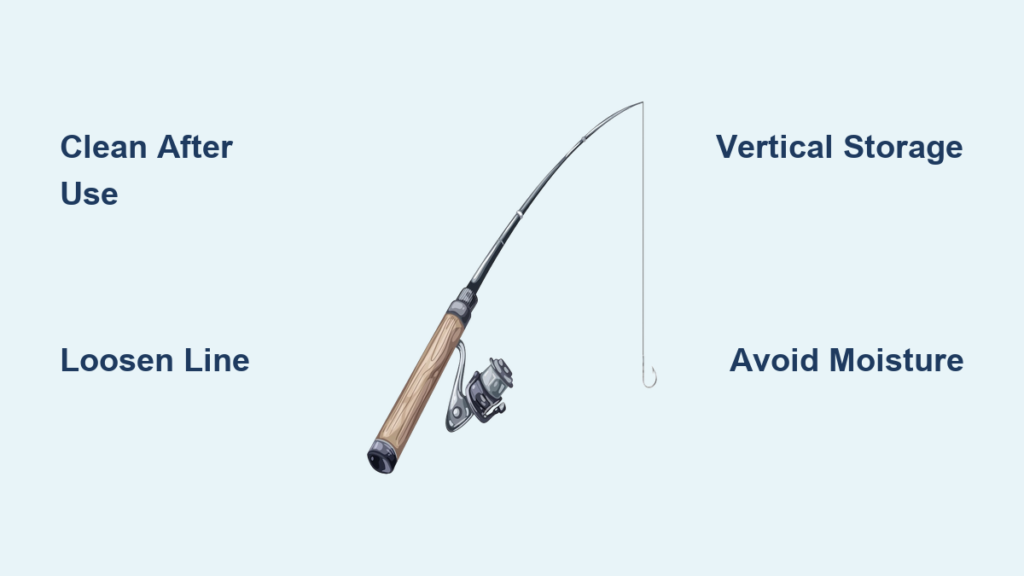
Clean After Every Use
Saltwater rods must be rinsed and cleaned after every single trip. Freshwater rods need cleaning every three to five outings. Use a reel-specific cleaner, a soft brush, and light water pressure. Never submerge the reel. Dry completely before storing since moisture trapped in gears causes rust.
Pro Tip: Apply a light oil to reel handles, drag knobs, and moving parts for extra protection during off-season storage.
Loosen Line and Adjust Tension
Always loosen the drag and reel tension before putting rods away. Constant pressure weakens the line and stresses the rod tip, which can lead to permanent deformation. For long-term storage, cut off old line to prevent memory coils and degradation that ruins casting distance.
Handle Multi-Piece Rods Correctly
Two-piece rods are vulnerable at the ferrule. To store these rods properly, hook the line into the keeper guide in a Texas-rig style. Fold the rod gently and secure the line. Place in a dedicated rod case to prevent shifting and impact damage. Never store multi-piece rods assembled without support since they’re more likely to snap.
Choose the Right Storage Orientation

Use Vertical Storage When Possible
Hanging rods vertically by the handle is the gold standard for storage. This keeps rods off the floor, prevents bending, and saves space. This method works best with wall-mounted clips, ceiling hooks, or floor stands with vertical slots.
Ensure the handle is fully supported. Never clamp the rod blank itself. The tip should hang freely, clear of ceilings or obstacles that could cause damage.
Support Horizontal Rods Fully
Horizontal storage works if rods are fully supported along their entire length. Use racks with multiple contact points to prevent sagging in the middle. Avoid tight clamps since over-tightening damages the blank. This method is ideal for display or tight spaces but requires more room width.
Try the Gravity Grabber Method
This smart technique uses handle-based cradles that let rods hang vertically without pinching the blank. The rod’s weight keeps it secure without any clamps needed. It’s perfect for garages, sheds, or closets and works equally well for paddles and other long gear during off-seasons.
Install a DIY Wall Storage System

Build a Low-Cost Clip Rack
For under twelve dollars, you can store forty rods with a DIY wall-mounted clip system. It’s customizable, scalable, and space-efficient for any collection size.
Materials needed:
- Forty adjustable plastic rod clips
- One by three white trim board
- Drywall screws
- Small screws for each clip
- Level, tape measure, and pencil
Steps to install:
- Mount the trim to the wall using one to two screws to minimize wall damage
- Use a baitcasting rod as a spacing guide and mark positions behind the reel and handle
- Space clips two and a half inches apart for standard rods, allowing extra room for large swimbait rods
- Attach one screw per clip since over-screwing isn’t necessary for stability
Optimize Clip Placement
Offset clips slightly up or down to avoid guide interference between rods. Rotate clips to grip thinner handles securely. Arrange spinning rods front to back by length to create a clean slope that makes grabbing your favorite rod easy.
This system grows with your collection. Just add more clips or extend the board when you expand your rod arsenal.
Use Ceiling and Overhead Solutions

Hang Rods from the Ceiling
Maximize floor space in garages or sheds with ceiling-mounted hooks or pulleys. Rods can hang vertically or horizontally depending on your ceiling height. This approach is ideal for long rods that won’t fit in a wall-to-floor configuration. Ensure safe clearance so you don’t hit rods when walking or lifting gear.
Install Tension-Rod Systems
Use tension rods across a doorway or vehicle interior to suspend rods horizontally. No drilling is required. This solution works great for temporary storage or travel situations. Add soft padding to prevent scratches on rod finishes.
Select Commercial and Specialized Racks

Wall-Mounted and Floor Stands
Ladder-style racks let rods lean at an angle, but ensure full support along the length. Panel systems with slots keep rods separated and upright. Floor stands need a non-slip base or anchoring to prevent tipping. Choose powder-coated or marine-grade aluminum for durability, especially in damp areas.
Rotating and Modular Displays
Turntable units let you store and view multiple rods in tight spaces, making them great for retail or home displays. Modular units combine rod storage with tackle drawers and shelves, ideal for organized anglers who want everything in one place.
Magnetic and Built-In Holders
Magnetic strips work only for rods with metal-reinforced handles, so use them sparingly. Built-in cabinets with angled dividers or labeled slots offer sleek, protected storage perfect for apartments or custom spaces.
Store Rods in Vehicles Safely
Transport in Cars and SUVs
Lay rods flat across soft gear with seats folded. Never stack heavy items on top of your rods. Wrap reel seats and tips in cloth or towels to prevent damage. Use ceiling-mounted holders or tension rods inside the cabin for secure transport.
For long trips, roof-mounted rod tubes keep gear secure and out of the way while freeing up interior space.
Secure Rods in Trucks and Trailers
Loose rods in truck beds snap from bouncing, so use horizontal racks under a tonneau cover. Mount weatherproof lockers on utility racks. Use foam-lined trailer compartments for shock absorption during transport.
Always protect rods from rain, sun, and movement during any vehicle storage.
Use Mobile Rod Caddies
Rolling caddies keep rods vertical, spaced, and mobile. They’re perfect for moving gear from garage to boat. Look for marine-grade materials and locking casters to prevent tipping on docks or uneven surfaces.
Creative and Space-Saving Ideas
Use Pegboards and Door Racks
Pegboards with custom hooks organize rods and tackle in one convenient spot. Over-the-door racks fit inside closets, ideal for shorter rods. Under-shelf holders use dead space beneath cabinets efficiently.
These solutions work great for small apartments or tight storage rooms where floor space is limited.
Build Multi-Functional Furniture
Benches or tables with hidden rod compartments double as seating and storage. Add cushioned lids for comfort and protection. This approach blends storage into your existing furniture seamlessly.
Install Lockable Combo Lockers
In shared spaces like marinas or cabins, lockable cabinets with built-in rod holders and tackle bins keep gear secure and organized. This prevents theft and keeps everything in one place.
Choose the Right Materials for Durability
Use Marine-Grade Aluminum
Marine-grade aluminum is essential for docks, boats, or humid areas. It resists salt, UV rays, and corrosion. Look for welded joints for maximum strength and longevity.
Select Stainless Steel Hardware
Screws, hooks, and fasteners in salt environments must be stainless steel to prevent rust stains and failure. This small investment prevents major problems down the road.
Add Protective Padding
Use polypropylene inserts or foam lining in cases and compartments to prevent scratches and absorb shock. This padding protects your investment during transport and storage.
Invest in Hard-Shell Cases
For long-term storage or travel, padded hard-shell cases are unbeatable. They protect against impact, moisture, and crushing that softer cases cannot prevent.
Match Storage to Your Location
| Location | Best Storage Method | Key Tips |
|---|---|---|
| Garage | DIY wall clips, ceiling hooks | Avoid concrete floors, control humidity, block sunlight |
| Dock/Boathouse | Marine-grade racks, lockable cabinets | Resist salt spray, elevate for airflow, use stainless steel |
| Apartment/Home | Vertical wall holders, closet racks | Prioritize space-saving, keep rods out of traffic zones |
| Vehicle | Roof tubes, interior tension rods | Prevent movement, protect reels, avoid extreme heat |
| Outdoor Shed | Weatherproof racks, foam-lined cases | Ensure ventilation, use dehumidifiers, pest-proof |
Maintain Rods During Storage
Lubricate Before Long-Term Storage
Before putting rods away for the season, lubricate reel gears, drag systems, and guides. This prevents seizing and extends the lifespan of your equipment significantly.
Inspect Regularly
Check stored rods every few months for warping or bends in the blank, corrosion on guides or reel seats, and brittle or cracked line. Early detection prevents bigger problems.
Reorganize As Needed
As your collection grows, scalable systems like DIY clips or modular units let you expand without starting over. Rearrange for better access or seasonal use whenever your needs change.
Frequently Asked Questions About Storing Fishing Poles
What’s the best way to store fishing rods in a garage?
The best garage storage uses vertical wall-mounted clips or ceiling hooks. Avoid concrete floors since they trap moisture. Control humidity with a dehumidifier and block all sunlight to prevent UV damage to rod blanks.
Should I remove the fishing line when storing rods?
Yes, you should loosen the drag and line tension before storage. For long-term storage, cut off old line completely to prevent memory coils and degradation that affects casting performance.
Can fishing rods be stored horizontally?
Yes, but only if they’re fully supported along their entire length. Use racks with multiple contact points to prevent sagging. Avoid tight clamps that damage the blank.
How do I protect my fishing rods from moisture damage?
Ensure storage areas have good airflow. Use a dehumidifier in damp basements or garages. Rinse saltwater rods after every trip and dry completely before storing. Seal storage containers in coastal environments.
What’s the safest vehicle transport method for fishing rods?
Roof-mounted rod tubes offer the safest transport. Inside vehicles, lay rods flat across soft gear with seats folded. Never place heavy items on top of rods.
Key Takeaways for Storing Your Fishing Poles
Proper storage isn’t optional, it’s essential for protecting your investment. By following these steps, you’ll maintain rod performance and always be ready for the next bite. The key is consistency: clean your rods thoroughly, keep them dry, support them properly, and separate them from each other.
Whether you’re using a ten-dollar clip system or a custom cabinet, the principles remain the same. Choose materials that match your environment, inspect your gear regularly, and scale your storage as your collection grows. Store smart, and you’ll fish longer with equipment that performs season after season.