If you’ve ever struggled to attract baitfish or keep gamefish near your boat, the secret might not be your lure or line. Making chum for saltwater fishing is a proven way to create a powerful scent trail that draws in everything from hungry pinfish to trophy snapper. Whether you’re targeting flounder on the flats or yellowtail around reefs, the right homemade chum can triple your catch rate. This guide breaks down exactly how to make effective, low-cost chum using simple ingredients and smart techniques.
Forget overpriced commercial blocks that sink too fast or smell like garbage. You’ll learn how to mix mud-style slop, grind high-yield batches, and even ferment stink bait. Plus, you’ll discover how to store, deploy, and time your chumming for maximum results. From beginner-friendly canned mixes to pro-level wood chipper systems, this is everything you need to master saltwater chumming.
Choose the Right Chum Type

Not all chum works the same. The type you use determines where fish feed and how long they stick around.
Surface Slop for Baitfish Attraction
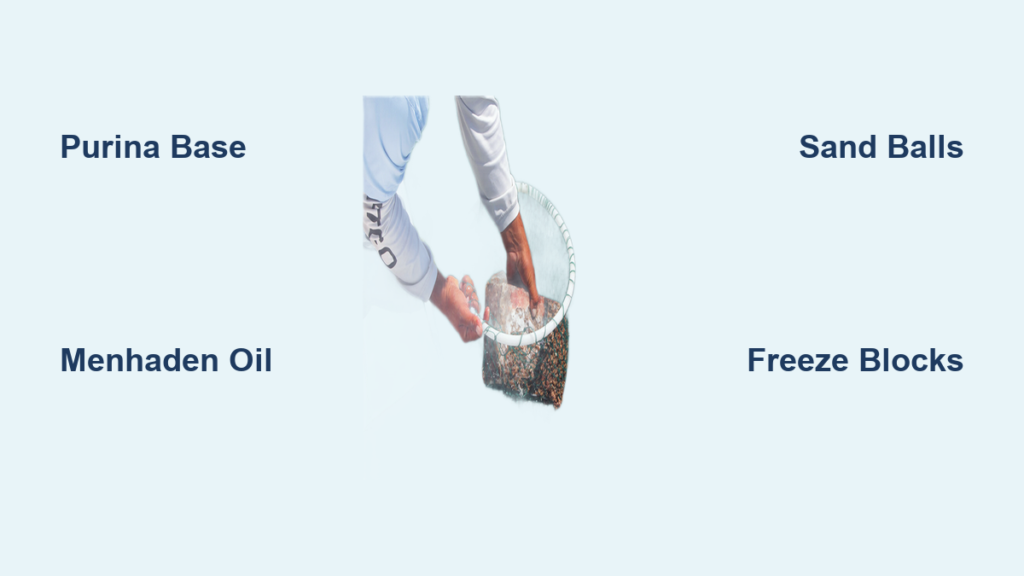
Use liquid or soft chum that floats or slowly disperses in the top 6 feet. This method draws in ballyhoo, threadfin herring, or glass minnows before cast-netting. Mix Purina fish food, menhaden oil, and water into a pourable slurry. Pour it over the side up-current and watch the slick spread.
Sand Balls for Bottom Feeders
Add fine beach sand to your mix to make sinking bricks that target sheepshead, drum, or flounder. Combine clam bellies, cooked rice, and sand into golf ball-sized balls. They break down slowly, releasing scent right on the bottom where structure-loving fish hunt.
Frozen Chum Blocks for Reef Fishing
Freeze blended chum into blocks or pops for long-duration fishing. This method works perfectly for snapper, grouper, or amberjack. Use a cardboard mold or gallon bag, freeze flat, then drop overboard. The block melts gradually, keeping fish schooled at depth.
Fermented Stink Chum for Sharks
Let fish scraps rot for 2 to 3 days to create a pungent plume that travels far. While risky and smelly, it’s deadly on catfish and sharks. Seal fish scraps in a bucket with whole shrimp and oily fish chunks, then deploy in tidal zones. Wait 20 minutes, then start reeling.
Pick High-Impact Ingredients

Your chum is only as good as what’s in it. Focus on scent, oil, and texture.
Best Base Ingredients
These form the bulk and help control how fast your chum breaks down.
- Purina Tropical Fish Food powder: The number one base. Oily, fish-attracting, and easy to mix
- Steamed Rolled Oats: Absorbs liquid, holds shape, and sinks slowly
- Cooked Rice: Especially when boiled in shrimp bouillon, great for snapper and flounder
- Bread Crumbs: Adds fluff and helps bind wet mixes
- Dog Food corn-based: Durable and used in flounder chum for slow release
Pro Tip: Avoid glitter. It may mimic predator flashes and scare baitfish.
Top Scent Attractants
Smell travels fast in water. Use these to build a long-range plume.
- Menhaden Oil: The gold standard. Just 2 to 3 squirts per batch creates a powerful trail
- Anchovy Oil: Strong alternative if menhaden is not available
- Clam Juice: Essential for sheepshead and drum
- Unprocessed Tuna Oil: Natural and effective; save the oil from canned tuna
Real Fish Components That Work
Fresh or canned fish adds authenticity and oils that mimic feeding frenzies.
- Ballyhoo or Pilchards frozen scraps: High oil content, perfect for grinding
- Canned Sardines or Jack Mackerel: Affordable and stinky in a good way
- Squid Wings or Amberjack Carcasses: Do not waste them, chum with them
- Cat Food shrimp or fish flavor: Surprisingly effective; Friskies is a favorite
Warning: Never use rancid or spoiled fish. It can repel fish or attract jellyfish.
Use the Right Tools
You do not need fancy gear, but the right tools make chumming easier and more consistent.
Essential Equipment
- 5-Gallon Bucket: Your mixing station. Use one dedicated to chum only
- Stirring Paddle or Drill Mixer: A hand drill with a paint mixer attachment speeds blending
- Scoop or Ladle: For portioning into bags or molds
- Chum Bag or Mesh Sock: Hang over the side for steady release. Nylon stockings work great
- Gallon Freezer Bags: Store and freeze chum flat for easy stacking
Optional but Game-Changing
- 15-Amp Wood Chipper: Grinds 50 plus pounds of fish fast and pays for itself in two trips
- Vacuum Sealer: Compresses chum, saves freezer space, and prevents freezer burn
- 25-Gallon Trash Bin: For large batches like 14 plus gallon bags at once
- Weight with Hole: For chum pops suspended at specific depths
Cleanup Tip: Rinse your chipper and bucket immediately. Dried chum sticks like concrete.
Make Chum: 4 Proven Methods
Pick the method that fits your time, gear, and target species.
Mud-Style Chum Fast and Simple
Perfect for last-minute trips with minimal ingredients.
Ingredients:
- 4 handfuls Purina Tropical Fish Food
- Garden-hose water
- 2 to 3 squirts menhaden oil
Steps:
- Add Purina to bucket.
- Slowly add water until mixture holds together like mud.
- Mix in menhaden oil.
- Roll into golf ball-sized balls.
- Use immediately.
Consistency Check: Should ball up but break apart in water. Too dry? Add water. Too wet? Add more Purina.
Storage: Do not store overnight. Fermentation can turn it foul-smelling.
Ground Fish Chum High-Yield
For anglers who fish weekly and want bulk savings.
Ingredients:
- Ballyhoo, pilchards, or bonito scraps
- Steamed oats
- 1 scoop Purina per batch
- Generous menhaden oil
Steps:
- Feed fish through wood chipper until finely ground.
- Transfer to 25-gallon bin.
- Add oats, Purina, and oil.
- Mix with shovel or drill.
- Spoon into gallon freezer bags.
- Lay flat and freeze.
Yield: One batch equals 14 gallon bags costing 2 to 3 dollars each. Commercial blocks cost 10 dollars each, which means 140 dollars saved per batch.
Pro Tip: Label bags with date and contents. Use oldest first.
Canned Fish Mix Beginner-Friendly
No grinder? No problem. Use pantry staples.
Ingredients:
- Canned corn
- Canned jack mackerel, sardines, white ocean whitefish
- Friskies cat food with sauce
- Bread crumbs, oats, Meow Mix
- Beach sand
- Garden-hose water
Steps:
- Combine all ingredients in bucket.
- Add water slowly until pliable.
- Split into two portions: one without sand for surface chumming, one with sand for sinking.
- Adjust texture with breadcrumbs if too wet or water if too dry.
Use: Pour or toss surface mix for ballyhoo. Freeze sand mix into bricks and drop overboard for bottom feeders.
Freezer Hack: Vacuum seal for compact, long-lasting storage.
Fermented Chum Jos Heemstra Method
For aggressive bottom feeders. Use with caution.
Ingredients:
- Fish chunks man’s ball size
- Whole leftover shrimp
- Nylon stocking or mesh bag
Steps:
- Mix fish and shrimp.
- Place in nylon stocking.
- Seal in bucket; ferment 2 to 3 days until extremely pungent.
- Deploy at tidal apex or river confluence.
- Wait 20 minutes before fishing.
Caution: Smells so bad it might get you kicked off the boat. Use only on private or shark trips.
Shelf Life: Discard after 3 days. Risk of bacterial growth.
Optimize for Target Species

Tailor your chum to the fish you want.
Yellowtail Snapper
- Sand Balls: Glass minnows plus cooked oatmeal plus menhaden oil plus sand
- Slop: 2 bags rolled oats plus thawed chum block plus saltwater
Deploy: Up-current of reef. Use chum bag for steady release.
Flounder
- Gourmet Mix: Clam bellies, mussels, shrimp-flavored cat food, clam juice, rice in shrimp bouillon
- Budget Version: Cornmeal dog food plus clam waste plus boiled rice
Tip: Add corn for visibility. Flounder key in on movement and contrast.
Sheepshead and Drum
- Clam Cocktail: Cooked rice plus clam juice plus chopped clams
Best Time: Early morning near pilings or jetties.
Mullet
- Mad Mullet Sand Balls: Ground pilchard plus anchovy oil plus bread plus fine sand
Use: Free-drop or in chum bag near mangroves.
Tuna
- Easy Tuna and Rice: Canned tuna in oil plus cooked rice
Deploy: From moving boat or anchored up-current.
Reef Fish Australian Burley
- Rabbit pellets, canned tuna, oily fish like yakka, bread, unprocessed fish oil
Note: Popular in Australia and effective on coral reefs.
Store Chum Properly
Bad storage ruins good chum.
Same-Day Use
- Keep in lidded bucket.
- Store in shade.
- Cover to prevent humidity absorption.
Long-Term Freezing
- Use gallon freezer bags.
- Lay flat to stack and thaw quickly.
- Vacuum seal to save space and prevent freezer burn.
Label: Include date and contents like Snapper Chum with the date.
Fermented Chum
- Use within 3 days.
- Store in sealed bucket in cool, shaded area.
- Discard if smell turns sour or slimy.
Pest Warning: Dry Purina bags attract mice and roaches. Store in sealed plastic bins.
Deploy Chum Like a Pro

Timing and method matter as much as the mix.
When to Start Chumming
- Begin 20 to 30 minutes before fishing.
- Best time is early morning, before sunrise.
- Fish are most active during low light.
Where to Chum
- Up-current of target zone so scent drifts to fish.
- Near tidal rips, reef edges, or river mouths.
- Avoid chumming directly over structure. Fish may stay too deep.
How to Release Chum
| Method | Best For |
|---|---|
| Hand-Toss Balls | Immediate dispersion, good for sand balls |
| Chum Bag | Continuous release, minimal effort |
| Frozen Bricks | Long trips, slow melt |
| Chum Pop | Targeted depth like 20 feet |
| Pour Slop | Surface baitfish attraction |
Frequency: Chum every 5 to 10 minutes. Increase if activity drops.
Stop Once Fish Are Hooked: Over-chumming can oversaturate the area.
Avoid Common Mistakes
Even good chum can fail if used wrong.
Sinking Too Fast
Dry mixes with bread or sand often plummet to the bottom, attracting catfish instead of baitfish.
Fix: Use Purina-based slop for mid-water dispersion. Add less sand.
Over-Chumming
Too much chum makes fish full before they hit your hook.
Fix: Start small. Less is more. Adjust based on response.
Using Spoiled Ingredients
Rancid fish or old oil repels fish.
Fix: Smell it first. If it is off, toss it.
Ignoring Deck Cleanup
Some chum hardens like concrete.
Fix: Rinse bucket, scoop, and deck immediately after use.
Homemade vs. Commercial Chum
Should you make it or buy it?
| Factor | Homemade | Commercial |
|---|---|---|
| Cost | Low, 2 to 3 dollars per bag | High, 10 dollars plus per block |
| Effort | Requires prep time | Ready to use |
| Consistency | Varies by batch | Uniform and tested |
| Scent | Can be too strong | Marketed as clean-smelling |
| Sink Rate | Often too fast | Engineered for water column |
| Target Fish | May attract sharks, catfish | Designed for baitfish |
| Storage | Needs freezer | Shelf-stable |
Pro Insight: Many charter captains now use Boca Coast Chum developed with 20 plus experts. It works right out of the bag.
Best Hybrid Approach: Use homemade for bulk and commercial for precision.
Key Takeaways for Making Chum for Saltwater Fishing
Making chum for saltwater fishing is not about throwing fish parts overboard. It is about creating a biological signal that says feeding time. The right ingredients matter most. Purina Tropical Fish Food and menhaden oil form the foundation of every effective homemade mix. Pick your chum type based on target species. Use sand balls for bottom feeders, surface slop for baitfish, and frozen blocks for reef fishing. Store properly in freezer bags and label everything with dates. Start with simple canned mixes if you are new, then scale up to wood chipper batches as you gain experience. Your next big catch might start with a bucket of mud.
Frequently Asked Questions About Making Chum for Saltwater Fishing
What is the best base ingredient for homemade chum?
Purina Tropical Fish Food powder is the number one base ingredient. It is oily, fish-attracting, and easy to mix with water and other additives. It creates the mud-like consistency that releases scent effectively in the water column.
How long does homemade chum last in the freezer?
Homemade chum lasts 3 to 6 months in the freezer when stored in airtight freezer bags. Vacuum sealing extends shelf life and prevents freezer burn. Always label bags with the date and contents.
Can I use chum for all saltwater fish species?
Yes, but you should tailor your chum to the target species. Bottom feeders like flounder and sheepshead need sinking sand balls with clam scent. Surface feeders like ballyhoo need floating slurry. Adjust ingredients accordingly.
Why does my chum sink too fast?
Your mix likely has too much bread, sand, or dry ingredients. Add more Purina powder or menhaden oil to create a lighter, more buoyant mixture that hangs in the water column longer.
Is commercial chum better than homemade?
Commercial chum like Boca Coast offers convenience and consistent performance. However, homemade chum costs significantly less and allows customization. Many pros use both, homemade for bulk and commercial for precision situations.