
If you’re struggling to get bites when fish are sluggish, deep, or pressured, the drop shot rig might be the solution you need. This finesse technique keeps your soft plastic bait suspended just above the bottom, creating a natural presentation that mimics a dying minnow. The drop shot fishing method has helped tournament anglers and weekend warriors alike catch fish when other techniques fail completely.
In this guide, you’ll learn exactly how to drop shot fish from rigging basics to advanced tactics. We’ll cover hook selection, weight choices, retrieve techniques, and species-specific tips that will help you land more bass, trout, and panfish.
Rig the Drop Shot Correctly

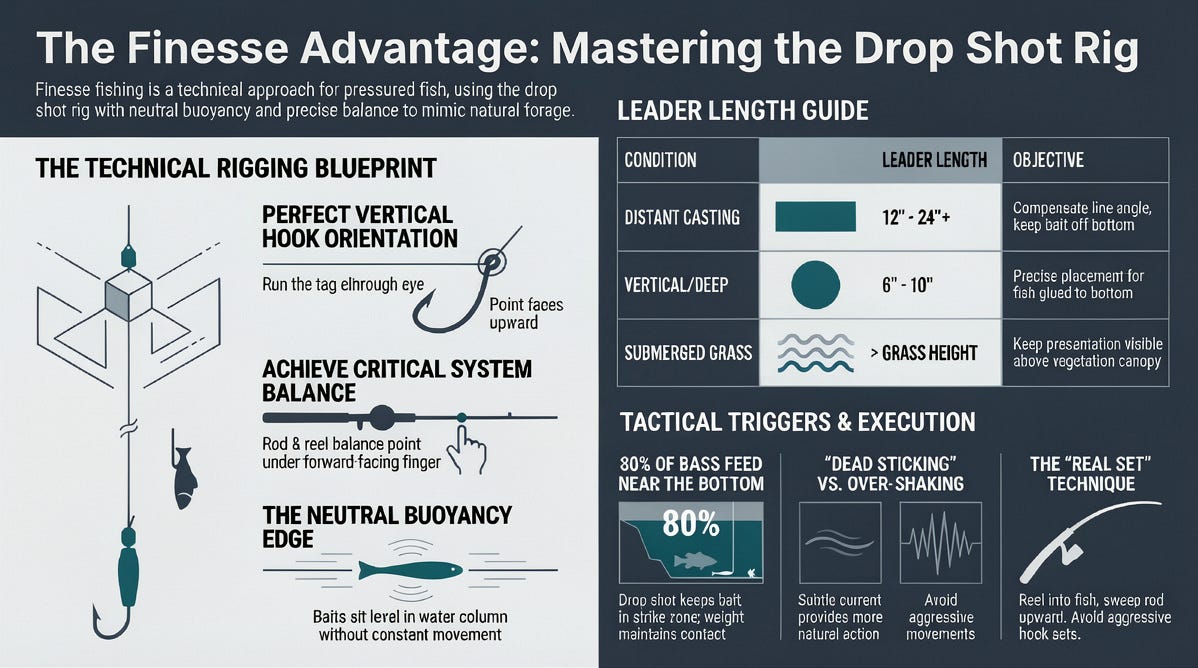
Proper rigging is the foundation of drop shot success. The core principle is simple: hook above the weight, with a leader of adjustable length between them.
Standard Rig: Palomar Knot Method
- Tie the hook using a Palomar knot, leaving a 12 to 14 inch tag end
- Pass the tag end back through the hook eye from the top, which orients the hook horizontally with the point facing up
- Cinch down to secure the knot firmly
- Slide on your weight and secure it with a crimp, pinch, or overhand knot
This upward-pointing hook drives into the roof of the fish’s mouth on the hookset, reducing gut-hooks and improving your landing success rate.
Adjust Leader Length by Cover Type
Your hook-to-weight distance determines how high your bait floats off the bottom. Use these guidelines:
• Rocks, boulders, open flats: 2 to 6 inches
• Sparse grass or soft weeds: 2 to 3 feet
• Thick grass or brush: 1 to 2 feet
• Suspended fish: 1 to 3 feet
• Spawning bass near nests: 2 to 6 inches
In grass, match your leader length to the height of the vegetation to keep your bait visible above the cover.
Choose the Right Hook for Drop Shot Fishing
The hook makes or breaks your success. Match it to your cover, target species, and presentation style.
Hook Types and Their Uses
| Hook Type | Best For | Orientation |
|---|---|---|
| Circle/Octopus | Open water, smallmouth | Point-up, nose-hooked |
| Texas-Rig Hook | Grass, docks, brush | Weedless, buried in bait |
| EWG (Extra Wide Gap) | Big smallmouth, shad imitators | Threaded swimbait style |
| Drop Shot Specific | Clear water, pressured fish | Fine wire, sharp point |
Hook Sizes by Species
• Panfish, trout: Size #6 to #8
• Largemouth, smallmouth: #1 to 2/0
• Power drop shotting: 2/0 to 4/0
Top picks include the Gamakatsu Drop Shot Hook (#4) for finesse and the Gamakatsu EWG (3/0) for bigger fish.
Master the Drop Shot Retrieve
Most bites happen during pauses or subtle movements, not aggressive reeling. Here’s how to work the bait effectively.
Finesse Retrieve for Bass and Panfish
- Cast and let the rig fall to the bottom
- Pause 3 to 10 seconds while the bait flutters down
- Tighten your line to remove all slack
- Dead-stick: let the bait sit for 5 to 10 seconds
- Shake: give 4 to 6 inch rod-tip twitches to quiver the tail
- Lift and settle: raise the bait a few inches, then let it fall
- Repeat the cycle
Bite detection requires attention to light taps, ticks, or when the line suddenly feels heavier. Most strikes occur on the fall, after a pause, or during the first shake.
Power Retrieve for Heavy Cover
For grass, docks, and brush piles, use a more aggressive approach:
- Cast into cover and let the rig sink
- Dead-stick for 5 seconds with slight slack
- Use a “yo-yo” retrieve: lift the rod tip, stop before feeling weight, let fall
- Repeat 3 to 4 times, then recast
- Set the hook with an aggressive sweep while reeling
Select the Right Weight

Weight shape and size affect snag resistance and how naturally your bait falls.
Weight Types by Bottom Type
| Weight | Best For | Why |
|---|---|---|
| Teardrop/Round Ball | Rock, boulders | Slides over structure |
| Cylinder/Tube | Grass, wood | Less likely to hang in weeds |
| Split Shot | Adjustable rigs | Easy to move or remove |
The rule: use cylinder weights in grass and teardrop weights in rock.
Weight Sizes
• Finesse fishing: 1/16 oz to 1/2 oz
• Power drop shot: 1/2 oz to 1 1/2 oz
• Panfish: 1/16 oz to 1/8 oz
Heavier weights still allow finesse presentation because the bait stays separated from the weight.
Pick the Best Soft Plastic Bait

Match your bait to the local forage and water clarity.
Bait Profiles by Species
• Shad Shape: mimics threadfin shad, best for smallmouth and open water
• Worm Style: mimics nightcrawlers, ideal for largemouth and spawning fish
• Grub/Minnow: mimics small forage fish, perfect for trout and bluegill
• Craw/Tube: mimics crayfish, best for power fishing in cover
In clear water, use natural colors. In stained water, use high-contrast colors like black/blue.
Gear Up: Rod, Reel, and Line
Your setup directly affects sensitivity, casting distance, and hooksets.
Line Choices
• Finesse: 4 to 8 lb fluorocarbon for low visibility
• Standard bass: 10 to 15 lb braid with 8 to 12 lb fluoro leader
• Power fishing: 10 to 17 lb fluoro or mono for heavy cover
• Trout/panfish: 6 to 10 lb fluorocarbon
Rod and Reel Recommendations
• Rod: 6’6″ to 7’6″ medium-light, fast action
• Reel: 2000 to 3000 size spinning with 6.2:1 or higher gear ratio
• Preferred setup: KVD GS7 7’6″ medium-light rod with Akuma X Series 3000 reel
Spool with braid main line and an 8 to 12 foot fluorocarbon leader for the best combination of distance and sensitivity.
Set the Hook the Right Way
A bad hookset loses fish. The drop shot requires a real set, not a snap.
Proper Hookset Technique
- Reel while lifting: turn the handle as you raise the rod
- Drive upward: use steady pressure to embed the point-up hook
- Maintain tension: avoid slack during the fight
- Don’t over-jerk: keep the fish subdued to prevent blowouts
The point-up hook is designed to set into the roof of the mouth, so upward motion is essential.
Drag Settings
Set your drag light enough to slip slightly on the hookset but tight enough to control the fish. Adjust manually during runs to avoid break-offs.
Target Specific Species
Bass (Largemouth, Smallmouth, Spotted)
Best in deep structure, grass edges, and rocky points. Use Texas-rigged hooks in cover and nose-hooked rigs in open water. The drop shot shines on clear, sunny days and post-frontal conditions.
Trout
Ideal in deep, clear lakes with structure. Use a size 8 hook, 6 to 8 lb fluoro, and a micro worm. The subtle shakes and dead-stick presentation keep the bait in the strike zone without snagging.
Bluegill and Panfish
Target them in 5 to 15 feet near docks and logs. Use 1 inch plastic wax worms on a size 4 or 6 hook. Most strikes happen on the fall or the first shake.
Advanced Tactics for Tough Fish
Environmental Adjustments
• Shallow water: cast at a flatter angle so the bait sits lower
• Deep water: cast more vertically to keep the bait higher
• Windy conditions: lower your rod tip to reduce line drag
• Clear water: use lighter line, natural colors, and longer leaders
When to Use the Drop Shot
The technique excels during post-frontal conditions, high sun and clear water, spawning periods, and late summer heat when fish seek cooler depths. It works when other presentations fail completely.
Finesse vs. Power Drop Shot
Finesse Drop Shot
Goal: stealthy, light presentation
• Hook: #8 to #1
• Line: 4 to 8 lb fluoro
• Weight: 1/16 to 1/2 oz
• Use: pressured fish, deep structure, clear water
Power Drop Shot
Goal: extract fish from heavy cover
• Hook: 1/0 to 4/0
• Line: 10 to 17 lb fluoro
• Weight: 1/2 to 1 1/2 oz
• Use: weeds, docks, brush
Frequently Asked Questions About Drop Shot Fishing
What is the best leader length for drop shot fishing?
Leader length depends on cover type. Use 2 to 6 inches in rocks and open water, 2 to 3 feet in sparse grass, and 1 to 2 feet in thick grass or brush. Match leader height to vegetation height in heavy grass.
Can you use live bait on a drop shot rig?
Yes, you can use live bait like minnows or crawfish on a drop shot. Thread the bait onto the hook similar to a soft plastic, or nose-hook live bait for better action. This works especially well for trout and panfish.
How do I prevent tangles when drop shot fishing?
Wrap double-sided Velcro above the sinker on your rod to prevent line wraps during transport. Use crimped or knot-secured weights to stop the weight from sliding along the line.
What’s the difference between drop shot and Ned rig?
Both are finesse presentations, but the Ned rig uses a mushroom-shaped weight with the hook embedded in the bait. The drop shot keeps the hook separated from the weight, allowing more vertical movement and better bite detection.
Do I need special knots for drop shot fishing?
A Palomar knot is the most common and effective knot for tying the hook. Some anglers use a drop loop knot for power drop shotting. The key is passing the tag end through the hook eye from the top to achieve point-up orientation.
When should I switch from finesse to power drop shot?
Switch to power drop shot when fishing heavy cover like thick grass, docks, or brush piles. Use heavier hooks (1/0 to 4/0), thicker line (10 to 17 lb), and larger baits (4 to 7 inches) to extract fish from snaggy areas.
Key Takeaways for Drop Shot Fishing Success
The drop shot rig is one of the most versatile and effective techniques in modern angling. The key to success lies in proper hook orientation with the point facing up, which drives into the roof of the mouth for better hookups. Adjust your leader length based on cover type, keeping the bait suspended above rocks, grass, or structure.
Master the finesse retrieve by focusing on pauses rather than constant movement. Most strikes happen during dead-sticks, subtle shakes, and after the bait falls. Experiment with bait colors, sizes, and retrieve speeds until you find what triggers bites in your local waters.
Now tie one on and hit the water. The next fish of a lifetime might strike on the pause.